
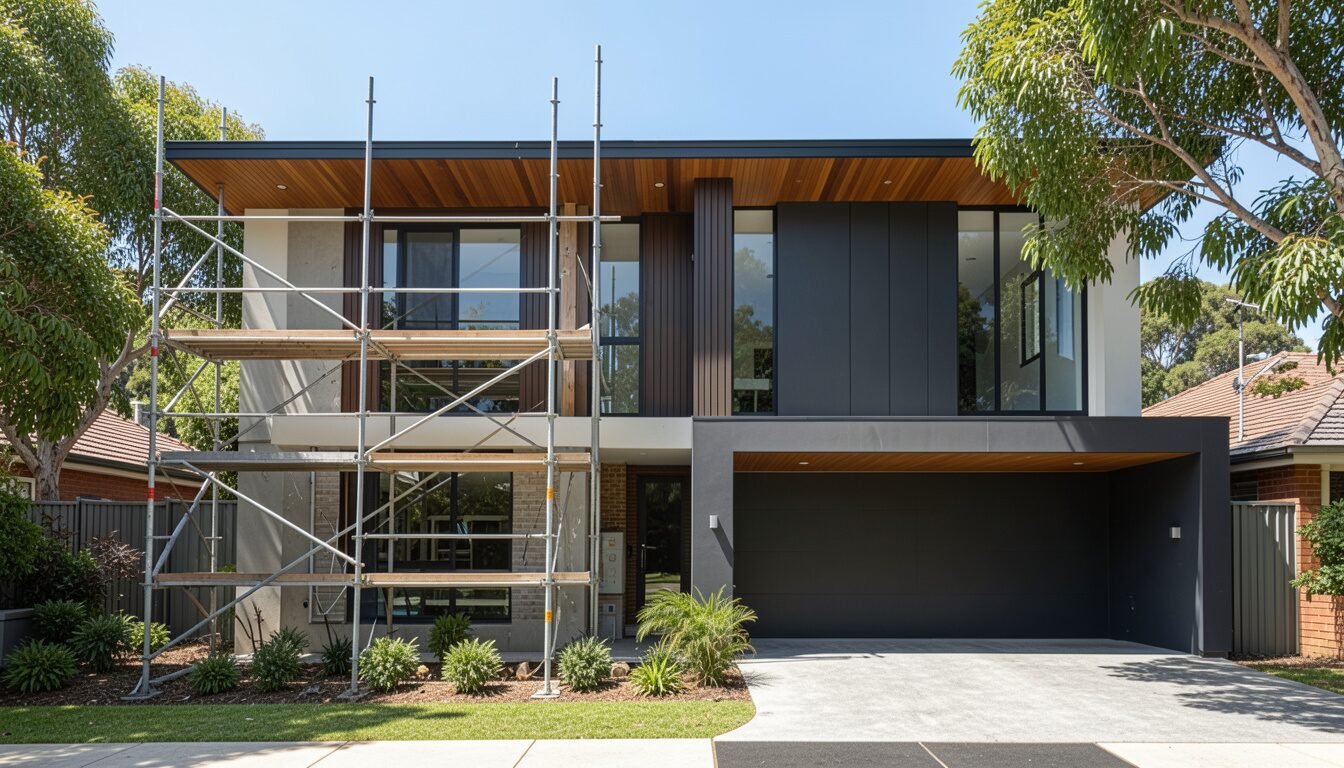
You love your location. You have outgrown your home. Now comes the question that thousands of Sydney homeowners face every year: do you renovate what you have, or do you knock it down and start again?
It sounds simple on the surface. In practice, it is one of the most financially and emotionally complex decisions a homeowner can make. The wrong choice can cost you hundreds of thousands of dollars, years of disruption, and a result that still does not deliver what you actually wanted.
At Home Choice Australia, we have guided homeowners through both paths across Sydney and regional NSW. This guide gives you the complete picture — the costs, the process, the risks, and the honest advice you need to make the right decision for your specific situation.
What Does It Mean to Renovate vs Rebuild?
Renovation
A Sydney home renovation means updating, repairing, or extending your existing structure while retaining the core building. Common renovation types in Sydney include kitchen and bathroom upgrades, home extensions, adding a second storey, opening up floor plans, and modernising ageing services like plumbing and electrical systems.
Renovation preserves the existing bones of your home and works within or around what is already there. It can range from a $50,000 cosmetic refresh to a $500,000 major structural extension — the scope is wide.
Rebuild
A knockdown rebuild in Sydney means demolishing your existing home completely and constructing an entirely new one on the same land. You keep your block and your location. Everything above the ground is removed and replaced.
This path suits homeowners whose existing structure is beyond cost-effective repair, whose layout cannot be improved through renovation, or who want a fully modern home designed precisely around their family’s needs without compromise.
Key Factors to Consider When Choosing
Structural Condition of Your Home
Before any other conversation happens, you need to understand the structural integrity of your existing home. Termite damage, compromised foundations, crumbling subfloor structures, and deteriorated roof framing can make renovation economically unviable. A building and pest inspection from a licensed professional will reveal what you are actually working with underneath the surface.
Homes with serious structural defects often cost more to rectify and renovate than they would to demolish and rebuild from scratch. This is especially common in Sydney’s older housing stock — Federation homes, interwar cottages, and post-war brick veneer houses that look solid from the outside but carry hidden structural problems that only emerge once walls come down.
Budget and Cost Considerations
This is where most homeowners begin — and where realistic thinking matters most.
Renovation costs in Sydney vary enormously depending on scope. A mid-range kitchen and bathroom renovation costs $80,000 to $150,000. A full home extension or second-storey addition runs $250,000 to $500,000 or more. The risk with renovation is hidden costs — unexpected building issues discovered during construction that add to your budget without adding to your design outcome.
Rebuild costs in NSW for a standard new home sit between $350,000 and $1,200,000 depending on the size and quality of the build, plus $20,000 to $50,000 for demolition. The cost per square metre in Sydney for a new build typically ranges from $2,500 to $4,500 for standard construction.
The critical comparison is not just the quoted price — it is the total delivered outcome relative to cost. A renovation that costs $400,000 and still leaves you with an outdated layout and ageing services may represent worse value than a rebuild at $600,000 that delivers a fully modern, energy-efficient home designed exactly for your family.
Design Flexibility
Rebuild gives you complete design freedom. Every room, every window, every flow of space is designed from scratch to suit how you actually live. There are no compromises forced by an existing structure that was designed for a different era and a different family.
Renovation works within constraints. You can improve, modernise, and extend — but the position of load-bearing walls, the placement of existing services, and the footprint of the original structure all limit what is achievable. Sometimes those constraints produce creative solutions. Sometimes they produce expensive compromises that never quite deliver what you imagined.
Timeframe and Project Disruption
A straightforward kitchen or bathroom renovation takes 6 to 12 weeks. A major extension or whole-home renovation runs 6 to 12 months. A knockdown rebuild in Sydney typically takes 12 to 18 months from demolition through to moving in.
Both paths involve disruption to daily life. With renovation, you may be able to remain in the home through some stages depending on scope, though major works often require temporary relocation. A full knockdown rebuild requires you to vacate completely for the entire construction period.
Factor temporary accommodation costs into your rebuild budget. In Sydney, renting for 12 to 18 months adds $30,000 to $60,000 or more to your total project cost — a figure that many homeowners forget to include when comparing options.
Local Council Regulations and Approvals in NSW
Both renovation and rebuild projects in Sydney require council engagement, but the pathway differs by project type and location.
A Development Application is required for works that exceed complying development standards — including most significant renovations, all knockdown rebuilds, and any project affecting heritage-listed properties. Sydney council DA requirements vary by local government area, and heritage home considerations add significant complexity in areas like Glebe, Balmain, Paddington, and the inner west.
A Complying Development Certificate, assessed by a private certifier, is available for projects that meet specific NSW planning law criteria. This pathway is faster and cheaper than a DA — but not all projects or properties qualify.
BASIX requirements apply to all new builds and significant renovations in NSW, mandating minimum standards for energy efficiency and water use. The Building Code of Australia sets fire safety compliance and structural standards that apply regardless of approval pathway. Understanding these NSW building codes early avoids expensive redesigns later.
Market Value and Resale Impact
A well-executed knockdown rebuild in a desirable Sydney suburb typically delivers stronger return on investment than an equivalent renovation spend. New homes command a premium in the Sydney property market — buyers pay more for modern construction, builder warranties, energy efficiency, and the assurance that comes with a new build.
Renovation can also increase property value significantly when executed well. However, over-capitalising — spending more on renovation than the market will return at resale — is a real risk in Sydney suburbs where property values have a ceiling relative to the surrounding market.
Pros and Cons: Renovate vs Rebuild
Renovation advantages include lower upfront cost for moderate scope projects, the ability to preserve the character of period homes and heritage properties, shorter construction timelines, and maintaining proximity to your community without relocating.
Renovation disadvantages include the risk of hidden building issues that inflate the budget, design constraints imposed by the existing structure, the potential to spend heavily without achieving the outcome you actually wanted, and accumulated maintenance issues that persist after completion.
Rebuild advantages include full custom design from scratch, compliance with current energy efficiency standards and fire safety requirements, new builder warranties, and a modern home that suits your family’s current and future needs precisely.
Rebuild disadvantages include higher total cost, a longer construction timeline requiring temporary relocation, and the loss of any existing structural elements or character features you valued in the original home.
Hybrid Options
Not every decision is binary. A partial demolition and renovation — retaining the structurally sound sections of your home while demolishing and rebuilding the sections that are beyond repair or unsuitable for your needs — can deliver strong outcomes at a middle-ground cost.
This approach works particularly well when a portion of your home is in good condition and well-located on the block, but other sections require complete replacement. A structural engineer and experienced renovation builders in Sydney can assess feasibility and give you an honest view of whether this path makes practical and financial sense.
Financial Considerations and NSW-Specific Costs
Beyond construction costs, factor these into your total budget:
Demolition for a full knockdown rebuild runs $20,000 to $50,000. Asbestos removal adds $5,000 to $20,000 for pre-1990 homes. Council fees and certification costs add $20,000 to $40,000. Temporary accommodation for a rebuild period adds $30,000 to $60,000. Landscaping and external works post-construction add $20,000 to $100,000.
Renovation projects carry their own hidden cost risk — once walls open, unexpected building issues, substandard previous work, and outdated services regularly add 20 to 30 percent to original estimates.
Building insurance must cover both pathways during construction. Speak with your lender about whether your current mortgage structure accommodates a construction loan or renovation loan, and what the implications are for your overall budget planning.
Planning and Professional Advice
No homeowner should commit to either path without professional input first. The sequence that protects you is: building and pest inspection, followed by a structural engineer’s assessment, followed by a feasibility consultation with an experienced Sydney builder or building designer.
Quantity surveyors provide independent cost breakdown estimates that help you compare options without relying solely on builder quotes. Project managers can oversee either path and reduce the risk of budget overruns and construction timeline delays.
The cost of professional advice at this stage is minimal compared to the cost of making the wrong decision after contracts are signed.
Sydney Case Examples
A homeowner in Penrith with a 1970s brick veneer home on a flat 650 sqm block received renovation quotes of $380,000 for a full internal renovation and second-storey addition. A rebuild assessment came in at $520,000 all-in including demolition. The rebuild delivered a fully custom four-bedroom home meeting current energy standards with a 25-year structural warranty. The $140,000 difference bought an entirely new home rather than an improved old one.
A homeowner in Leichhardt with a Federation terrace received a structural report revealing termite damage and foundation issues requiring $90,000 in rectification before renovation could even begin. The full renovation cost jumped from an initial $200,000 estimate to $340,000 once structural issues were factored in. A partial rebuild of the rear section with retention of the heritage facade delivered the outcome they wanted at $310,000 — with less disruption and a better result.
Decision Checklist for Sydney Homeowners
Ask yourself these questions before committing to either path:
Has a licensed inspector assessed the structural integrity of my existing home? Does my renovation wish list require changes that the existing structure cannot accommodate? Have I included all hidden costs — temporary accommodation, unexpected issues, landscaping — in my total budget? Does my block have heritage, bushfire, or flood overlays that affect my approval pathway? Have I compared the total delivered outcome of renovation versus rebuild at equivalent cost levels? Have I spoken with a structural engineer, builder, and finance professional before deciding?
FAQs
Is a rebuild cheaper than renovation in Sydney?
Not always. For moderate scope projects, renovation is typically cheaper. For extensive whole-home renovations on properties with structural issues, rebuild often delivers better value for the total cost.
How long does a knockdown rebuild take in NSW?
Most knockdown rebuild projects in Sydney take 12 to 18 months from demolition through to practical completion, depending on design complexity and approval pathway.
Do I need DA approval to rebuild or renovate in Sydney?
Significant renovations and all knockdown rebuilds require either a Development Application or a Complying Development Certificate. Heritage properties and projects in certain zones always require a DA. Consult your local council or a private certifier early in your planning process.
Conclusion
The rebuild or renovate decision in Sydney is never one-size-fits-all. It depends on your home’s structural condition, your budget, your design ambitions, your timeline, and the specific regulations that apply to your property and suburb.
What matters most is making the decision based on complete, accurate information — not on the cheapest quote or the most optimistic estimate. At Home Choice Australia, we help Sydney homeowners understand both options clearly and honestly before they commit to either path. Get the right professional advice early, compare the full cost of each option honestly, and choose the path that delivers the best outcome for your family and your long-term property investment.