
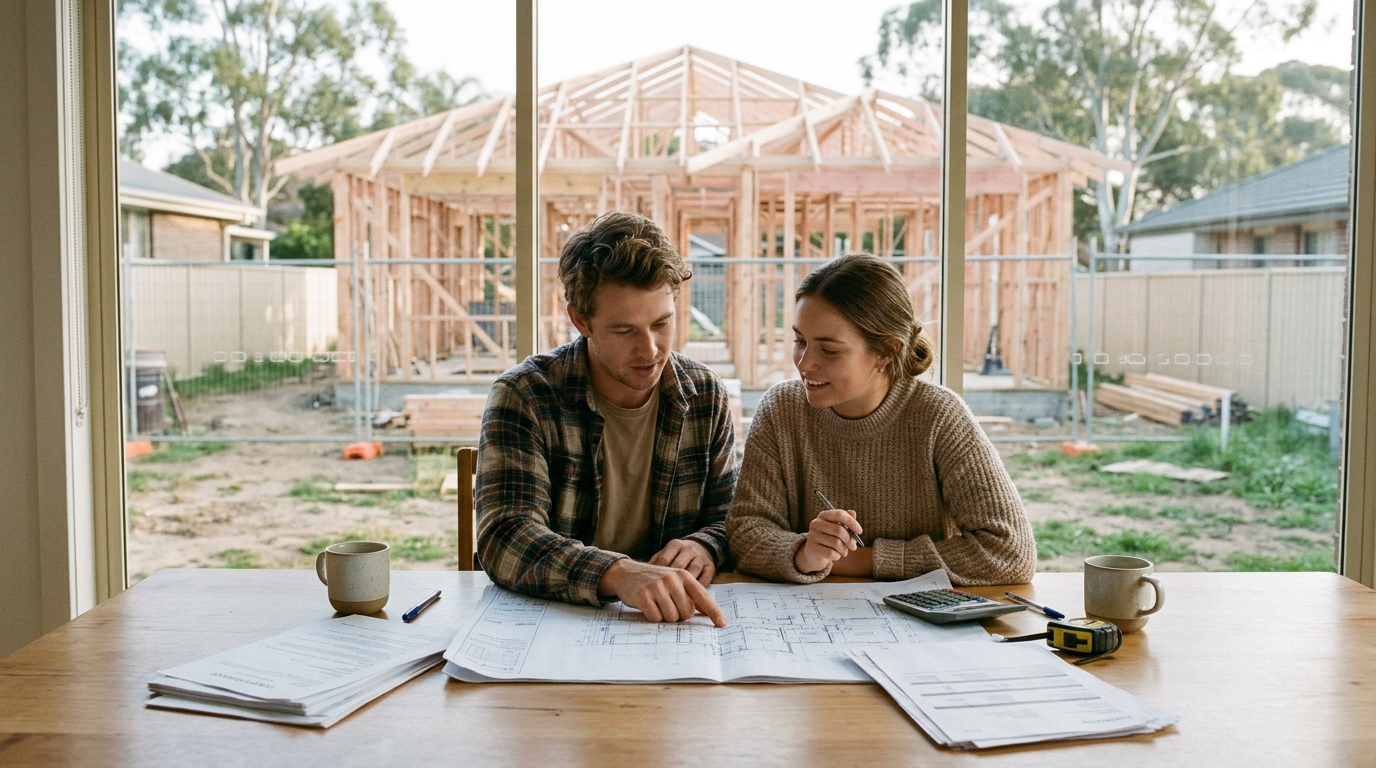
Home Choice Australia is a home development company in New South Wales, and the question we hear most often from future home owners is simple: how much can I borrow? There is no single answer. Your limit depends on your income, spending, debts, deposit and how the lender values the home you plan to build. Most people find the figure is lower than the headline numbers they see online, so it pays to understand the process early.
How Much Can You Borrow to Build a House in NSW?
Your total project budget and your loan amount are two different numbers. The budget covers land, construction, site works, approvals, landscaping and other costs. The loan covers only the part a lender agrees to fund after checking your finances and the proposed build. A borrowing power calculator gives a quick starting estimate, but it cannot see your full picture, your plans or your builder. Treat it as a guide, then confirm the figure with a lender or broker who understands home construction finance in NSW. The lender will always lend the lower of what you can afford and what the project supports.
How Do Banks Calculate Construction Loan Borrowing Capacity?
Lenders add up your income, then subtract your living expenses and current commitments. They test the result against a higher interest rate than you will actually pay, which builds in a safety margin. The loan term also matters, because a longer term lowers repayments on paper. Finally, the lender looks at the home itself: the plans, the builder and the expected value. A strong income does not help if the project fails the lender’s checks, so both sides of the assessment count.
How Much Income Do I Need to Build a House in Australia?
There is no minimum income that suits everyone. Lenders start with your gross annual income, which is your pay before tax, including regular overtime, bonuses and verified rental income. For couples, household income is combined, but the lender also counts both people’s spending and any dependants. As a rough guide, many lenders will consider a loan of about four to six times income, though your result may be lower or higher. Casual and self-employed applicants may need extra paperwork, such as two years of tax returns.
How Do Existing Debts Affect How Much You Can Borrow?
Every debt reduces what a lender will give you. Car loans, personal loans, HECS-HELP and buy now pay later accounts all count. Even unused credit card limits are assessed as if you had spent them in full, so closing cards you do not need can lift your result.
Here is a simple example. A couple earns $160,000 a year combined and has no debts. A lender might estimate a loan of around $750,000. Now add two credit cards with $20,000 in total limits and a $15,000 car loan. The same couple may see their estimate fall to around $650,000. These figures are illustrations only, not lender quotes, but they show how small commitments can make a big difference.
Does Owning Land Increase How Much You Can Borrow?
Often it does. If you own land, lenders can count its value towards your contribution, so you may need little or no cash deposit. The part of your land that is paid off is called land equity, and it works like a deposit for the build. Owning land does not guarantee approval, though. The lender still tests your income, debts and building plans. If the land has a mortgage, that balance reduces the equity available. [Internal link: our guide to building on land you already own]
How Much Deposit Do You Need to Build a House?
Deposit requirements vary between lenders, but many ask for five to twenty per cent of the total project cost, from savings, land or both. Lenders express this as a loan-to-value ratio (LVR), which compares the loan with the value of the property. When your deposit is under twenty per cent, you may pay lenders mortgage insurance (LMI), a one-off cost that protects the lender, not you. A larger deposit usually means a lower ratio, smaller repayments and a stronger application.
What Is the Difference Between Borrowing Power and Loan Approval?
Borrowing power is an estimate of what you could borrow based on your finances. Approval is the lender’s formal decision on a specific project. Approval needs the signed building contract, plans, council permission and a valuation, so it can land below your estimate. This is why a calculator result should never be treated as a promise. Plan your budget around the lower figure and keep a buffer in case your circumstances or interest rates change before you sign.
How Do Lenders Calculate the Value of a Home You Plan to Build?
A lender cannot value a house that does not exist yet, so a valuer estimates its worth using your plans, specifications and the land. This is called a completed property valuation. If the valuer’s figure is lower than your total cost, the lender bases the loan on the lower number, and you cover the gap. Sound plans, a fairly priced contract and a good location all help the valuation reflect what you are actually spending.
What Costs Should You Include in Your Construction Budget?
Build a full budget before you apply. Include the land, the building contract, council and certifier fees, utility connections, driveways, fencing, landscaping, insurance and stamp duty where it applies. Then add a construction contingency, often five to ten per cent, for price changes and surprises. The NSW Planning Portal’s MyHome Planner is a helpful official resource for planning steps, finance and additional building costs. Many first-time builders underestimate these extras, and they are the items most likely to strain your cash flow. [Internal link: our building costs guide]
Can You Borrow for Site Preparation and Other Additional Costs?
Sometimes. Many lenders will include site preparation costs, such as earthworks, retaining walls, soil testing and tree removal, when they are listed in your building contract. Costs outside the contract, like landscaping or window coverings, are usually paid from your own savings. Ask your lender early which extras they will fund, because sloping or difficult blocks in NSW can add a large amount to the total.
How Do Staged Loan Payments Work During the Build?
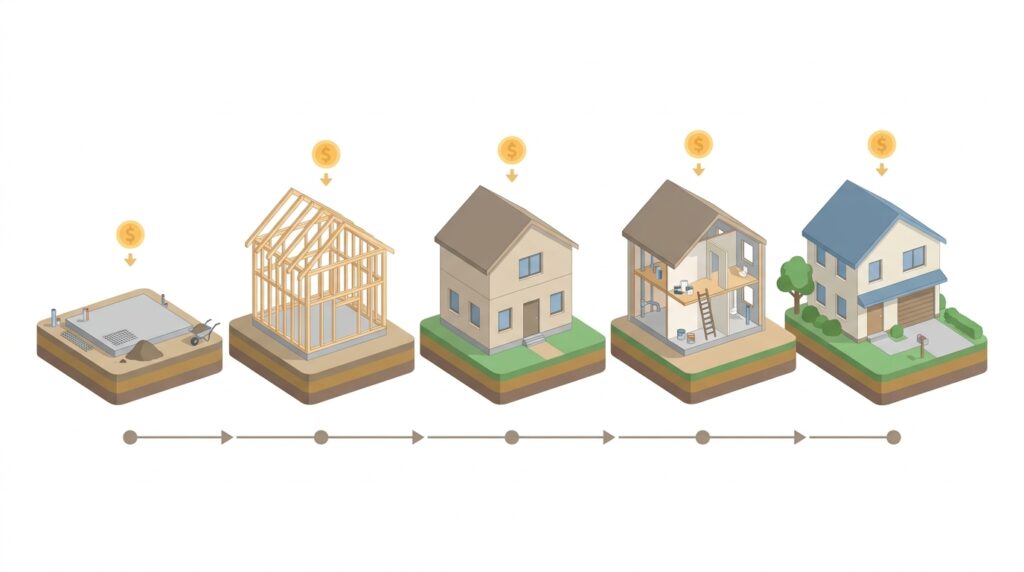
Instead of one lump sum, the lender releases money as the builder finishes set milestones. These progress payments usually follow the slab, frame, lock-up, fixing and completion stages. Before each release, the lender normally arranges an inspection to confirm the work is done. You typically pay interest only on the amount drawn so far, so your repayments rise gradually during the build. Make sure your builder’s invoices match the payment schedule in the contract.
Can You Get Construction Loan Pre-Approval Before Choosing a Builder?
Yes, in most cases. Construction loan pre-approval gives you a conditional idea of your budget before you sign anything, which helps when comparing builders and designs. It is not final. The lender will still review the actual contract, plans and valuation, and pre-approval usually lasts only for a limited period. If your income or debts change before you sign, the outcome can change too.
What Documents Do You Need to Apply?
Expect to provide photo ID, recent payslips, tax returns, bank statements and details of your debts and credit cards. For the project itself, you will need the land title or contract of sale, council or certifier approvals, plans and a fixed-price building contract, which sets the agreed cost and gives the lender certainty. Having these ready speeds up the assessment and reduces back-and-forth with your lender.
How Can You Improve How Much You Can Borrow?
Small changes can lift your result. Pay down or close cards and loans, trim regular spending for a few months, and avoid new credit before applying. Save a larger deposit, add a second income if possible, and check your credit report for errors. Together these steps improve your loan repayment capacity, which is what lenders care about most. A mortgage broker can also compare lenders for you, as their policies and limits differ.
Frequently Asked Questions About Building Finance in NSW
Can I get approval based on my salary and deposit?
Possibly. Salary and deposit are the main inputs, but lenders also check spending, debts, credit history and the building plans. Strong savings help, yet they do not replace the other checks.
How much can I borrow if I already own land?
It depends on your income, debts and the land’s value. The land counts towards your contribution, but you must still show you can afford repayments on the build amount.
Do I need a builder before I apply?
Not for pre-approval, but you will need a signed contract and plans before the lender gives final approval.
Will the bank fund the whole cost of my build?
Rarely. Most lenders expect a contribution from savings or land, and some costs, such as landscaping, often sit outside the loan.
How long does approval take?
It can take from a few days to several weeks, depending on how complete your documents are and how quickly the valuation is done.
What happens if the build costs more than planned?
The loan is usually based on the contract price. Extra costs must come from your savings or contingency, so keep a buffer. Ask your lender whether approved variations can be added.
Final Thoughts
Knowing how much you can borrow is the first step to a smooth build. Gather your documents, reduce your debts, plan for extras and speak to a lender early. If you want local guidance on building in NSW, the team at Home Choice Australia is ready to help you plan with confidence.