
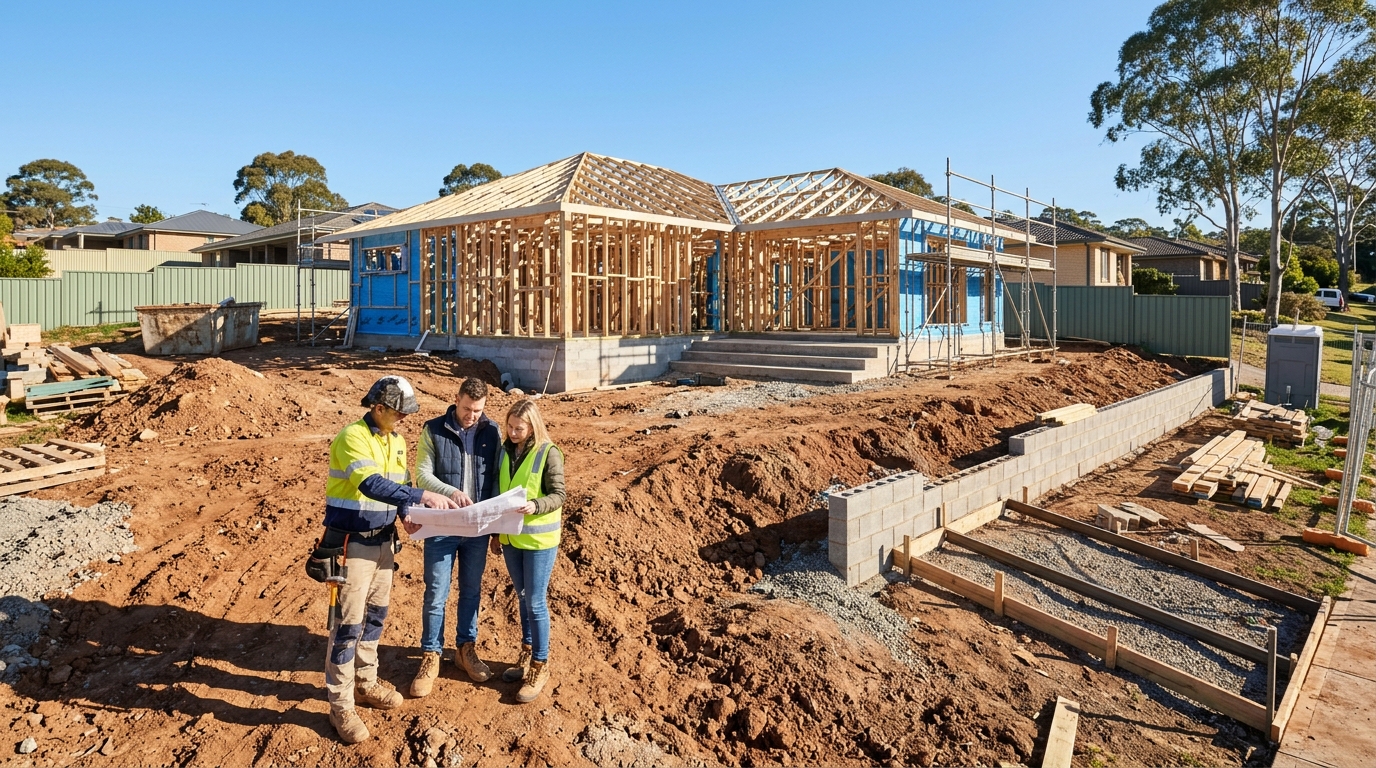
Home Choice Australia is a home development company in New South Wales, helping families plan and deliver new homes through our Home Development, Modular Homes and Construction Finance services. Many first-time builders focus on the builder’s price and are surprised when the real total is higher. Knowing the hidden building costs early lets you plan with confidence. This guide covers the extra expenses to budget for when building a house in NSW, grouped by when they usually arise.
1. Why the Builder’s Quote Is Not the Total Cost
A builder’s quote covers the construction of the house itself. Your full project budget also needs to include your land, your site, your approvals, your finance and your finishing touches. Think of the quote as the largest part of your budget, not the whole thing. Total house construction costs depend on your block, your design and your choices, so there is no single percentage that suits every build. The sections below show where the extra money tends to go.
2. Site Preparation and Earthworks
Before building starts, your block must be made ready. Clearing vegetation, removing trees, levelling the ground and creating safe access all cost money. Flat, cleared blocks need less work, while sloping, overgrown or tight sites need more. Ask your builder whether site preparation costs are included in the contract. If they are not, get a written estimate before you sign. Earthworks are one of the most common reasons budgets stretch, so treat this stage seriously.
3. Soil Tests, Land Surveys and Engineering Reports
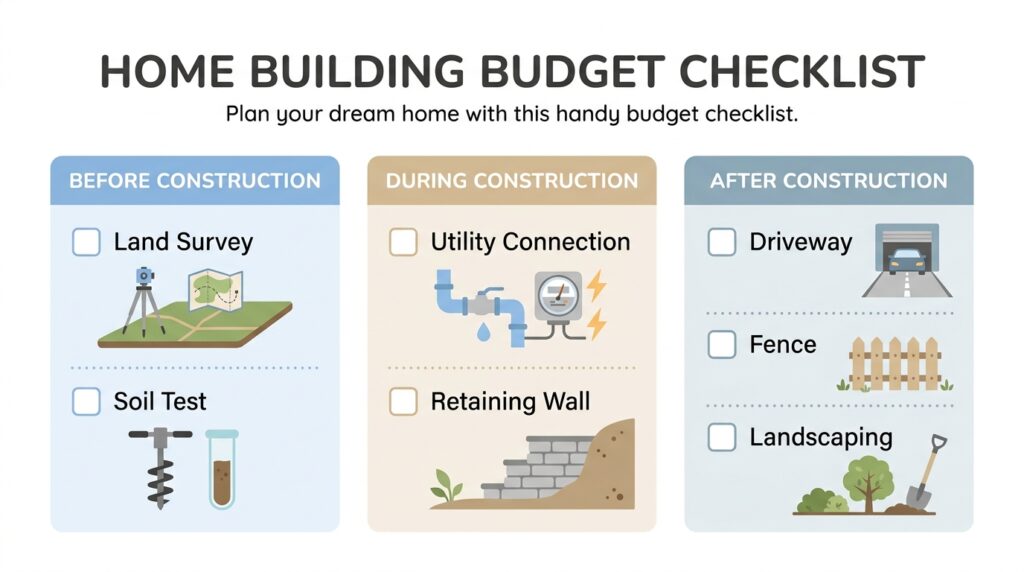
Your builder and engineer need accurate information about your land. Soil testing identifies how the ground behaves, which determines the type of foundation your home needs. A reactive clay site, for example, needs a stronger slab than a stable sandy one. A boundary and feature survey confirms exactly where your block begins and ends. Land survey costs and engineering reports are usually paid before construction begins, so include them in your early budget. They protect you from expensive surprises later.
4. Council Fees, Approvals and Development Contributions
Every new home in NSW needs formal approval before construction. Depending on your project, you may pay council approval fees, certifier fees and contributions toward local infrastructure such as roads and parks. Your project may also need a development application, and development application fees vary by council and by project value. The NSW Planning Portal publishes useful guidance on these costs. Check your local council’s fee schedule early, as amounts differ across regions like Sydney, the Central Coast and the Hunter.
5. Utility Connections: Water, Electricity, Sewer and NBN
A finished house is not a livable home until it is connected to services. Utility connection fees can apply for electricity, water, sewer and internet, and the amounts depend on how far your block is from existing infrastructure. Stormwater drainage is another site item to confirm, because water must be directed away from your home and onto an approved discharge point. Rural and acreage blocks may need tanks or on-site wastewater systems, which add further cost. Ask your builder exactly which connections are included.
6. Excavation, Rock Removal and Retaining Walls
Some of the biggest surprises sit below the surface. If rock is found during digging, rock excavation can be expensive because it needs specialist machinery and more time. Sloping blocks often need retaining walls to create flat building areas and keep soil stable. Neither cost can be predicted perfectly until the ground is opened up, which is why site investigation matters. Ask your builder how they handle unexpected rock and whether a rate per cubic metre is stated in the contract.
7. Driveways, Paths and External Concrete Work
Many standard quotes include only basic access to your front door. A full driveway and pathways, along with outdoor paving or a patio, may be excluded. Concrete prices vary depending on the size of the area, the finish you choose and the slope of the block. A long driveway on an acreage property can cost significantly more than a short one in a suburban estate. Request a written price for the exact driveway length and finish you want.
8. Landscaping, Turf and Fencing
Landscaping and fencing are often the last items completed, and also the easiest to underestimate. Turf, garden beds, irrigation, boundary fencing, pool fencing and retaining planters all add up. Some estates have rules about front yard landscaping within a set time after handover, so check your contract of sale. Even if you plan to do the work in stages, put a realistic amount aside now so your new home is not left with bare dirt for months.
9. Flooring, Blinds, Appliances and Other Excluded Inclusions
Not every home is handed over fully finished. Floor coverings in some rooms, window furnishings, fly screens, clotheslines, letterboxes, air conditioning and certain appliances may sit outside your contract. Builders describe their packages differently, so never assume something is included because it appeared in a display home. Display homes usually feature upgrades. Ask for a detailed inclusions list and compare it to what you saw. Then price any missing items before you commit.
10. Prime Cost Items and Provisional Sums
Your contract may list allowances for items that have not yet been chosen or fully measured. Prime cost items cover things like tapware, tiles and light fittings, where the contract holds a set allowance. If you select something more expensive than the allowance, you pay the difference. Provisional sums work similarly for work that cannot be priced exactly in advance, such as site works. When comparing two builders, look closely at these allowances. A lower quote with low allowances may end up costing more than a higher quote with realistic ones.
11. Contract Variations and Unexpected Construction Expenses
Changes after signing are called contract variations, and they can come from you or from site conditions. You might move a power point, upgrade a bench top or add a window. Unexpected soil, weather delays or council conditions can also force changes. Variations should always be priced and agreed in writing before work proceeds. Understanding what building contract exclusions apply to your agreement helps you avoid disputes later. Keep every variation document in one folder for easy reference.
12. Insurance, Loan Fees and Interest During Construction
Money costs appear throughout the build. Construction insurance protects the works while the home is being built, and your lender may require it. Home warranty insurance is also mandatory for many residential builds in NSW. On the finance side, expect loan establishment fees, valuation fees and progress payment charges. Interest is typically paid on the amount drawn so far, so repayments rise as construction progresses. A conversation with a finance specialist early on gives you a clearer picture of these ongoing costs.
13. Temporary Accommodation and Moving Costs
If you are selling or leaving a rental while your home is built, you may need somewhere to live. Temporary accommodation costs can include rent, storage and double-handling of furniture, especially if the build runs longer than planned. Weather and supply delays happen, so allow extra weeks in your budget. Moving costs, connection of utilities at your old address and cleaning fees also add up. Planning this stage helps you avoid a stressful end to your build.
14. How Much Contingency Should You Set Aside?
A reserve is your safety net. Setting up a construction contingency fund means you can handle surprises without borrowing more or delaying work. The right amount depends on your block, your design and how much of the cost is already fixed in your contract. A flat, fully investigated site carries less risk than a steep or unusual one. Ask your builder and finance adviser what they recommend for your situation, and treat that money as untouchable unless it is truly needed.
What Extra Costs Should You Budget for When Building a Modular Home?
Modular homes are built off-site and delivered to your block, which changes the cost mix. Some packages include certain items while others exclude them, so confirm every inclusion in writing. Common extras to budget for include:
- Transport and delivery to your building site, including access for large vehicles
- Crane hire and installation on the day
- Foundations and footings prepared before the home arrives
- Site access and preparation so trucks and cranes can operate safely
- Connecting water, electricity, sewer and telecommunications
- Council approvals and any site-specific requirements
- Driveways, landscaping and fencing
Because modules arrive on a set date, your site must be fully ready. Delays can lead to extra crane or transport charges. Our team at Home Choice Australia can walk you through what applies to your block and package.
Frequently Asked Questions
1. What costs should I budget for besides building a house?
Budget for site preparation, surveys, council and approval fees, utility connections, driveways, landscaping, fencing, window furnishings, insurance, loan costs and a reserve for unexpected expenses.
2. Are hidden costs common in NSW?
Yes. Sloping blocks, poor soil, rock and council requirements can all raise costs beyond the advertised price. A detailed contract and early site investigation help reduce surprises.
3. How much extra should I budget when building a new home?
There is no single figure that suits everyone. It depends on your site, your inclusions, your finishes and your finance. Ask for written quotes for each extra item and add a sensible reserve.
4. Are driveways and fencing included in a builder’s quote?
Often they are not, or only a basic version is included. Check your contract carefully and request a written price for the exact work you want.
5. What is not included in a house and land package?
Packages differ, but items such as extra site works, landscaping, window coverings, floor coverings and some connections are commonly excluded. Always ask for the full inclusions list.
6. How can I compare two builders’ quotes fairly?
Compare inclusions, exclusions and allowances line by line, rather than only the total price. A lower quote may leave out items that the higher quote already covers.
Plan Your Build with Confidence
The builder’s quote is just one part of your budget. When you plan for site works, approvals, connections, finishing items and a reserve, you protect yourself from stress and delays. Home Choice Australia supports NSW families from the first plan to the final handover. Contact our team today to talk through your block, your budget and your next steps.