

Home Choice Australia is a home development company in New South Wales, helping buyers plan, price and build new homes across Sydney, the Central Coast and regional NSW. Explore our services here: [insert your service link]. Before you sign a building contract, one question matters more than most: how much can you borrow, and will a lender back your plans? That is where construction loan pre-approval comes in. This guide explains how it works in Australia, what lenders look for, and how to get ready.
What Is Construction Loan Pre-Approval?
Construction loan pre-approval is a lender’s early indication of how much it may be willing to lend you to build a new home. It is not a final decision and it is not a guarantee. It simply tells you whether your finances look strong enough to move forward.
A construction loan works differently from a standard home loan. Instead of receiving the full amount on day one, you receive money in stages as your builder completes each part of the build. Because of this, lenders look at both you and the project. Pre-approval gives you a realistic budget before you fall in love with a block of land or a floor plan that sits outside your reach.
For most NSW buyers, pre-approval is the first practical step. It saves time, reduces stress and helps you speak to builders with confidence.
How Does Construction Loan Pre-Approval Work in Australia?
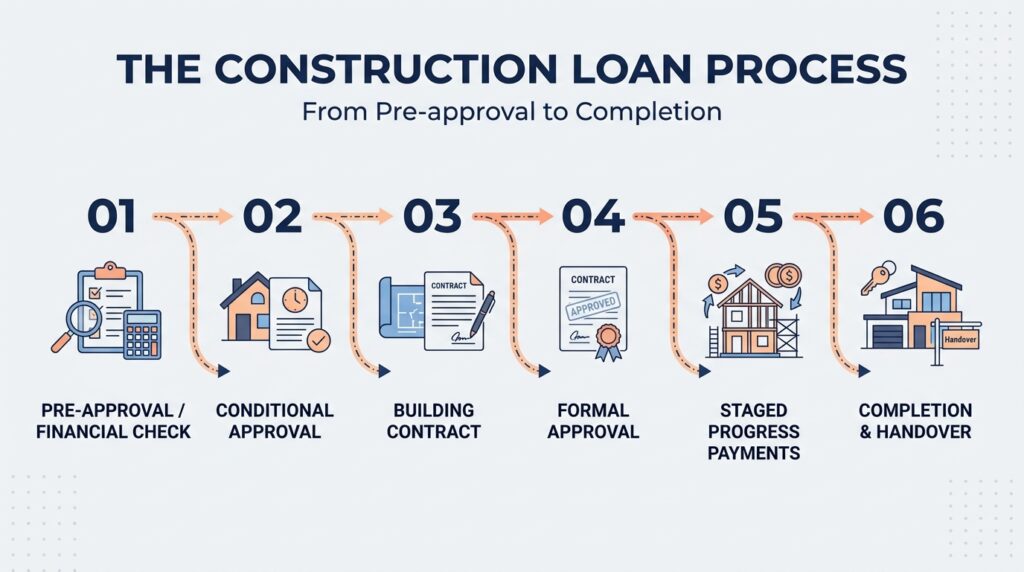
The process is fairly simple. You contact a lender or broker, share details about your income, spending, savings and debts, and the lender runs an initial check. If your numbers look sound, it issues a conditional approval, which is a written indication that it is willing to lend up to a certain amount, subject to conditions.
Those conditions usually relate to things you cannot provide yet. You may not have chosen a builder, finalised your plans or even bought land. The lender accepts that, and gives you a window of time to complete those steps.
Once you have everything in place, you submit a full loan application with the missing documents. Only then does the lender decide whether to move to final approval.
What Is the Difference Between Pre-Approval and Formal Approval?
Many buyers confuse these two stages, and the difference matters.
Pre-approval is an early estimate. It is based mostly on your financial position, and the lender has not yet seen your building contract, your plans or the property.
Formal loan approval comes later. At this stage, the lender has reviewed your signed contract, your approved plans and a valuation of the project. It confirms the exact amount it will lend and the terms attached.
Think of pre-approval as a green light to start shopping, and formal approval as the green light to start building. Treat the first as helpful guidance rather than a promise.
Can You Get Pre-Approval Before Choosing a Builder?
Yes. Many lenders allow you to apply for pre-approval while you are still comparing builders and house designs. This is one of the most useful things you can do early in the process.
Knowing your budget helps you avoid wasting time on homes that cost too much. It also shows builders you are a serious buyer, which can make quotes and conversations more productive.
Keep in mind that the lender will eventually need your chosen builder’s details and a signed contract. Some lenders also like to review the builder’s licence and insurance before they release funds. So while you can start without a builder, you will need one before formal approval.
Can You Get a Construction Loan Before Buying Land?
In many cases, yes, though the details depend on the lender. Some lenders offer pre-approval for a combined land and construction purchase. Others will issue pre-approval for the build alone, then ask you to confirm the land later.
If you are searching for land in NSW, getting pre-approved first lets you bid or make offers with a clear ceiling. It also prevents the common mistake of buying a block, then discovering you cannot afford the home you planned.
If you already own your land, the lender will usually count it as part of your security. That can improve your position and reduce the cash you need to contribute.
What Documents Do You Need for Construction Loan Pre-Approval?
Lenders want to understand your financial picture clearly. Having your paperwork ready speeds everything up. The financial documents most lenders ask for include:
Recent payslips and your latest tax returns
Bank statements covering your savings and everyday spending
Statements for credit cards, personal loans and other debts
Proof of your deposit or the equity in land you already own
Identification such as a driver licence or passport
If you are self-employed, expect to provide additional evidence, such as business tax returns and financial statements. Lenders need more proof when income varies from year to year.
You will not need your building contract at this early stage. That comes later, when you move toward formal approval.
How Do Lenders Assess Your Borrowing Capacity?
Your borrowing capacity is the maximum amount a lender believes you can safely repay. It is not just a matter of how much you earn. Lenders review your income, your regular expenses, your existing debts and your number of dependants.
They also run a credit assessment, which looks at your credit history, repayment record and any recent applications for finance. Missed payments, high credit card limits and frequent loan enquiries can all reduce the amount you can borrow.
Income verification is a key part of this review. The lender checks that the income you declared matches your payslips, tax returns and bank records. Your employment history also matters. A stable, continuous work record usually gives a lender more confidence than frequent job changes or recent gaps.
To strengthen your position, pay down small debts, reduce unused credit card limits and avoid new finance applications before you apply.
How Much Deposit Do You Need for a Construction Loan?
Deposit requirements vary by lender, but many ask for around 5 to 20 percent of the total project cost. A larger deposit usually means better terms and fewer extra costs.
Lenders look closely at the loan-to-value ratio (LVR), which compares the amount you borrow with the value of the property once it is built. If your LVR is higher than 80 percent, you may need to pay lenders mortgage insurance, which adds to your costs.
Your deposit can include savings, equity in land you already own, or in some cases gifted funds from family. Always ask your lender what they accept, as rules differ.
Remember to budget for extras that sit outside the loan, such as stamp duty, legal fees, and council or certifier fees. Many first-time builders overlook these.
Does Construction Loan Pre-Approval Include the Land?
It depends on your situation. If you are buying land and building at the same time, some lenders include both in one loan. Others split the land purchase and the construction into separate stages.
If you already own your block, pre-approval typically focuses on the build, with the land counted as part of your security.
Because each lender handles this differently, ask early. Knowing whether your approval covers land, construction or both helps you plan your cash flow and avoid surprises at settlement.
How Does a Lender Value a New Home Construction Project?
A lender cannot value a house that does not exist yet. Instead, it arranges a construction valuation, which estimates what the finished home will be worth based on your plans, the site and local market conditions.
To do this, the valuer reviews your building plans and specifications, which set out the design, materials, finishes and fixtures. The more detailed these documents are, the more accurate the valuation will be.
The lender will also expect a fixed-price building contract, which sets the total cost of the build in writing. This protects you from open-ended pricing and gives the lender a clear figure to work with.
If the valuation comes in lower than expected, the lender may reduce the amount it will lend, which means you may need to contribute more cash. This is another reason to keep a buffer in your budget.
Council approval is also part of the process. Lenders generally want to see council-approved plans before they release any funds, because they confirm the build can legally go ahead. In NSW, your approval may come through the council or a private certifier.
How Long Does Construction Loan Pre-Approval Last?
Most pre-approvals in Australia last between 90 and 180 days, though this varies by lender. After that, the approval expires and you must reapply.
This means timing matters. If you apply too early and take months to choose a builder, your approval may lapse. If your income or debts change in that time, the lender may also reassess your position.
A good approach is to get pre-approved when you are ready to start meeting builders in earnest. Keep track of the expiry date, and talk to your lender if you need an extension.
What Happens If Your Building Costs Increase?
Building costs can rise because of material prices, design changes or unexpected site conditions such as rock or poor soil. If your costs increase, your pre-approval does not automatically stretch to cover them.
A fixed-price contract helps by protecting you from many cost increases, but variations you request during the build are usually charged on top. Your lender may not cover these extras, so you may need to pay them from your own savings.
To protect yourself, build a contingency into your budget. Many buyers set aside around 5 to 10 percent for unexpected costs. If your costs do rise significantly, speak to your lender early. In some cases, they can review your loan amount, but this is never guaranteed.
What Happens After Construction Loan Pre-Approval?
Once you have pre-approval, you move through a series of steps.
First, you finalise your land, builder and building plans. Next, you obtain council approval or a complying development certificate. Then you sign your building contract and submit it to the lender with the rest of your paperwork.
The lender completes its checks and orders the valuation. If everything passes, it issues formal approval and prepares your loan documents.
When construction begins, the lender releases money according to a progress payment schedule. Each payment matches a stage of the build, such as slab, frame, lock-up and completion. This method is called a construction loan drawdown, and it means you only pay interest on the amount released so far, rather than the full loan.
Before each drawdown, the lender may arrange an inspection to confirm that the work is complete. This protects both you and the lender.
Common Reasons Construction Loan Applications Are Delayed
Many delays come from small, avoidable issues. The most common include:
Missing or outdated documents, such as old payslips or incomplete bank statements
Changes to your income, job or debts after pre-approval
Building plans that are unfinished or lack detail
Council approval taking longer than expected
A construction valuation that comes in lower than the contract price
Builder paperwork, such as licences or insurance certificates, not being supplied on time
You can avoid most of these by keeping your documents current, staying in regular contact with your lender and choosing a builder who is organised and responsive. A well-prepared application moves faster and creates fewer surprises.
Final Thoughts
Construction loan pre-approval gives you clarity before you commit to a build. It shows you what you can afford, helps you plan your deposit and gives you confidence when speaking with builders and sellers. It is not a guarantee, and it will not cover every cost, but it is one of the smartest first steps you can take.
If you are planning to build in NSW, the Central Coast or the Sydney region, preparation makes the whole journey smoother. Speak with a lender or broker early, gather your documents, and build a buffer into your budget.
At Home Choice Australia, we help NSW buyers move from early planning to a finished home with clear guidance at every stage. Get in touch with our team to talk through your plans.
FAQs About Construction Loan Pre-Approval in NSW
Can I get construction loan pre-approval without a builder?
Yes. Many lenders offer pre-approval before you choose a builder, so you can understand your budget first. You will need to provide builder details and a signed contract before the lender gives final approval.
Does pre-approval guarantee I will get the loan?
No. Pre-approval is a conditional indication, not a promise. The lender can still decline or change the amount if your finances change, the valuation is low or your documents do not meet its requirements.
How long does pre-approval last in Australia?
Most last between 90 and 180 days, depending on the lender. If it expires, you will usually need to reapply and the lender will reassess your finances.
Can I get a construction loan before buying land in NSW?
Often yes, though policies vary. Some lenders approve a combined land and build loan, while others approve the build first and ask you to confirm the land later. Check with your lender or broker.
What happens if my building contract costs more than expected?
Your pre-approval does not automatically increase. You may need to cover the extra cost from savings or ask the lender to review your loan. A contingency buffer of around 5 to 10 percent is a sensible precaution.
Does pre-approval affect my credit score?
A lender will usually check your credit history, which can leave a record on your credit file. Applying with several lenders in a short time may have a bigger effect, so it is wise to compare carefully and apply selectively.
Note: lender rules, deposit amounts and approval periods vary, so the figures above are general guides. Speak with a licensed lender or broker for advice on your own situation.