
Home Choice Australia is a home development company in New South Wales, helping buyers plan, finance and build new homes with confidence. If you are exploring our Construction Finance and Home Development services, understanding your loan options is the best first step.
Many buyers ask which loan they need first, and the answer shapes the whole project. A land loan funds the block, while a construction loan funds the house that goes on it. Some buyers need both, some need only one, and the order matters. This guide explains how each works, where they overlap and what to check before you commit. Lender rules vary, so treat the figures and examples here as general guidance, not a promise of approval.
What Is a Land Loan?
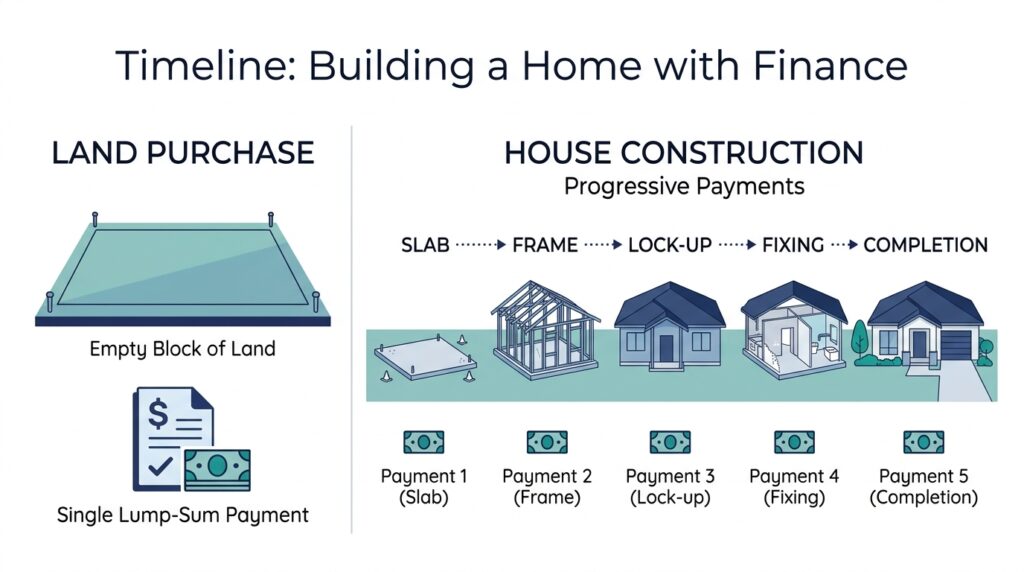
This loan is designed for buying a block of land. It is usually a standard mortgage secured against the property you are buying. Funds are typically paid in one lump sum at settlement. Lenders often set a time limit for starting the build, so check this before you sign. If you plan to build later, a vacant land loan can let you secure the block now while you finalise your plans, builder and budget.
What Is a Construction Loan?
This loan pays for the building work itself. Instead of one lump sum, the lender releases money in stages as your builder completes each part of the home. It suits buyers who already own land, or who are buying land and are ready to start building. It is one form of home construction finance, and it is designed around the building process rather than a single purchase.
Land Loan vs Construction Loan: Key Differences
| Feature | Land finance | Build finance |
| Main purpose | Buy vacant land | Pay for the home build |
| When used | At the point of purchase | When ready to build |
| How funds are released | Usually a lump sum at settlement | Usually in stages |
| Interest charges | Based on the amount outstanding | Commonly charged on the amount drawn |
| Building contract | May not be required at first | Commonly required |
| Can it be combined? | Some lenders offer combined arrangements | May be combined, subject to approval |
| Best suited for | Buyers buying now, building later | Buyers ready to build |
Loan terms and eligibility vary between lenders, so never assume a deposit figure, rate or deadline applies to everyone.
How Do Land Loans Work in Australia?
In Australia, the process begins when you sign a contract for the block and apply for finance. The lender assesses your income, expenses and savings. After approval, the funds are paid at settlement and your repayments begin. A land purchase is often viewed as higher risk than buying an established home because there is no building to secure the loan. As a result, lenders can ask for a larger deposit or apply stricter conditions. Always confirm these details early so there are no surprises close to settlement.
How Do Construction Loans Work?
Once you have chosen a builder and finalised your plans, you apply for finance to fund the build. The lender reviews your documents, your builder and the total project cost. If approved, funds are paid directly toward each stage of the build. During construction, you usually repay only what has been drawn so far, which keeps early repayments lower. After the home is finished, the loan typically moves to a standard home loan with regular repayments.
What Is the Difference Between Land Loan and Construction Loan Deposits?
Deposit rules depend on the lender, the land and your circumstances. For the block, your deposit is usually measured against the purchase price. For the build, your construction loan deposit is usually assessed against the land value and the total cost of building. If you already own the block, the lender may count part of its value toward what you need to contribute.
Lenders also use the loan-to-value ratio (LVR) to measure risk. It compares the amount you want to borrow with the value of the property. A lower ratio generally means less risk for the lender, and a higher one can lead to extra costs or tighter conditions.
How Do Interest Rates and Repayments Differ?
Rates differ between lenders, loan structures and borrower profiles, so compare several options. For the block, you will usually start repaying the full loan after settlement. During the build, many lenders allow interest-only repayments, so you pay only on the amount drawn at each stage. Once construction is complete, most borrowers move to principal and interest repayments, which reduce the loan balance over time. Check whether your lender allows this switch automatically or needs a new application.
How Do Staged Payments Work During the Build?
Construction lending follows the building schedule. A typical build has stages such as slab, frame, lock-up, fixing and completion. When your builder finishes a stage, they submit a claim. The lender may inspect the work before releasing the money. This method of progress payments protects both you and the lender, because funds only leave the loan as work is finished. The progressive drawdown structure also means you are not paying interest on money you have not yet used.
For a smooth process, keep these points in mind:
- Keep your builder’s claims and invoices organised.
- Respond quickly to any lender requests for information.
- Check how long inspections and payments usually take.
Can You Combine a Land Loan and Construction Loan?
Yes, in some cases. Some lenders offer a combined arrangement that covers both the purchase of the block and the build under one approval. This can simplify the process, because one assessment covers both stages. Combined finance may also be suited to a house and land package, where the land and the home are sold together. However, combined products are not available everywhere, and conditions differ. Compare a combined option with two separate loans before choosing.
Do You Need a Construction Loan After Buying Land?
Not always, but most buyers who plan to build do need some form of building finance. If you pay for the build entirely from savings, you may not. If you need to borrow, a standard home loan will not usually work, because lenders prefer to release money in stages. Approval for the first loan also does not guarantee approval for the second. Your financial position, the builder, the plans and the total project cost are all assessed again.
This matters if your circumstances change after settlement. If the second application is declined, you could own land with no way to fund the build. To reduce this risk, discuss the full plan with a broker or lender before buying, and ask for an indication of the finance you will need later.
Can You Use Existing Land Equity to Finance a New Home?
If you already own land, you may not need to buy again. Your land equity, which is the difference between what the block is worth and what you owe on it, can contribute toward the build. A lender may count it in place of some of the cash you would otherwise need. This can be useful for owners planning a knockdown rebuild or building on family land. A lender will want to confirm the value, so expect an assessment.
Your borrowing capacity also affects what you can do. Lenders look at income, debts, living expenses and dependants to decide how much you can safely borrow. Reducing credit card limits and other debts before applying can help.
Learn more about using what you already own in our guide to Using Land Equity to Build a New Home.
What Documents Do You Need to Apply?
Preparing documents early helps avoid delays. Lenders commonly ask for:
- Proof of identity and income, such as payslips and tax returns
- Bank statements and details of debts or other commitments
- The contract of sale or title details for the land
- Council-approved plans or specifications
- A fixed-price building contract signed with a licensed builder
- A copy of the builder’s licence and insurance
The fixed-price building contract gives the lender a clear cost for the build, which is why it is usually required. Our guide to What Is Included in a New Home Building Contract? explains what to look for.
A lender will also order a land valuation to confirm what the block is worth, and may do the same for the finished home. The result affects how much they are willing to lend.
What Additional Costs Should You Budget For?
The building contract rarely covers everything. Plan for these items:
- Stamp duty and legal fees
- Council and approval fees
- Site preparation, including levelling, drainage and soil testing
- Utility connections for water, power and sewerage
- Landscaping, driveways and fencing
- Lenders mortgage insurance (LMI), which can apply when your deposit is smaller than the lender prefers
- Interest during the build
Add a buffer for unexpected changes. Site works especially can raise your total, so read What Site Preparation Is Needed Before Building a New Home? when planning. Accurate construction costs help you borrow the right amount and avoid running short mid-build.
Which Loan Is Better If You Want to Buy Land Now and Build Later?
If you want to buy now and build later, start with finance for the block. It lets you secure the location before you are ready to build. Just be sure you understand any time limits for starting construction, and confirm what you will need when you apply for the build.
If you are ready to start soon, a combined arrangement may suit you better. If you already own land, you may only need building finance, with your existing equity helping. If you are considering modular construction, ask the lender how payments work, because factory builds can follow different payment schedules. Our Modular Homes page explains the options.
The right choice depends on your timeline, savings and plans. As a New South Wales home development company, Home Choice Australia can help you understand how finance fits into your build. For official information, you can also read the guides from NAB and ANZ on land and construction lending.
Frequently Asked Questions
1. Should I apply for a land loan or construction loan first?
If you are buying a block, you will usually finance that first. If you already own the land, you can go straight to building finance. If you want both together, ask about combined lending.
2. Can I get a construction loan without owning land?
Usually not. Lenders generally need the land to be owned or purchased as part of the same arrangement, because it is the security for the loan.
3. Does approval for one loan guarantee approval for the other?
No. The lender reassesses your finances, your builder, your plans and your costs. Check your plan early to reduce the risk of a decline.
4. Can I use land equity for a construction loan in NSW?
Often yes. Equity in land you already own may count toward your contribution. The lender will confirm the value and your ability to repay.
5. Are the repayments the same for both loans?
No. Repayments for the block usually begin in full after settlement. During construction, you often pay on the amount drawn, then switch to regular repayments once the home is complete.
6. What happens if the build costs more than planned?
You may need to cover the difference from savings, or ask the lender about a variation. This is why a budget buffer and a fixed-price contract are important.
Loan terms, rates and eligibility depend on the lender and your circumstances. This article is general information, not financial advice, so speak with a licensed broker or lender before making decisions.