
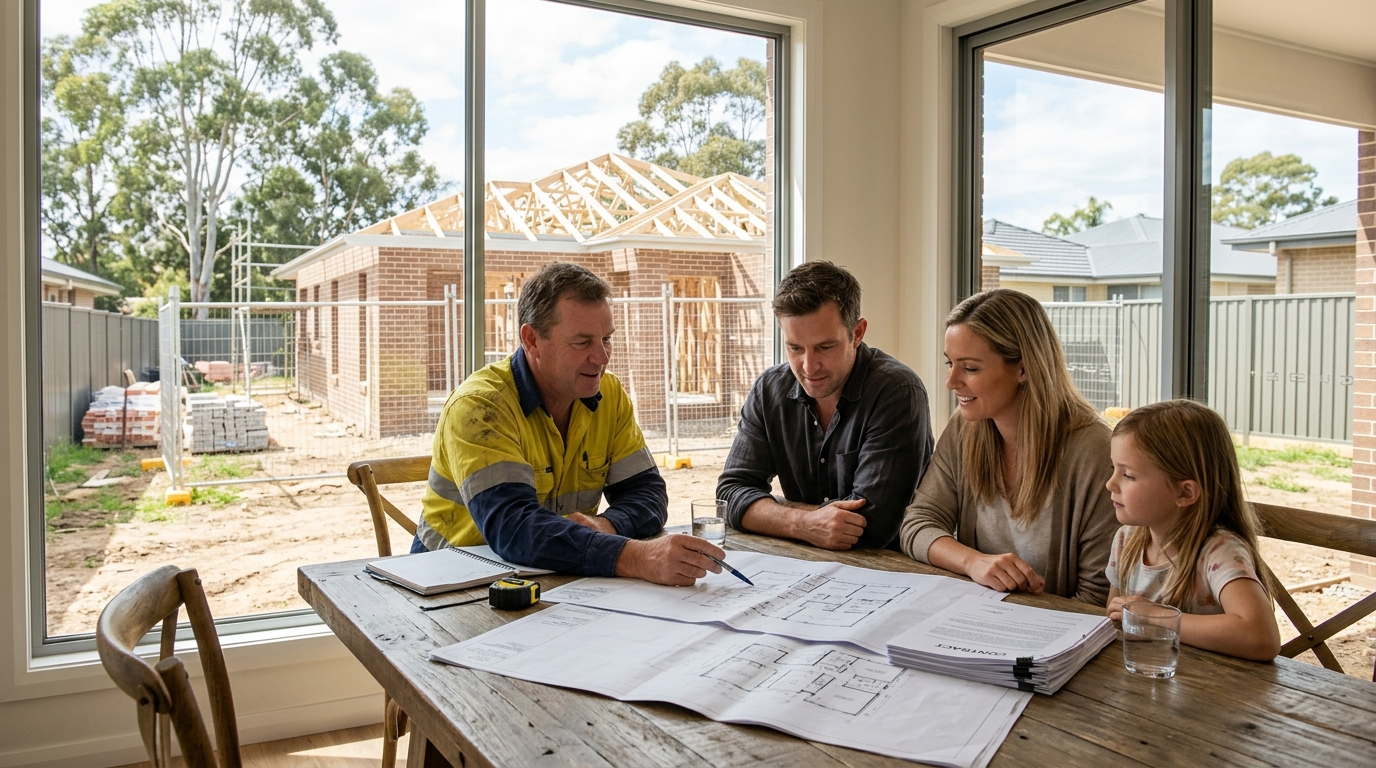
Homechoiceaustralia is a home development company in New South Wales, helping families plan, design and build homes with clear pricing and no surprises. You can explore our Home Development Services. Before any build begins, you need to understand your contract. This guide explains what is included in a new home building contract, what is left out, and what to check before you sign.
What Is Included in a New Home Building Contract?
A new home building contract is a legal agreement between you and the builder. It sets out what will be built, the price, how and when you pay, and what happens if something goes wrong. In NSW, new home building contract inclusions typically cover the building plans, the specifications, the price, the payment terms, the construction timeline, and the insurance and warranty details required by law.
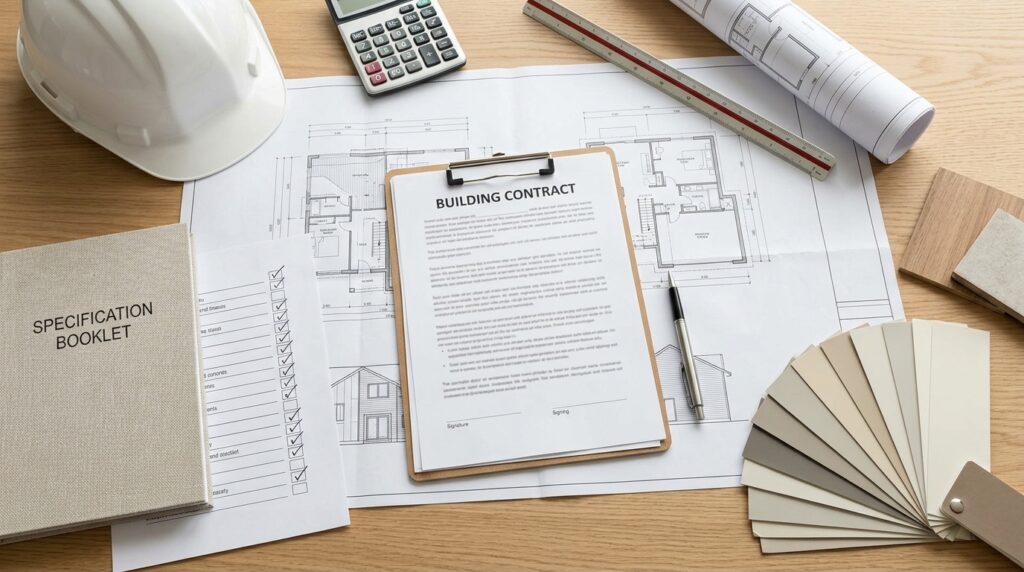
A good home building contract leaves nothing vague. If something matters to you, such as a feature, finish or fixture, it should be written down.
What Documents Should Be Attached to the Contract?
Your contract should come with a full set of supporting documents. In NSW, you should expect:
- The signed building plans and specifications
- A copy of the builder licence number
- The Home Building Compensation Scheme certificate (for work over the legal threshold)
- Any council or certifier documents already obtained
- Fair Trading’s information for owner-builders and consumers, where required
If a document is missing, ask for it before you sign. Never rely on a verbal promise.
Does the Contract Include Building Plans and Specifications?
Yes, it should. The building plans show the layout, dimensions and design of your home. The building specifications describe how it will be built, including materials, brands, colours, finishes and fittings.
Plans show you what the home looks like. Specifications tell you what it is made of. If a specification says “standard tiles” without naming a product or price, that can lead to disputes later. Ask for clear descriptions so you know exactly what you are paying for.
What Is Included in the Contract Price?
The contract price is the total amount you agree to pay for the build. In a fixed-price building contract, the price is set at signing and should only change if you approve a variation or certain allowed adjustments apply.
The price usually covers labour, materials, builder’s margin, standard fixtures and the work listed in the specifications. It does not automatically cover everything you need to move in. Always ask the builder to confirm in writing what the contract price covers and what it does not.
What Is Usually Excluded From a New Home Building Contract?
Understanding what is excluded from a new home building contract is just as important as knowing what is included. Common exclusions are:
- Landscaping, fencing and driveways
- Window coverings, such as blinds and curtains
- Air conditioning or heating (sometimes)
- Light fittings beyond a basic allowance
- Connection fees for utilities
- Soil removal or extra rock excavation
- Items you supply yourself
A clear inclusions and exclusions list helps you compare builders fairly. A cheaper quote may simply include less.
Are Site Preparation and Foundation Costs Included?
This is where many buyers get caught out. Some builders include basic site preparation costs in the contract. Others leave them out until a soil test and site survey are done.
Site costs can include levelling, retaining walls, tree removal, drainage, bushfire requirements and slab upgrades for reactive soil. Foundation costs often depend on the soil report. If the builder gives you a price before a soil test, ask whether the foundation allowance is fixed or an estimate. Clarify this early to avoid hidden costs in your new home building contract.
Are Kitchen Appliances, Flooring and Fixtures Included?
It depends on the builder and the package. Some contracts include a standard oven, cooktop and rangehood, along with basic flooring and bathroom fittings. Others list only an allowance.
Check the specifications line by line for:
- Kitchen appliances and benchtops
- Flooring in each room
- Tapware, basins and toilets
- Door handles and internal doors
- Heating, cooling and hot water systems
If an item is not listed, assume it is not included until the builder confirms otherwise in writing.
What Are Prime Cost Items and Provisional Sums?
These two terms cause plenty of confusion, but they are simple once explained.
Prime cost items are products you have not yet chosen, such as tiles, taps or appliances. The builder sets an allowance for each. If you choose something more expensive, you pay the difference.
Provisional sums are allowances for work that cannot be priced exactly at signing, such as excavation or rock removal. The final cost may be higher or lower than the allowance.
Both can raise your final bill. Make sure the amounts are realistic and itemised. Unrealistically low allowances are a common way for a quote to look cheaper than it really is.
How Do Deposits and Progress Payments Work?
In NSW, there are limits on how much a builder can ask for upfront. The builder deposit is capped by law, and for contracts over $20,000 it cannot exceed 10 per cent of the contract price.
After the deposit, you pay in stages through a progress payment schedule. Each payment is tied to a completed stage of the build, such as slab, frame, lock-up and fixing. Payments should match the work actually completed, not just the calendar. Never pay ahead of progress, and keep every receipt.
Are Council Approvals and Building Permits Included?
Many builders include the lodgement of council approvals and the building certificate process in the contract, but fees may be listed separately. Some contracts only include the builder’s time to prepare documents, while the actual council fees, bonds and certifier costs sit outside the price.
Ask who is responsible for:
- Development application or complying development certificate
- Construction certificate
- Council and water authority fees
- Any delays caused by approval changes
Knowing this upfront helps you budget properly and avoid surprises.
How Are Contract Variations and Extra Costs Managed?
A variation is any change to the original plans, specifications or price. Contract variations can be requested by you, or required because of site conditions or council conditions.
In NSW, variations should be in writing, signed by both parties and clearly state the cost and any impact on the timeline. Do not agree to changes on site without paperwork. Verbal changes are one of the biggest causes of disputes between owners and builders.
What Insurance and Warranties Should the Contract Cover?
Your contract should confirm the builder’s licence details and the required insurance. For residential building work over the legal threshold, the builder must provide the Home Building Compensation Scheme certificate before taking a deposit or starting work.
The scheme protects you if the builder dies, disappears or becomes insolvent. Under the Home Building Act, statutory warranties also apply. In general, these cover defects in workmanship and materials, with longer protection for major defects than for minor ones. Check the current periods with NSW Fair Trading, as rules can change.
What Is the Expected Construction Timeline?
A good contract states the start date, the completion date and the number of days allowed for the build. The construction timeline should also explain which delays can extend the period, such as wet weather, variations or late council approvals.
Be wary of vague wording such as “approximately” or “subject to conditions”. A clear timeline lets you plan your rental, finance and move-in date with confidence.
What Happens if the Builder Delays or the Work Has Defects?
Delays happen, but your contract should state how they are handled. Some contracts include a daily amount payable if the builder passes the agreed completion date without a valid reason.
For defects and completion, the contract should set out a handover inspection process, a defect list and a timeframe for fixing problems. Always inspect the home carefully before final payment. If you find issues, record them in writing and keep photos. If a dispute cannot be resolved directly, NSW Fair Trading offers dispute resolution services.
New Home Building Contract Checklist: What to Check Before Signing
Use this new home builder contract inclusions and exclusions checklist before you sign:
- Is the builder licence valid and the details correct?
- Are the plans and specifications complete and signed?
- Is the contract price fixed, and what could change it?
- Are prime cost items and provisional sums realistic?
- Are site preparation and foundation costs clearly stated?
- Does the payment schedule match building stages?
- Is the Home Building Compensation Scheme certificate attached?
- Are council approvals and fees allocated to someone?
- Is the construction timeline clear and specific?
- Do you understand the cooling-off period and your right to cancel?
In NSW, a cooling-off period generally applies to residential building contracts over $20,000, so you have a short window to change your mind. Use that time to have the contract reviewed by a solicitor, and consider asking a building consultant to read the specifications.
Final Thoughts
Knowing what should be included in a house building contract in Australia protects your money and your peace of mind. The best contracts are clear, detailed and honest about costs. If a builder is reluctant to explain a clause, that is a warning sign.
At Homechoiceaustralia, we believe a transparent contract is the foundation of a successful build. Our team supports New South Wales homeowners from planning through to handover, so you always know what you are getting.
Frequently Asked Questions
1. What is included in a new home building contract?
It usually includes the building plans, specifications, contract price, payment schedule, timeline, insurance details and warranty information.
2. What is not included in a new home building contract?
Common exclusions are landscaping, fencing, driveways, window coverings, utility connection fees and extra site costs such as rock removal.
3. Are site costs included in a fixed-price contract?
Not always. Many builders price site costs separately or use provisional sums until a soil test and survey are done. Ask for this in writing.
4. How much deposit can a builder ask for in NSW?
For contracts over $20,000, the deposit is generally capped at 10 per cent of the contract price. Check current rules with NSW Fair Trading.
5. Can I change the plans after signing the contract?
Yes, but it must be done through a written, signed variation that states the cost and any change to the timeline.
6. What protection do I have if my builder becomes insolvent?
The Home Building Compensation Scheme may protect you if the builder cannot complete the work. Make sure you receive the certificate before paying a deposit.