Home Choice Australia is a home development company in New South Wales, helping families plan, finance and build new homes through our Home Development service. One question comes up again and again on the coast: is it cheaper to build or buy on the Central Coast? The honest answer is that it depends on the block, the design, the finance and the property you compare it with. A lower sticker price does not always mean a lower final bill. This guide looks at the full picture so you can decide with clear numbers. All figures here are general guidance only, and real costs need individual quotes.
Is It Cheaper to Build or Buy a House on the Central Coast?
Neither option is cheaper in every case. Buying gives you a known price and a quick move-in. Building gives you a new home with warranty cover, but the budget has more moving parts. The fair comparison is a new home against a similar established home in the same suburb, with every cost added up on both sides. Start with the Central Coast NSW property market, where prices vary widely between waterfront suburbs, established inland areas and newer growth corridors. A comparison that ignores location will mislead you.
How Much Does It Cost to Build a House on the Central Coast?
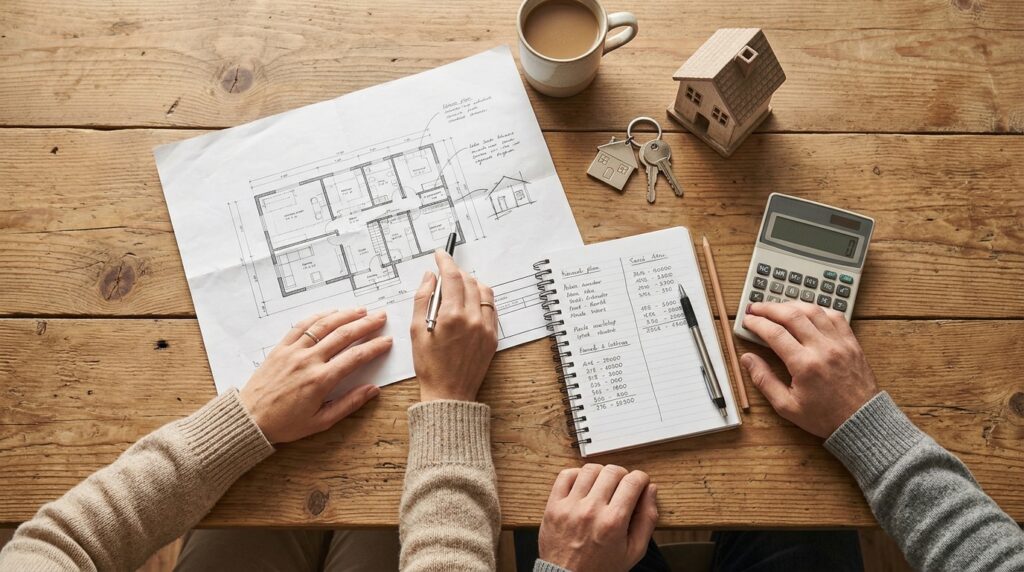
Construction costs make up the largest part of any build budget. They depend on the size of the home, the design, the finishes and the builder you choose. Advertised project-home prices often leave out items such as site works, driveways, landscaping and window coverings, so always ask for a fixed-price contract with a clear list of inclusions and exclusions. Design choice matters too. Architect-designed homes generally cost more than project homes, and every custom feature pushes the figure higher. If you do not already own a block, land purchase costs sit on top of the build price and must be counted from day one.
How Much Does It Cost to Buy an Existing House on the Central Coast?
Buying an established home gives you a fixed price and a finished product. You can inspect it, live in the street and see the neighbours before you commit. The price on the listing is not the full cost, though. Add conveyancing, building and pest inspections, loan fees and any repairs or updates the home needs. Older homes may need work on roofing, wiring, plumbing, kitchens or bathrooms. To compare fairly, estimate what it would cost to bring the established home up to the standard of a new build, then weigh that against the build quote.
Building vs Buying: A Side-by-Side Cost Comparison
Here is a simple way to line up the two options.
Building a new home usually involves:
- Land price and purchase costs
- The building contract
- Site works, approvals and utilities
- Construction finance and holding costs
- Landscaping, fencing and driveway
- A contingency allowance
Buying an established home usually involves:
- The purchase price
- Stamp duty and conveyancing
- Building and pest inspections
- Repairs, updates or renovations
- Higher maintenance in the early years
Fill in both lists with real quotes and prices for comparable properties. Mark which numbers are estimates and which are confirmed. A side-by-side table built this way tells you far more than any regional average.
What Are the Hidden Costs of Building a New Home?
Hidden costs are what catch most first-time builders out. Council approval fees, building permits and approvals, engineering reports, bushfire or flood-related requirements and Sydney Water or local authority charges can all appear after you sign. Variations to the plan add more. Because of this, set aside a building contingency budget before you start. Many lenders and builders suggest holding back a percentage of the build price for surprises, so ask your own builder and lender what they recommend. A contingency you never touch is a bonus. One you needed but did not have is a stressful problem.
How Much Does Land Cost on the Central Coast?
Land prices vary by suburb, lot size, orientation, slope and whether services are already connected. Blocks close to the water or train lines usually cost more than those further inland. Newer estates may offer flat, serviced lots, while older streets may offer larger blocks that need more preparation. Do not judge a block by its price alone. A cheaper lot with a steep fall or poor access can cost more to build on than a dearer flat one. Compare the finished cost of the land and the home together.
What Additional Site Preparation Costs Should You Expect?
Site preparation costs are among the biggest variables in the Central Coast. Excavation, levelling, drainage, tree removal, retaining walls and rock removal can all add up. Sloping block construction is common in the region, and it often calls for deeper footings, engineered retaining and split-level designs. Soil testing is a key early step, because it sets the site classification and tells your engineer what footing system the block needs. Utility connection costs for water, sewer, power, gas and internet also vary a lot between sites, especially for unserviced or rural lots. Ask for these items in writing before you sign a contract.
How Do Stamp Duty and First-Home Buyer Concessions Affect Your Budget?
Stamp duty NSW applies to both paths, but it can work differently. When you buy an established home, duty is calculated on the full purchase price. When you buy vacant land and then build, duty is generally calculated on the land value only, not the construction, which can reduce this upfront expense. First home buyer concessions in NSW may reduce or remove duty for eligible buyers, subject to value thresholds and other conditions, and extra support may be available for new homes. Rules and thresholds change, so check the current details with Revenue NSW before you finalise your budget.
How Much Does Construction Finance Add to the Total Cost?
Construction finance works differently from a standard home loan. Money is released in stages, so you pay construction loan interest only on the amount drawn so far, not the full loan. The lender releases progress payments as the builder completes set stages, such as slab, frame, lock-up and completion. This can keep early repayments lower, but the loan runs for longer and the final costs add up. If you are renting while you build, or still paying off another home, those costs belong in your budget as well. Talk to a broker or look into our Construction Finance support early, so you know what you can borrow before you commit to a block or a design.
Is a New Home Cheaper to Maintain Than an Older Property?
Often, yes, at least in the early years. New materials, fresh plumbing and wiring and builder warranties usually mean fewer repairs. Maintenance costs on an older property can be harder to predict, particularly if the roof, stumps or pipes are near the end of their life. Running costs matter as well. Energy-efficient home design, including good insulation, orientation, glazing and efficient appliances, can lower your power bills year after year. When you compare homes, check the energy rating and ask what upgrades the older property would need to match.
Is Building a Modular Home More Affordable?
Modular home construction moves much of the build into a factory, where modules are made in controlled conditions and then transported to the site. That can shorten the time spent on site and reduce weather delays, which may cut holding costs. It is not automatically cheaper, though. You still pay for site works, transport, crane hire, connections and approvals. The only reliable way to know is to compare a modular quote with a conventional quote for the same design and finish level. Our Modular Homes service can walk you through that comparison.
How Long Does It Take to Build Compared with Buying?
Buying an existing home can settle within weeks once your finance is approved. Building takes much longer, because you must allow for design, approvals, contract signing and construction. Weather, supplier delays and site surprises can stretch the schedule further. Every extra month means more rent, more loan interest or both, so time is a real cost. If you need to move quickly, buying may suit you better. If you can plan ahead and want a home made for your needs, the wait may be worth it.
Which Central Coast Suburbs Should You Consider?
The best suburb depends on your budget, lifestyle and the type of block you want. Areas around Gosford, Erina and Wyong all offer different mixes of land size, transport, schools and amenities. Check each address for slope, flood and bushfire overlays, access to services and the character of the street. Look at both new-build and established sales in the same suburb so your comparison reflects what is actually available. A local builder who knows the council requirements can save you time and money here.
When Does Buying an Established Home Make More Financial Sense?
Buying can be the smarter choice in a few situations. You may need to move quickly. You may have found a well-kept home in a suburb with few vacant blocks. The available land may need heavy site works, or your deposit and borrowing power may not stretch to a build. You may also prefer the certainty of a fixed price and a finished home. If any of these apply, run the numbers for buying first and be honest about how much risk you are comfortable carrying.
How to Decide Whether to Build or Buy on the Central Coast
Follow a simple process. Set a total budget, including a buffer. Price the build, including land, site works, approvals, finance and landscaping. Price a comparable established home, including duty, inspections and any repairs. Add the time cost of each option. Then compare the total cost of home ownership across several years, not just the day you get the keys. That includes repayments, maintenance, energy use and the value of your time. Whichever option comes out ahead on honest numbers is your answer.
Frequently Asked Questions
Is building always cheaper than buying on the Central Coast?
No. Building can cost more or less depending on the land, design, site conditions and finance. Compare a full build budget with a similar established home in the same suburb.
How much should I set aside as a contingency?
Ask your builder and lender what they recommend for your project. A buffer is especially important on sloping or unserviced blocks, where unknowns are more likely.
Do I pay stamp duty when I build?
You generally pay duty on the land purchase rather than the construction cost, but the details depend on your situation. Confirm current rules and any concessions with Revenue NSW.
Will I need to pay rent while my home is being built?
Often, yes, unless you have another place to live. Include rent, or your existing loan repayments, in the budget for the whole build period.
Is a modular home cheaper than a traditional build?
It can be, but not always. Compare quotes for the same design, finishes and site, and include transport, crane and connection costs.
How do I get an accurate comparison?
Gather a written quote for the build, a price for a comparable established home and a list of all extra costs on both sides. Mark estimates clearly and update them as quotes come in.
Final Thoughts
Building and buying can both be good decisions on the Central Coast. The cheaper path is the one that holds up once land, site works, approvals, finance, time and long-term running costs are all counted. At Home Choice Australia, we help New South Wales buyers price their options clearly before they commit. Get in touch to start comparing your own numbers.