
Home Choice Australia is a home development company in New South Wales, and our Home Development service supports families from early planning through to handover. If you are thinking about building a new home in Erina NSW, a clear plan can save you time, money and stress. Erina sits in the heart of the Central Coast NSW, close to beaches, shopping centres and transport links, which keeps it popular with buyers and families alike. This guide walks you through budgeting, land checks, approvals, contracts and construction so you can move forward with confidence.
1. Why Build a New Home in Erina NSW?
Many people choose new home construction because it lets them shape the layout, finishes and energy performance around their lifestyle. In Erina, you also gain a relaxed coastal setting with schools, parks and everyday services close by. A new build usually means fewer early repairs, modern insulation and the chance to design for how your household actually lives. You also control the timing and quality of the work. The trade-off is that you make many more decisions, so a clear plan from the start is essential.
2. What Should You Know About the Erina Property Market?
Market conditions change, so review current information before you commit to a block or a design. Look at recent land sales, the mix of older homes and new builds, and how long properties take to sell. This helps you decide whether to buy vacant land or an existing home for a knockdown rebuild. It also guides how much to invest in the finished home compared with nearby properties. A local agent or independent valuer can give advice specific to your property.
3. How Much Does It Cost to Build a New Home in Erina?
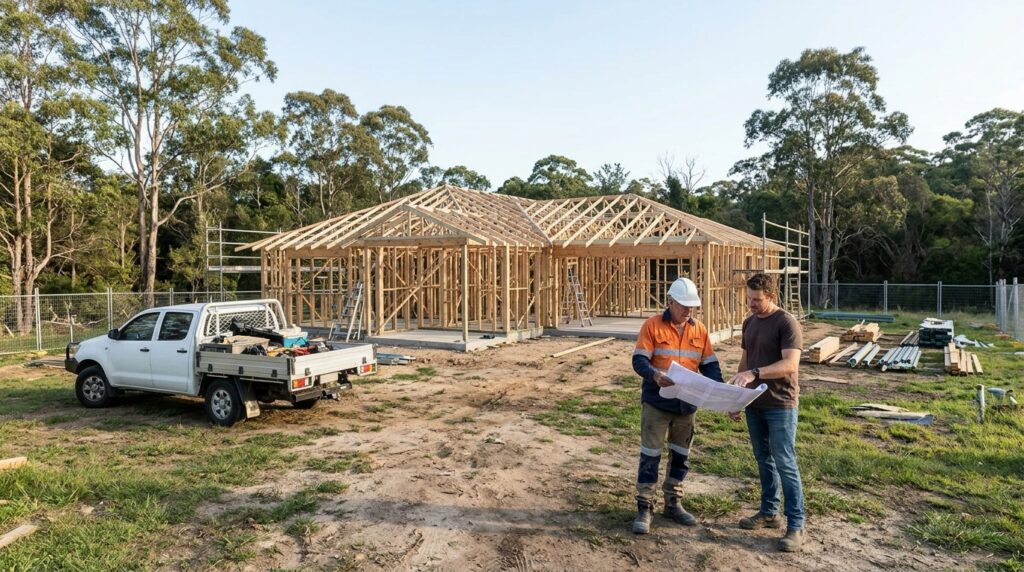
The cost of building a new house in Erina NSW depends on the size, design, finishes and condition of the block, so no single figure suits every project. Building costs generally include design, approvals, site works, foundations, services, construction and external works such as driveways, fencing and landscaping. Set a construction budget early and include a contingency for unexpected expenses. Always request itemised written quotes rather than comparing headline prices, and check what is excluded, since retaining walls and tree removal are sometimes left out of base packages.
4. How to Choose the Right Home Builder in Erina
Knowing how to choose a home builder in Erina NSW starts with checking the builder’s licence through NSW Fair Trading. Review completed projects, speak with previous clients and compare at least three written quotes line by line. A custom home builder can tailor the design to your block and lifestyle, while a volume builder may offer set designs at a lower starting price. Ask about warranties, timelines and how the team communicates during construction. The right builder explains things clearly, answers questions openly and never pressures you to sign.
5. What Should You Check Before Buying Land in Erina?
What to consider before building a new home in Erina NSW often begins with the land itself. Confirm the zoning, lot size, frontage, easements and any covenants that limit what you can build. Check whether the block is affected by flooding, bushfire or heritage controls, and find out if it has legal access. Ask where services are located in relation to the boundary. Have a solicitor or conveyancer review the contract of sale, and where possible make your purchase subject to the checks you need.
6. Why Soil Testing and Site Classification Matter
Soil testing shows how the ground behaves, including how much it may move as moisture levels change. The results lead to a site classification, which guides the foundation type and footing design your engineer specifies. A reactive clay block, for example, usually needs a stronger slab than stable rock or sand. Ordering the report before you finalise your plans reduces the risk of costly variations later. It is a modest upfront cost that protects the whole build.
7. What Site Preparation Is Needed Before Building?
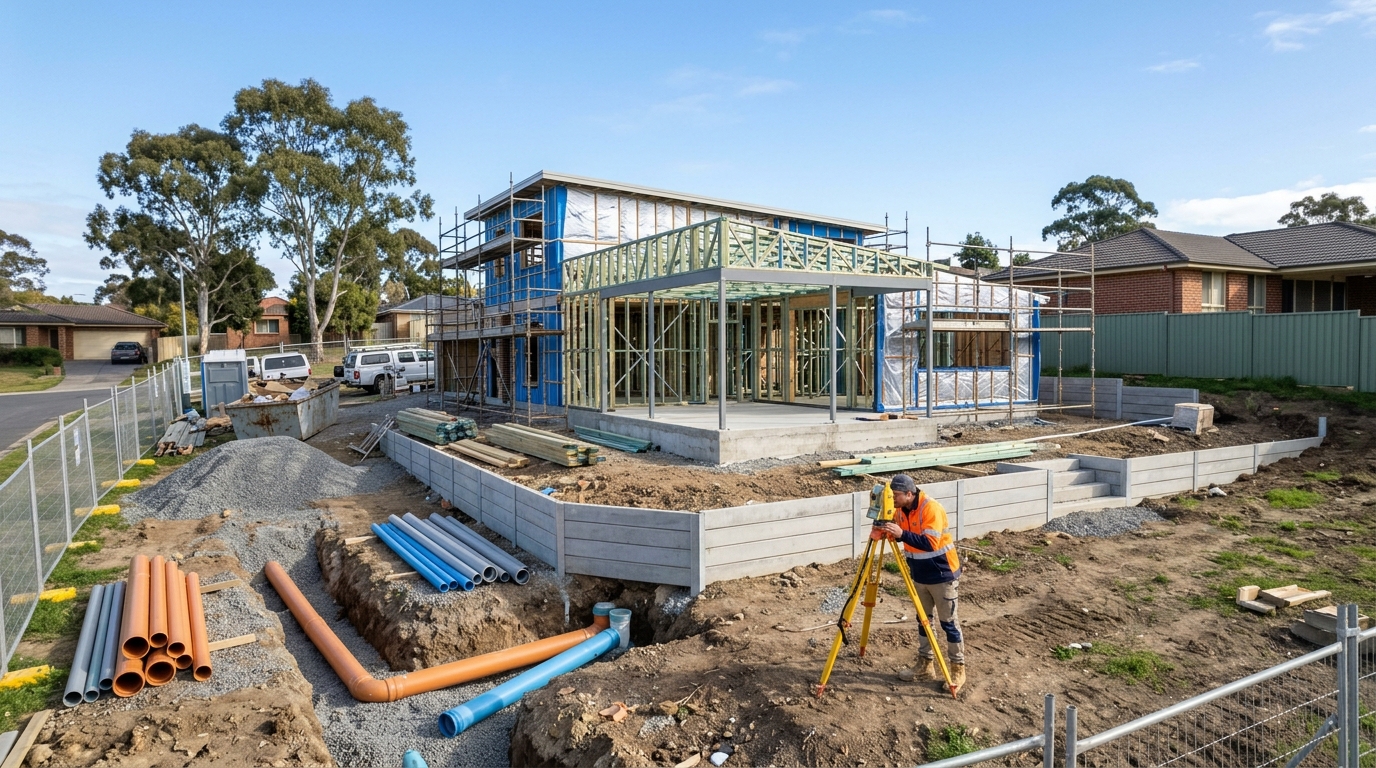
Site preparation requirements for building a house in Erina can include demolishing existing structures, clearing vegetation, levelling, erosion and sediment controls, and setting up temporary fencing and power. Some blocks need rock removal, imported fill or retaining walls. Site access also matters, because narrow streets or steep driveways can limit trucks and cranes. Utility connections for water, sewer, electricity and internet must be confirmed too, since the distance to existing services can change the price. Ask your builder to inspect the block and list every task in the quote.
8. How Do Sloping Blocks Affect Construction Costs?
A sloping block can offer wonderful views, but it often needs extra excavation, retaining walls, deeper footings or a split-level design. Each of these adds labour and materials to the project. Stormwater drainage also needs careful planning, because water must be directed away from the home and neighbouring properties without causing erosion. A designer who has worked on sloping land can suggest layouts that follow the contours rather than fight them, which helps keep costs more predictable.
9. What Council Approvals Are Required to Build in Erina?
Council approval requirements for building a new home in Erina NSW depend on the property and the proposal. A development application (DA) is assessed by Central Coast Council and considers the design, setbacks, height and impact on neighbours. Some straightforward homes may qualify for a complying development certificate (CDC), which is assessed against set standards and can be faster. Not every lot qualifies, so check the zoning and constraints on the NSW Planning Portal and speak with council or a certifier before assuming a pathway.
10. How to Choose the Right House Design and Floor Plan
A good house design and floor plan responds to your block, budget and daily routine. Think about orientation for natural light and breezes, room sizes, storage, outdoor living and future needs such as a growing family or a home office. Simple shapes and rooflines are usually cheaper to build than complex ones. Share your wish list with your designer early, and separate must-haves from nice-to-haves so you can adjust the plan if prices change.
11. What Should Be Included in Your Building Contract?
A building contract should clearly state the price, scope of works, plans, specifications, payment schedule, start and completion dates, and how variations are handled. A fixed-price building contract gives more certainty, but check which allowances, provisional sums and exclusions it contains. Make sure the contract also covers required insurance, warranties and defect rectification. Have a solicitor review it before you sign, and keep every variation in writing.
12. How Do Construction Loans and Progress Payments Work?
A construction loan releases funds in stages as work is completed, rather than as one lump sum. These progress payments typically follow milestones such as slab, frame, lock-up and completion, and the lender may arrange inspections before each release. Interest is usually charged only on the amount drawn. Speak with your lender or broker early about pre-approval, deposit requirements and how they assess the land and plans, because lending rules differ between institutions.
13. Should You Consider a Modular or Prefabricated Home?
Modular home construction builds sections of the home in a factory and transports them to site, where they are installed and finished. This can shorten on-site time and reduce weather delays. However, transport routes, crane access and site conditions must still be assessed, and foundations and approvals need to be arranged. Ask any provider for a complete scope covering delivery, installation and connection so you can compare it fairly with traditional construction.
14. How Long Does It Take to Build a New Home on the Central Coast?
Timeframes vary with design complexity, approvals, weather, trade availability and material supply. Allow time for design, ground investigation, council or certifier assessment and finance before construction starts. Once building begins, progress from slab to handover is usually measured in months rather than weeks. Ask your builder for a written schedule and understand how delays are recorded and communicated. Responding quickly to selections and decisions helps keep the project moving.
15. Frequently Asked Questions About Building a New Home in Erina
1. Do I need council approval to build a house in Erina?
Most new homes need either a development application or a complying development certificate. The pathway depends on the zoning, lot size and site constraints. Check the NSW Planning Portal and speak with Central Coast Council or a private certifier before finalising your plans.
2. Do I need soil testing before I build?
In most cases, yes. Your engineer needs the results to design suitable footings. The report highlights issues such as reactive clay or fill, and ordering it early helps you avoid unexpected foundation costs after your contract is signed.
3. Is the lowest quote always the best value?
Not necessarily. A lower price may leave out items that another quote includes. Compare scopes, inclusions, allowances and exclusions rather than totals, and ask each builder to explain any differences.
4. Can I build on a sloping block in Erina?
Often yes, but the design and engineering must suit the slope. Expect extra excavation, retaining and drainage work, and ask your designer for layouts that work with the land. A site survey and soil report will show what is practical.
5. Can I build a modular home on my block?
Possibly. The block still needs approvals, suitable foundations and service connections, and the site must allow for transport and crane access. Ask the provider to assess your property before you commit.
6. How can I check a builder’s licence?
Search the NSW Fair Trading licence register using the builder’s name or licence number. Confirm the licence covers the work you need, and ask to see proof of insurance before signing anything.
Building in Erina rewards careful preparation. Understand your block, set a realistic budget, choose a builder you trust and confirm approvals before work begins. If you would like help planning your project, speak with Home Choice Australia about our Home Development service across New South Wales.