
Sydney & Regional Suburbs Set to Boom (2025–2026)
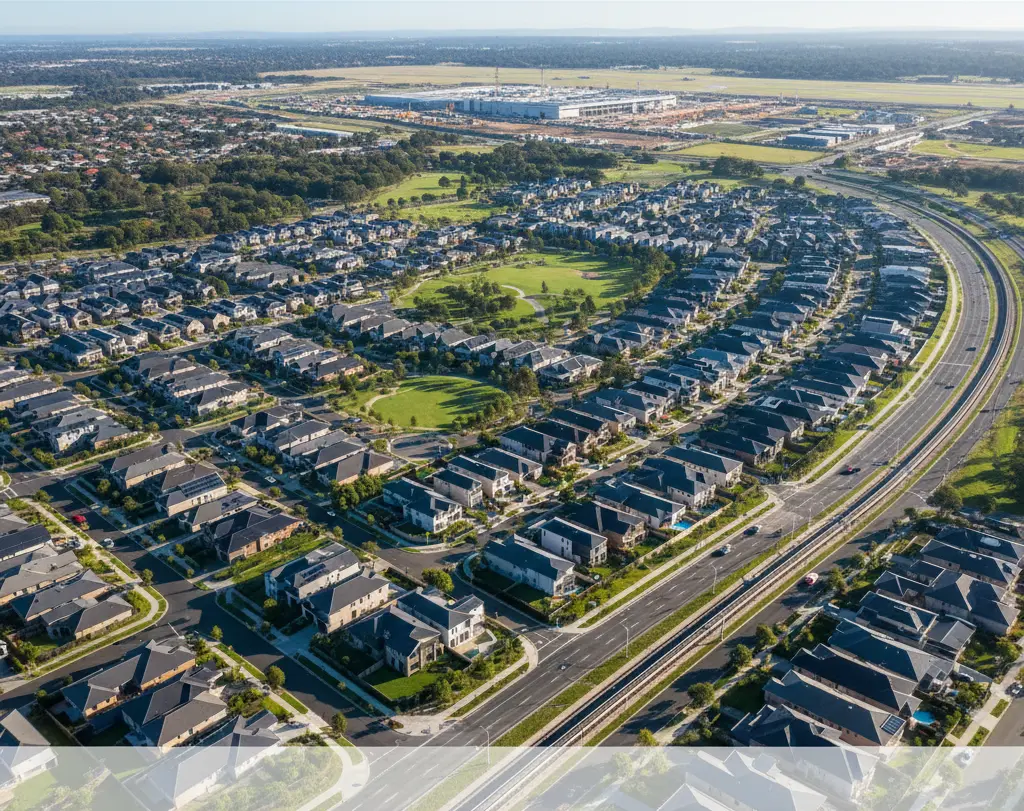
The NSW property market is entering a decisive phase in 2025–2026, with growth patterns shifting away from traditional inner-city hotspots toward suburban corridors and regional centers that offer better value and stronger fundamentals.
For investors, developers, and homebuyers working with specialists like Home Choice Australia real estate services, understanding these emerging growth zones isn’t just helpful—it’s essential for making decisions that deliver long-term returns.
Sydney Suburbs Poised for Growth in 2026
Sydney remains Australia’s largest and most dynamic property market, but the geography of growth is changing. Inner-city price peaks have pushed demand outward, creating opportunity in middle-ring and outer suburbs where infrastructure investment and affordability are converging.
The Western Sydney Growth Corridor
Western Sydney has evolved from a developing region into one of NSW’s most significant long-term growth engines. Three major factors are driving this transformation:
Western Sydney International Airport is reshaping the economic landscape of the region. The airport, set to open in 2026, is expected to generate over 200,000 jobs by 2060 and has already triggered substantial residential and commercial development across nearby suburbs.
Employment and logistics hubs are expanding rapidly. The Western Sydney Aerotropolis and surrounding business parks are attracting major employers, creating local job markets that reduce the need for long commutes to the Sydney CBD.
Transport infrastructure continues to expand, with new motorway connections, upgraded rail links, and bus rapid transit systems improving connectivity to central Sydney and making Western Sydney suburbs more accessible than ever.
Suburbs across the south-west and north-west growth corridors are seeing strong interest from first-home buyers and investors alike. These areas combine relatively affordable entry points with established development pipelines, making them attractive for both new home construction and established property investment.
Middle-Ring Sydney Suburbs
As inner-city property prices remain beyond reach for many buyers, middle-ring suburbs—typically 10 to 20 kilometers from the CBD—are experiencing renewed demand. These areas offer several advantages:
Established infrastructure and amenities including quality schools, shopping centers, medical facilities, and public transport connections that rival inner-city convenience without the premium price tag.
Character and community that appeals to families and downsizers seeking neighborhood feel, local parks, and community connections.
Redevelopment potential in suburbs where older housing stock is being gradually replaced with modern homes, townhouses, and low-rise apartment buildings, creating opportunities for knock-down rebuilds and small-scale development.
Transport accessibility to employment hubs, with many middle-ring suburbs offering 30 to 45-minute commutes to the CBD and major business districts.
These suburbs typically deliver steady capital growth rates between 5-8% annually, with better affordability than premium inner-city locations where median prices can exceed $2 million.
What Are the Undervalued Suburbs of Sydney?
Undervalued doesn’t mean “cheap”—it means suburbs where current prices haven’t yet reflected the area’s improving fundamentals. These locations share specific characteristics:
Price lag relative to neighboring areas. A suburb might be 15-20% cheaper than an adjacent suburb with similar amenities and access, simply because it hasn’t yet gained the same market recognition.
Infrastructure upgrades in progress or planned. New metro stations, road improvements, or school developments that will enhance liveability and accessibility but haven’t yet been fully priced into property values.
Rising rental demand. Vacancy rates below 2% and rental yields above the Sydney average indicate strong underlying demand that often precedes price growth.
In Sydney’s current market, undervalued opportunities typically appear in several contexts:
Fringe locations of established suburbs where buyers can access similar amenities and transport at lower entry costs.
Transit corridor suburbs where new or upgraded transport infrastructure is improving connectivity but market awareness hasn’t caught up.
Transitional industrial areas being rezoned for residential use, particularly in inner-west and southern Sydney locations where urban renewal projects are underway.
For investors working with services like Home Choice Australia, these undervalued pockets offer entry points for strategies including knock-down rebuilds, dual occupancy developments, and medium-density residential projects that can capture value as the suburb matures.
Regional NSW Growth Areas to Watch
Sydney’s affordability challenges have accelerated migration to regional NSW, transforming these markets from secondary options into primary growth areas with their own momentum and investment merit.
Central Coast
The Central Coast sits at the intersection of affordability, lifestyle, and connectivity, making it one of NSW’s strongest-performing regional markets.
Proximity to Sydney allows some residents to maintain Sydney employment while enjoying coastal living, with train connections to Central Station taking 60-90 minutes from major Central Coast hubs.
Lifestyle appeal combines beaches, national parks, and a more relaxed pace of life that attracts families, downsizers, and remote workers who no longer need daily Sydney access.
Infrastructure improvements including hospital upgrades, new schools, and shopping center expansions are supporting population growth and improving local amenity.
Suburbs across the Central Coast—from Gosford and Erina in the south to The Entrance and Toukley in the north—are attracting diverse buyer groups. For new home builders, the region offers land prices significantly below Sydney levels while maintaining strong demand fundamentals.
Erina, in particular, has emerged as a growth center with Erina Fair serving as the region’s premier retail hub and surrounding suburbs offering a mix of established homes and new residential estates.
Western Sydney Regional Extension
Beyond Greater Sydney’s official boundaries, surrounding areas connected to Western Sydney’s infrastructure boom are experiencing spillover demand:
Lower land costs make these locations viable for larger homes and land packages that would be prohibitively expensive closer to Sydney.
New residential estates are being developed by major builders, offering turnkey solutions for first-home buyers and investors seeking rental properties.
Employment growth from the airport and associated business parks is creating local job markets that support population influx and reduce dependence on Sydney commuting.
These extension areas—including suburbs in the Blue Mountains foothills and northwest growth corridors—represent some of the strongest development-driven opportunities in NSW.
Illawarra Region
South of Sydney, the Illawarra region is gaining recognition as more than just Wollongong. The broader region offers:
Coastal living with beaches running from Helensburgh to Kiama, appealing to lifestyle buyers and retirees.
Improved connectivity through rail electrification and road upgrades that have reduced travel times to Sydney.
Affordable housing options with median house prices 30-40% below Sydney levels while offering comparable amenities.
Economic diversification beyond traditional heavy industry, with growth in healthcare, education, and tourism sectors.
The Illawarra appeals to both owner-occupiers seeking lifestyle and investors targeting rental markets driven by University of Wollongong students and working professionals.
Hunter Region
The Hunter Region, anchored by Newcastle, continues demonstrating strong fundamentals that support sustained growth:
Diverse employment base spanning defense, manufacturing, healthcare, education, and logistics reduces economic volatility.
Major infrastructure investment in transport, health facilities, and education creates ongoing construction activity and job growth.
Growing population from both Sydney migration and international arrivals is driving housing demand across all price points.
Affordability advantage with Newcastle median house prices around 60% of Sydney levels while offering city amenities and coastal access.
The Hunter offers a compelling mix of capital growth potential and rental yields, making it attractive for long-term buy-and-hold investors and developers planning multi-stage residential projects.
What Is the Best Suburb to Invest in NSW Right Now?
There’s no universal answer—the “best” suburb depends entirely on your investment strategy, budget, timeline, and goals. However, high-performing suburbs in the current market typically share these characteristics:
Strong population growth (above 2% annually) driven by employment, lifestyle, or affordability factors.
Infrastructure-led development including new transport, schools, hospitals, or commercial centers that improve liveability and attract residents.
Relative affordability compared to surrounding areas, allowing buyers to enter the market with room for future appreciation.
High rental demand indicated by low vacancy rates (below 2%) and strong rental yields that provide cash flow.
In 2025–2026, suburbs meeting these criteria often fall into several categories:
Outer Sydney growth suburbs in western and south-western corridors where new estates and infrastructure are driving demand.
Central Coast lifestyle locations offering coastal amenity and Sydney connectivity at accessible price points.
Hunter and Illawarra regional hubs providing urban conveniences with better affordability than capital city markets.
Transition suburbs positioned just outside high-priced established areas where infrastructure improvements are enhancing accessibility.
For developers and builders, suburbs with master-planned estates, recent or pending rezoning, and proximity to major infrastructure projects present particularly strong opportunities for medium-term value creation.
Sydney vs Regional NSW: Where Is Growth Stronger?
This comparison isn’t about choosing one over the other—it’s about understanding their different value propositions:
Sydney advantages:
- Stronger long-term capital growth track record
- Greater market depth and liquidity
- More diverse employment opportunities
- Established infrastructure and amenities
Sydney challenges:
- Higher entry prices limiting accessibility
- Lower rental yields (often 2-3%)
- Slower percentage growth in mature suburbs
Regional NSW advantages:
- Faster percentage growth rates (often 8-12% annually)
- Better affordability for similar property types
- Stronger rental yields (often 4-6%)
- Lifestyle appeal and less congestion
Regional NSW challenges:
- Smaller buyer pools affecting liquidity
- Greater economic dependence on specific industries
- Less infrastructure maturity in some locations
Smart investors and home builders are increasingly diversifying across both markets—combining Sydney’s stability and long-term appreciation with regional NSW’s growth momentum and cash flow potential.
Real estate professionals, including teams like those at Home Choice Australia, often recommend portfolio strategies that balance geographic exposure rather than concentrating exclusively in one market type.
Key Takeaways: Suburbs Set to Boom
Sydney’s growth is shifting outward, not inward. Inner-city suburbs continue appreciating but at slower rates than outer and middle-ring locations where affordability and infrastructure are converging.
Western Sydney remains a long-term powerhouse. The airport and associated development will drive growth for decades, not just years, making early positioning in this corridor strategically valuable.
Central Coast and regional NSW are primary markets now. These regions have graduated from “alternative” options to growth markets with their own strong fundamentals and investment merit.
Undervalued suburbs offer early-entry opportunities. Identifying locations where infrastructure improvements haven’t yet been fully priced into property values allows investors to capture appreciation as the market catches up.
Location selection is critical for development success. For home builders and developers, choosing suburbs with strong population growth, infrastructure investment, and supply-demand imbalances determines project viability and returns.
The NSW property market in 2025–2026 rewards informed, strategic positioning over speculation. Understanding where growth is concentrating—and why—allows investors, homebuyers, and developers to make decisions aligned with long-term market fundamentals rather than short-term price movements.