
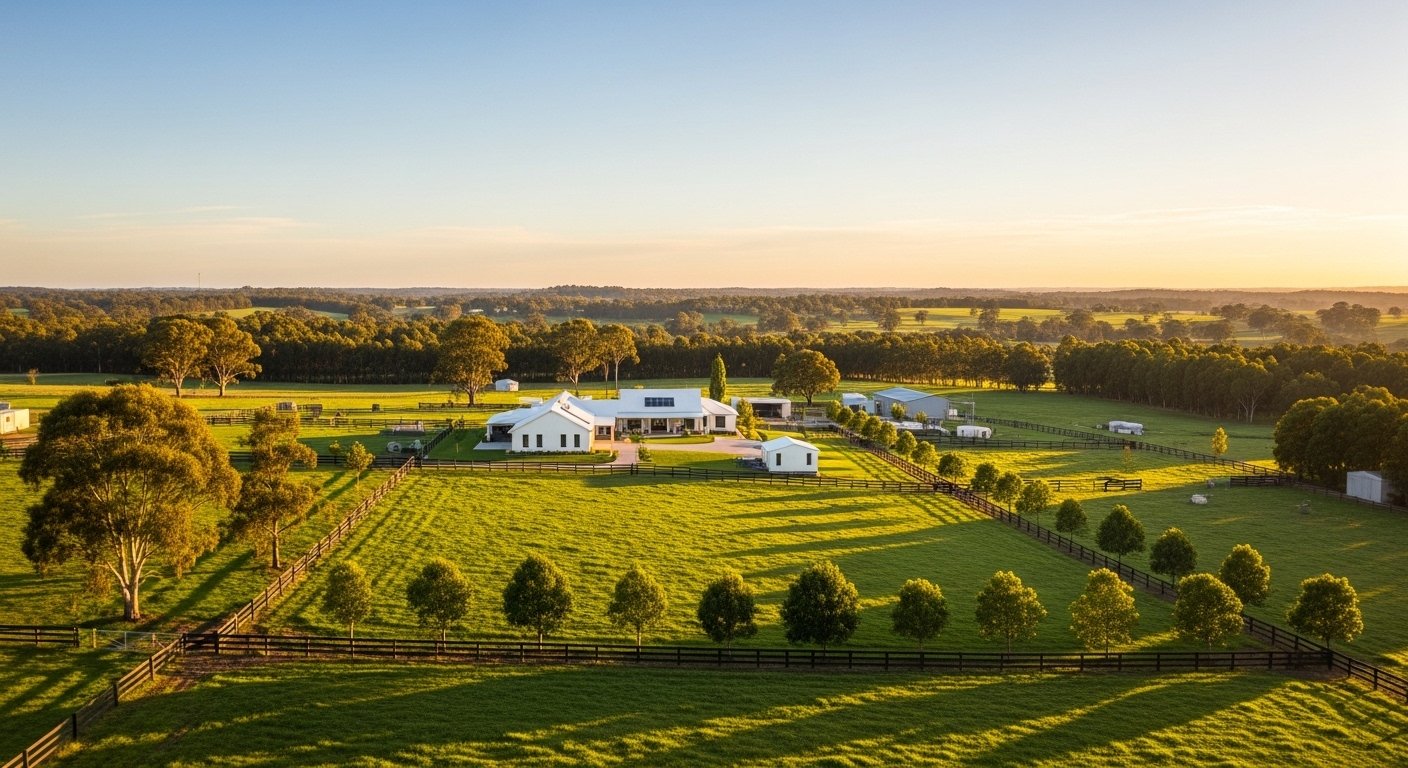
If you have ever driven past a sprawling property with rolling paddocks, a large homestead, and not a neighbour in sight, you were likely looking at an acreage property. For many Australians, this kind of space represents the ultimate lifestyle upgrade. But before you make the leap from a suburban block to wide-open land, it helps to understand exactly what acreage living involves — including the rewards and the realities.
At Home Choice Australia, we work with buyers across New South Wales who dream of rural lifestyle properties, hobby farms, and everything in between. This guide is written for homebuyers, investors, and lifestyle seekers who want a clear, honest picture of acreage property ownership in NSW.
What Is an Acreage Property?
The definition of acreage property refers to land that is significantly larger than a standard residential block. In Australia, properties are generally classified as acreage when they measure two hectares (approximately five acres) or more, although this can vary depending on local council definitions and zoning regulations.
Unlike a typical suburban quarter-acre block in Sydney or Newcastle, acreage land offers open space, reduced density, and often a rural or semi-rural setting. The land size classification in Australia places acreage somewhere between a standard suburban allotment and a full commercial farming property.
In NSW, acreage properties are commonly found in regions like the Hunter Valley, the Central Coast hinterland, the Blue Mountains rural areas, and the outskirts of Sydney in areas such as the Hawkesbury and Macarthur regions. These locations offer buyers access to large land property NSW buyers seek, while still maintaining reasonable proximity to city services.
Key Features of Acreage Properties
Acreage homes in Australia typically share several defining characteristics:
Large land area: The most obvious feature is space. You get room to breathe, room for children and animals to roam, and room to grow.
Additional structures: Many acreage properties include or allow for sheds, barns, workshops, and secondary dwellings. This makes them well-suited to hobby farming opportunities or home-based businesses.
Privacy and seclusion: One of the biggest drawcards is separation from neighbours. Boundary fences may be hundreds of metres from your front door.
Natural surroundings: Whether you are surrounded by bushland, open paddocks, or creek flats, acreage properties tend to offer a genuine connection to the landscape.
Pros of Owning an Acreage Property
1. Space and Privacy
The most immediate benefit of rural lifestyle properties in NSW is the sheer amount of space available. Families with children, pets, or a passion for gardening and farming find that acreage living transforms daily life. You can install a pool, a tennis court, a vegetable garden, an orchard, or a horse paddock — all on your own land.
Privacy and seclusion are equally valuable. There are no shared walls, no parking disputes with neighbours, and no noise drifting over the fence from a backyard party next door. For many buyers, this alone justifies the lifestyle change from city to rural.
2. Lifestyle Benefits
Country living lifestyle appeals to people who want peace, quiet, and reduced noise and pollution. Research consistently shows that people living near green space and nature report higher levels of wellbeing. Acreage living puts you inside that environment permanently.
The off-grid living potential is also worth considering. Many acreage properties in NSW are set up with rainwater tanks, solar panels, and septic systems, giving owners a degree of self-sufficiency that simply is not possible on a suburban block.
3. Potential Cost Advantages
Regional NSW land for sale is significantly more affordable per hectare than land closer to Sydney or major coastal cities. Buyers who purchase acreage land for sale in NSW outside of metro areas often get far more land for the same or lower price than a suburban block in an established suburb.
There is also room for future development or home extensions. Depending on zoning regulations and NSW rural land council restrictions, you may be able to subdivide, add a secondary dwelling, or expand the main home over time. This makes acreage land a smart long-term real estate investment for buyers thinking about property value appreciation on rural land.
4. Flexibility and Customisation
Lifestyle blocks in NSW give owners a level of flexibility that urban buyers simply do not have. You can build a workshop for a trade business, establish a small market garden, run livestock, or create a guest house for extended family. The land works around your life rather than limiting it.
Cons of Owning an Acreage Property
1. Higher Maintenance Requirements
Owning a large property comes with proportionally large responsibilities. Lawn care, fencing, weed control, and water tank upkeep are ongoing tasks that take real time and money. A suburban garden can be mowed in forty-five minutes. A five-acre property is a different story.
The maintenance costs of an acreage property can surprise first-time rural buyers. Fencing alone — particularly if you run animals — can cost tens of thousands of dollars to install and maintain. Budgeting realistically for this is essential before purchasing.
2. Distance from Amenities
One of the most significant disadvantages of rural property ownership is distance. Longer travel times to shops, schools, healthcare, and entertainment are a daily reality for many acreage owners in NSW. Families with school-age children need to consider transport carefully. Emergency services also take longer to reach remote addresses.
This distance from city services is something many buyers underestimate. Living forty minutes from the nearest supermarket feels very different in week three of winter compared to a sunny Saturday morning when you first viewed the property.
3. Utility and Infrastructure Challenges
Connecting to mains water, sewer, and electricity is not always straightforward in rural NSW. Many properties rely on bore water or tank water, which requires management and testing. Septic systems need regular servicing. The infrastructure and utility costs of setting up or maintaining these systems can add significantly to ownership expenses.
Buyers should ask their conveyancer or solicitor to investigate the availability of utilities before exchanging contracts. The mortgage for a rural property in Australia may also differ from a standard home loan, with some lenders applying different criteria to rural or semi-rural blocks.
4. Lifestyle Trade-offs
Internet and mobile reception issues are a genuine concern across many rural areas in NSW. Community forums and rural buyer groups regularly flag this as one of the biggest rural property challenges in Australia. While the federal government’s investment in regional connectivity is improving the situation, some properties still have limited or unreliable access.
Environmental risks also deserve serious consideration. Bushfire, drought, and flooding are real threats across many parts of New South Wales. Buyers should review the property’s bushfire attack level (BAL) rating, check flood mapping from the relevant council, and consider the implications for insurance costs and home construction standards.
Key Considerations Before Buying Acreage in NSW
Before you commit to buying acreage property in Australia, work through this checklist:
Zoning and council regulations: New South Wales rural property market rules vary significantly between local government areas. Some zones permit hobby farming and secondary dwellings; others restrict land use considerably. Always verify zoning with the relevant council before purchasing.
Water rights and land use permissions: In NSW, water access is governed by the Water Management Act. Bore water, creek access, and dam rights are separate from land ownership and must be checked individually.
Fencing laws: Under NSW legislation, adjoining landowners share responsibility for boundary fences. Understanding your obligations before you purchase avoids disputes later.
Transport and school access: Families relocating from Sydney’s outskirts acreage homes market to regional NSW should confirm school catchment areas, bus routes, and access roads — particularly for properties on unsealed or flood-prone roads.
Final Thoughts
Acreage living in New South Wales offers a lifestyle that many Australians actively pursue — space, privacy, connection to nature, and the freedom to build a life on your own terms. The advantages of acreage living are real and significant. So are the challenges.
At Home Choice Australia, we believe the best property decisions come from complete information. Understanding the pros and cons of acreage living before you buy means fewer surprises and a stronger chance of finding a property that genuinely suits your life. Take the time to inspect thoroughly, research the area, engage a rural property solicitor, and speak to locals who already live in the region you are considering.
The right acreage property in NSW is out there. Going in prepared makes all the difference.