
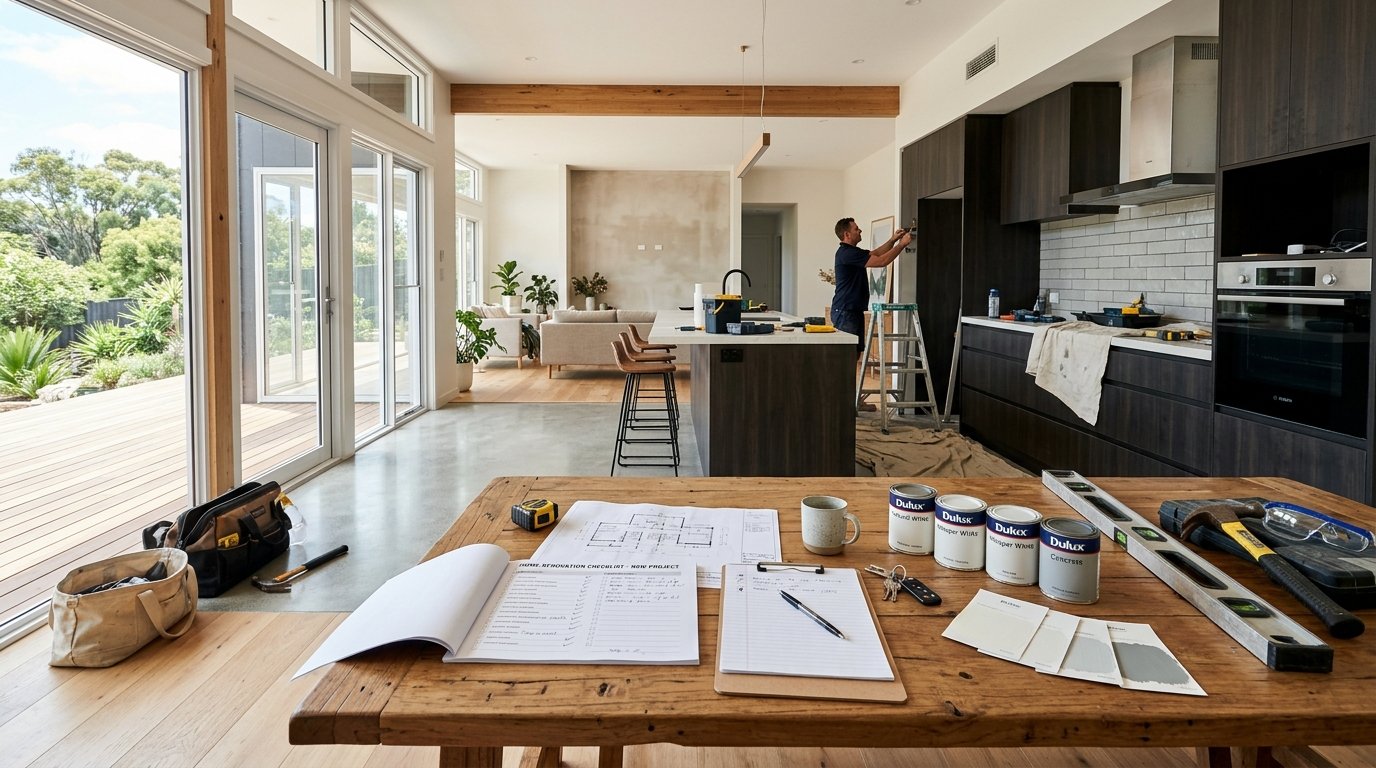
Planning a home renovation in NSW without a clear checklist is like driving across Australia without a map. You might eventually get there, but you will waste time, money, and energy along the way. At Home Choice Australia, we have seen firsthand how the right preparation transforms a stressful renovation into a smooth, rewarding project. Whether you are updating a bathroom, extending your kitchen, or doing a full home overhaul, this renovating a house checklist covers every essential step to keep your renovation on track.
Why You Need a House Renovation Checklist
A house renovation checklist is not just a to-do list. It is your project management tool, your compliance guide, and your financial safeguard rolled into one document.
Without it, homeowners across NSW regularly face budget blowouts that stretch weeks into months, council compliance issues that freeze construction mid-project, and contractors who disappear because the scope was never defined. A solid home renovation checklist NSW homeowners can rely on helps you avoid all of this. It keeps every contractor accountable, reduces delays, and protects your property value from poor workmanship decisions made under pressure.
Planning Your Home Renovation
Before you pick up a paintbrush or call a builder, spend serious time in the planning phase. This stage makes or breaks the entire renovation project.

Define your renovation goals. Are you renovating to sell, to live better, or to modernise an ageing property? Your goal changes every decision that follows. A cosmetic renovation — new paint, flooring, fixtures — costs far less and requires fewer approvals than a structural renovation involving walls, extensions, or load-bearing changes.
Set a realistic renovation timeline. A kitchen renovation in NSW typically takes four to eight weeks. A full home renovation can take six to twelve months or longer depending on approvals, trades availability, and material lead times. Build buffer time into every stage.
Create a renovation budget with contingency. Break your budget into labour costs, material costs, council fees, and always include a ten to twenty percent emergency contingency fund. Hidden costs are the number one complaint from NSW homeowners on renovation forums — unexpected asbestos, rotting subfloors, and outdated wiring top the list. Renovation costs NSW homeowners face vary widely, but a mid-range bathroom renovation runs between $15,000 and $30,000, while a full home renovation can exceed $150,000 depending on size and finishes.
Understanding NSW Renovation Approvals
This section catches many homeowners off guard. Renovating a house in NSW requires you to understand two main approval pathways.
A Development Application (DA) goes through your local council. It applies to major structural changes, extensions, and projects in heritage or environmentally sensitive areas. The DA process involves public notification periods and can take weeks to months.
A Complying Development Certificate (CDC) is a faster, private certification pathway for projects that meet specific state standards. Many straightforward renovations qualify for CDC approval and can be approved in ten business days.
Some renovations are fully exempt from approval — interior cosmetic work, minor repairs, and certain like-for-like replacements. Always check with your local council before assuming your project is exempt. NSW BASIX requirements also apply to many renovations, requiring energy and water efficiency standards to be met. If your property sits in a heritage area, bushfire zone, or flood-prone location, additional council requirements apply before any construction begins.
Pre-Renovation Inspections You Must Not Skip
Before your renovation planning checklist moves into construction, complete these inspections:
- Asbestos inspection — Mandatory in homes built before 1990. Disturbing asbestos without a licensed removalist is illegal and dangerous.
- Pest inspection — Termite damage inside walls can add tens of thousands to your renovation costs.
- Electrical safety inspection — Older NSW homes often have outdated wiring that cannot support modern appliances.
- Plumbing inspection — Corroded pipes and drainage issues must be addressed before tiling or cabinetry installation begins.
Hiring the Right Renovation Professionals
Choosing the right team is the single most important decision in your home improvement checklist Australia. Always verify your builder holds a current licence through NSW Fair Trading before signing any contract. An unlicensed tradie cannot legally complete structural, electrical, or plumbing work — and if something goes wrong, your insurance will not cover it.
Get at least three itemised quotes before committing. Itemised quotes allow you to compare labour and material costs line by line rather than accepting a lump-sum figure you cannot interrogate. Read every contract carefully, including payment schedules, variation clauses, and dispute resolution terms.
Key professionals you may need include a licensed builder, architect, interior designer, licensed electrician, licensed plumber, and a private certifier for approvals.
Before hiring any contractor, ask directly about their insurance coverage, expected project timeline, warranty on workmanship, and references from previous renovation projects.
The Correct Order to Renovate a House
One of the most common renovation mistakes is completing work in the wrong sequence. Follow this renovation process to avoid expensive rework:
- Demolition — Remove old structures, walls, cabinetry, and fittings.
- Structural work — Complete any engineering-approved structural changes.
- Plumbing and electrical rough-ins — Run pipes and cables before walls are closed.
- Insulation and plastering — Seal walls and ceilings before surface finishes.
- Waterproofing — Apply waterproofing membranes in bathrooms and wet areas before tiling.
- Flooring — Lay hard flooring after walls are finished.
- Cabinetry — Install kitchen and bathroom cabinetry once floors are done.
- Painting — Paint walls and ceilings before fixtures go in.
- Fixtures and fittings — Install tapware, switches, door handles, and light fittings last.
- Final cleaning — Deep clean before final inspection.
Room-by-Room Renovation Checklist
Kitchen: Confirm layout and cabinetry selections early. Order appliances before construction starts to avoid delays. Plan splashbacks, lighting, and benchtops as a coordinated set.
Bathroom: Waterproofing is your most critical step. Poor waterproofing causes leaks, mould, and structural damage that costs far more to fix later. Confirm ventilation, plumbing layout, and tile selection before any trades begin.
Living room: Focus on flooring, lighting upgrades, painting, and storage solutions. Power point placement is a detail many homeowners regret overlooking — plan outlet positions before walls are plastered.
Bedroom: Plan wardrobes, window treatments, flooring, and paint colours before construction. Decisions made on-site under time pressure rarely match the original vision.
Outdoor areas: Include decking, landscaping, drainage, exterior painting, and outdoor lighting in your home improvement checklist Australia to capture the full scope of your renovation project.
Final Inspection and Handover Checklist
Do not release your final payment until you have completed a thorough walkthrough. Check all workmanship quality against your contract specifications. Test every plumbing fixture and electrical circuit. Inspect waterproofing membranes in all wet areas. Walk through your defects list with the builder and confirm a timeline for fixing outstanding items. Collect all warranties, compliance certificates, and occupation certificates before the renovation contractor leaves site.
Common Renovation Mistakes to Avoid
Underestimating costs is the mistake most NSW homeowners make first. Skipping inspections is a close second. Choosing the cheapest quote over the most qualified contractor causes more problems than it solves — quality tradespeople cost more upfront and save money in the long run. Changing plans mid-project generates expensive variation costs. Ignoring building regulations risks stop-work orders and fines. Poor lighting design and thoughtless power point placement are the finishing regrets that haunt homeowners for years.
FAQs About Renovating a House in Australia
Do I need council approval to renovate in NSW? It depends on the scope. Cosmetic work rarely requires approval. Structural changes, extensions, and wet area renovations often do. Check with your local council first.
How long does a home renovation take? A single room renovation typically takes two to eight weeks. Full home renovations run six to twelve months or more.
What renovations add the most value? Kitchen and bathroom renovations consistently deliver the strongest return on investment in the Australian property market.
Can I live in my house during renovations? For cosmetic renovations, yes. For major structural or whole-home projects, temporary accommodation is strongly recommended.
What should I renovate first? Always address structural, plumbing, and electrical issues before cosmetic upgrades.
Start Your Renovation the Right Way
A successful renovation does not happen by accident. It starts with a detailed renovation planning checklist, a realistic budget with contingency, the right approvals from your NSW council, and licensed professionals who stand behind their work. At Home Choice Australia, we encourage every homeowner to use a complete renovating a house checklist before a single tool touches your property.
Start your renovation with a clear plan to avoid costly mistakes — and enjoy a finished home that truly reflects the investment you made.