
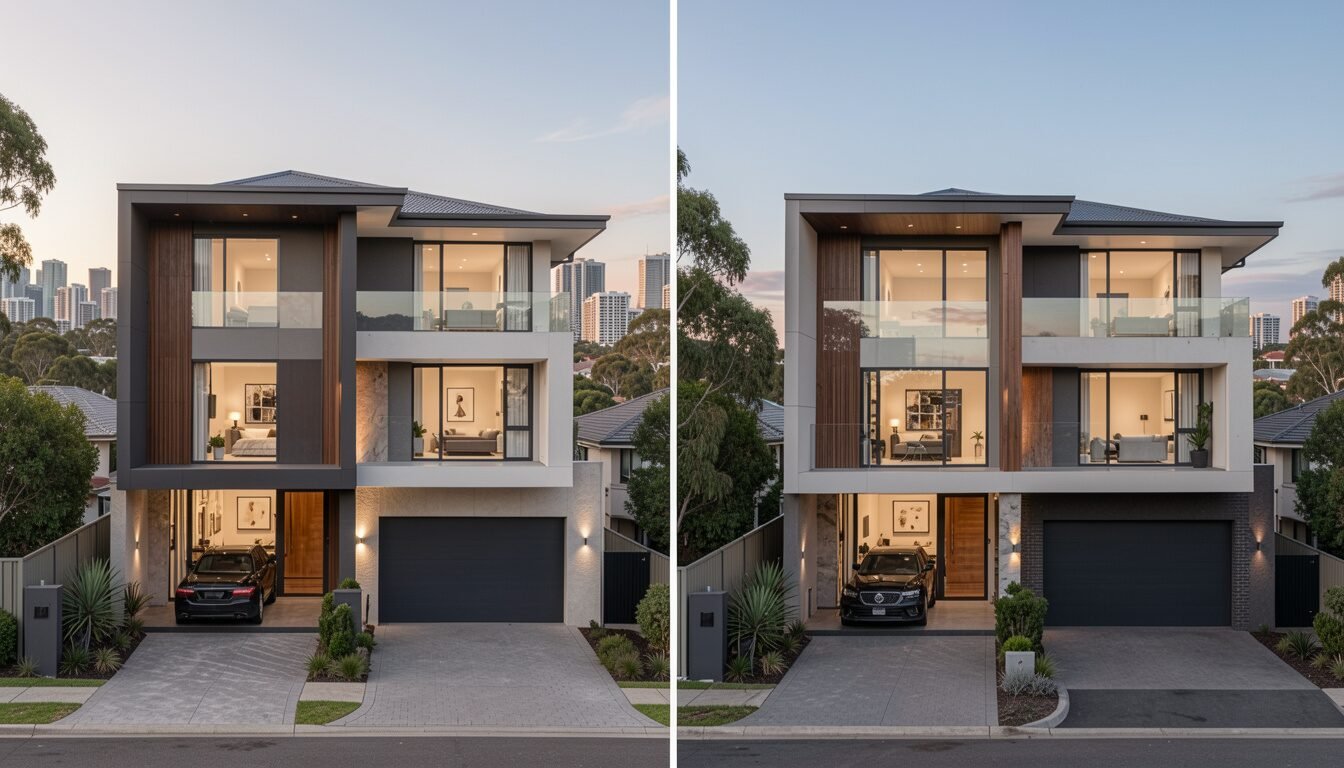
Choosing between a single storey and double-storey home is one of the biggest decisions you’ll make when building in New South Wales. It affects your budget, lifestyle, block usage, and long-term satisfaction. At Home Choice Australia, we’ve helped hundreds of NSW families navigate this exact choice — and there’s rarely a one-size-fits-all answer.
This article breaks down everything you need to know about single storey vs double-storey homes, including costs, design flexibility, council considerations, and lifestyle fit — so you can make a confident, informed decision.
What Is a single-storey home?
A single storey home contains all living spaces on one level — bedrooms, bathrooms, kitchen, and living areas all sit on the ground floor. In NSW, single storey house plans are popular across suburban and regional areas where block sizes are generous enough to spread out.
Common layouts include open plan living, where the kitchen and dining area flow into the backyard space. These designs suit wide suburban blocks typically ranging from 450m² to 700m², and they’re especially popular in outer Sydney suburbs and regional New South Wales.
What Is a Double Storey Home?
A double storey home splits living spaces across two levels. Typically, the ground floor holds social zones like the kitchen, lounge, and dining area, while the upper floor contains bedrooms and bathrooms for better privacy.
Double storey house designs in NSW thrive on narrower or smaller blocks where land prices are high. In Sydney’s inner and middle-ring suburbs, a compact 300m² to 400m² block often makes double storey the only practical way to achieve the family home design you want without sacrificing outdoor space.
Pros of Single Storey Homes
Accessibility is the standout advantage. Without stairs, single storey homes work brilliantly for young children, elderly family members, and anyone with mobility needs. This makes them a top choice for retirement-friendly homes and ageing-in-place living.
Construction cost in NSW is generally lower for single storey builds. With a simpler structure, fewer materials, and straightforward labour, the building cost per square metre in Australia tends to be more budget-friendly compared to double storey equivalents.
Energy efficiency is easier to achieve on one level. Heating and cooling a single storey home requires less effort because temperature naturally distributes more evenly. Combined with good ventilation and insulation design, running costs stay low.
Indoor-outdoor flow is where single storey homes truly shine. Open plan living connects seamlessly to the garden, patio, or yard — a lifestyle feature that Australian families genuinely value.
Cons of Single Storey Homes
The main drawback is the land footprint. To achieve the same internal floor area as a double storey, a single storey home needs a significantly larger block. On smaller or more expensive lots in Sydney, this can be a real limitation.
Future expansion potential is also more restricted. Adding rooms later typically means extending outward, which requires more land and council approval in NSW.
Privacy between zones can be harder to achieve on a single level, especially in households where adults and teenagers want separation from the main living areas.
Pros of Double Storey Homes
Space efficiency is the headline benefit. A double storey home delivers more living area without increasing the land size — a major advantage as land prices in NSW continue to rise.
Zone separation is natural and effective. Parents get a quiet retreat upstairs while the downstairs social areas stay active. This layout suits growing families, and it works well for households with older kids who want their own space.
Resale value tends to be strong in NSW urban areas. Buyers in Sydney and its surrounds often pay a premium for double storey homes because they maximise the potential of expensive land. This makes them a smart property investment in the right suburbs.
Views and natural light are often better on the upper floor. Elevated bedrooms capture breezes, morning sun, and district views that a single-level design simply can’t offer.
Cons of Double Storey Homes
Build cost is the most immediate challenge. Double storey construction requires more structural engineering, a stronger foundation, staircase construction, and more complex roofing — all of which push up the price per square metre.
Stairs present a practical challenge for households with toddlers, elderly residents, or anyone managing a health condition. Long term, this can affect how comfortable the home feels as your family ages.
Construction timelines are typically longer for double storey homes, which affects how soon you can move in and when mortgage repayments begin in earnest.
Local council approval in NSW can be more involved for double storey designs. Height limits, overshadowing rules, and privacy setbacks all come into play depending on your suburb and local planning controls.
Key Factors to Consider When Choosing
Budget and build costs — Get clear quotes for both options on your specific block. The gap in construction cost NSW between single and double storey varies depending on design complexity, finishes, and site conditions.
Block size and land value — On a narrow or small block in Sydney, double storey often makes more financial sense. On a larger suburban or regional block, a single storey design can deliver everything you need without the added expense.
Family lifestyle and long-term needs — A young family with toddlers and elderly grandparents visiting regularly may prioritise accessibility. A family with teenagers may want the privacy a double storey naturally provides.
Resale value and market trends in NSW — Talk to a local real estate agent about what buyers in your suburb prefer. In dense urban areas, double storey homes consistently attract stronger interest.
Council regulations and local planning controls — Always check your local council’s height restrictions, setback requirements, and any heritage or character overlays before committing to a design.
Energy efficiency and climate — NSW has diverse climate zones. In hotter western Sydney suburbs, a well-designed single storey with good eaves and cross-ventilation can outperform a double storey in terms of comfort and energy bills.
NSW-Specific Considerations
Sydney’s housing market continues to face land scarcity, particularly in established suburbs within 30 kilometres of the CBD. This is pushing more homeowners toward double storey designs to maximise their block.
Regional NSW presents a different picture. Towns like Wagga Wagga, Orange, and Dubbo offer larger blocks at accessible price points, making single storey homes the dominant choice for families and downsizers alike.
NSW building regulations require double storey homes to meet specific structural and fire safety standards. Working with a registered builder who understands Australian building regulations and local council approval processes in NSW is essential to avoid costly delays.
Single Storey vs Double Storey: Quick Comparison
| Feature | Single Storey | Double Storey |
| Build Cost | Lower | Higher |
| Space Efficiency | Requires more land | Uses land efficiently |
| Accessibility | Excellent | Moderate (stairs) |
| Maintenance | Easier | Harder |
| Resale Value | Varies by area | Often higher in dense areas |
Which One Should You Choose?
Choose single storey if you have a large block, value accessibility, are building for retirement or ageing in place, or want a simpler, more cost-efficient build with great indoor-outdoor connection.
Choose double storey if your block is compact, you want zone separation for a growing family, you’re targeting strong resale value in an urban NSW suburb, or you want to maximise living space without buying more land.
Three quick scenarios:
- Young family in outer Sydney — Single storey on a 500m² block offers backyard space, accessibility, and budget efficiency.
- Couple in an inner suburb — Double storey on a 320m² block maximises space and long-term resale appeal.
- Downsizers in regional NSW — Single storey on a large block offers comfort, ease of maintenance, and retirement-friendly living.
Conclusion
There’s no universal winner in the single storey vs double storey debate. The right choice depends on your block, your budget, your family’s lifestyle, and the suburb you’re building in. At Home Choice Australia, we recommend getting clear on your priorities first — then letting those priorities drive your design, not the other way around.
Talk to an experienced builder or architect who knows the NSW market. The right advice early saves time, money, and stress throughout your build.
FAQs
Is a double storey always more expensive than a single storey?
Generally yes, but not always. A very large single storey home on a complex site can cost more than a compact double storey. Get detailed quotes for your specific block and design.
Can I build a single storey on a small block in NSW?
Yes, but your floor plan options will be limited. On narrow blocks under 350m², a double storey typically gives you more usable living space without sacrificing outdoor area.
Which home type is better for ageing in place?
Single storey homes are strongly preferred for ageing in place. No stairs, easier access throughout the home, and simpler maintenance make them the practical choice for retirees and anyone planning long-term accessibility needs.