
Homechoiceaustralia is a home development company in New South Wales, helping families plan, design and build homes on sites across the state. Explore our home development services here: [Insert Your Service Link]
Before any plans are drawn, one question comes first: what is the ground like? Arranging a soil test before building is one of the most important early steps in any new home project. It tells you what lies beneath your block and how the home should be supported. It also helps you avoid surprise costs after construction has started.
This guide explains what a soil test is, how it works, what the results mean and what NSW homebuyers should know before they build.
What Is a Soil Test?
A soil test is a ground assessment carried out on your block before construction begins. It shows what type of soil you have, how it behaves when wet or dry, and how much weight it can carry.
Soil testing for house construction is usually done by a qualified engineering specialist. Their work, often called geotechnical soil testing, studies the ground the way a doctor studies a patient before treatment. Your builder and engineer use these findings to decide how your home should be supported.
Why the Ground Matters Before You Build
Every home is only as stable as the ground beneath it. Soil can swell, shrink, shift, hold water or crumble under pressure. If these behaviours are not understood, a house can develop cracked walls, sticking doors, uneven floors and costly structural damage.
A soil test gives you four things:
- Safety: your home is supported correctly from the start.
- Accurate pricing: your builder can quote based on real ground conditions rather than guesses.
- Fewer delays: you find out about rock, soft ground or water early, not halfway through excavation.
- Compliance: councils and certifiers need this information to approve your plans.
How Does Soil Testing Work?
The process is simpler than most people expect.
Step 1: Site visit. A technician visits your block and looks at the land, slope, vegetation and drainage.
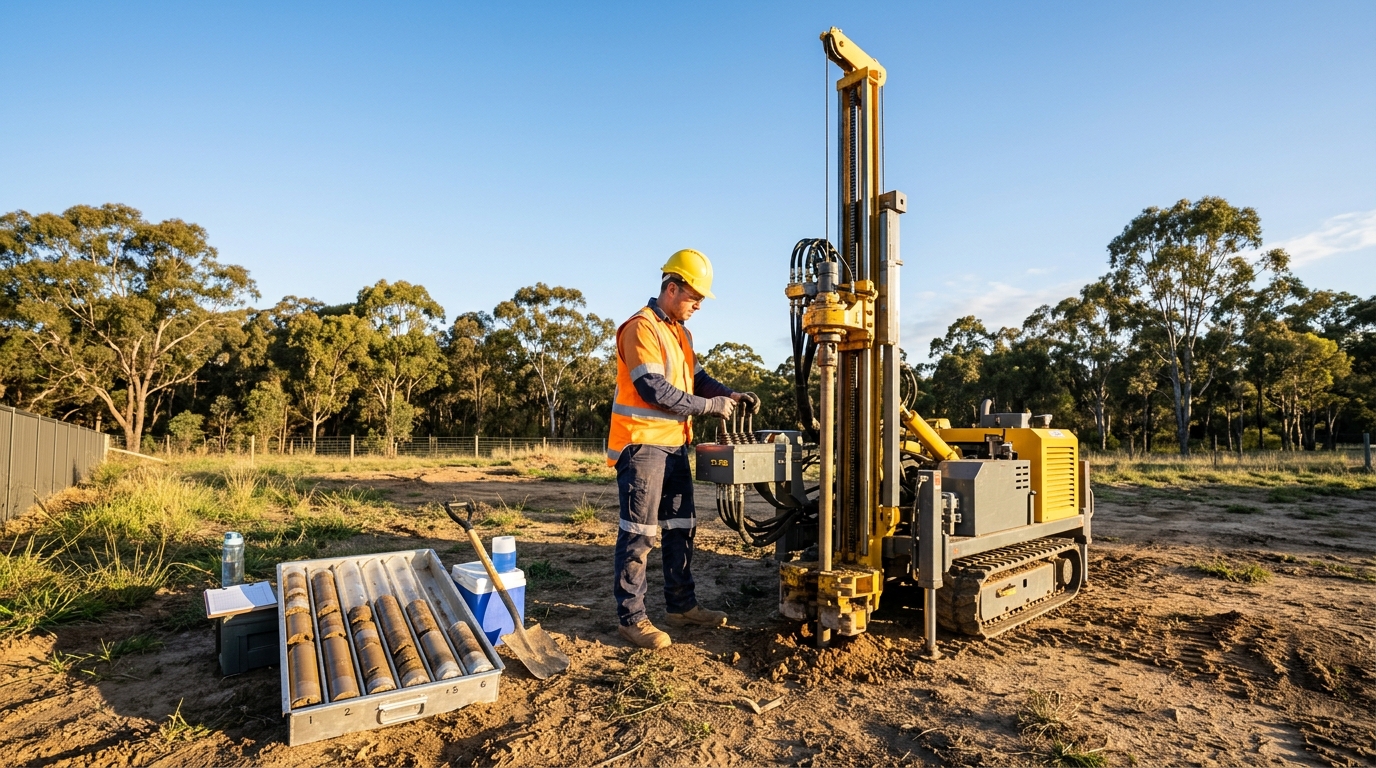
Step 2: Drilling or digging. Small holes are drilled or dug at several points across the site. This is how soil samples are collected from different depths.
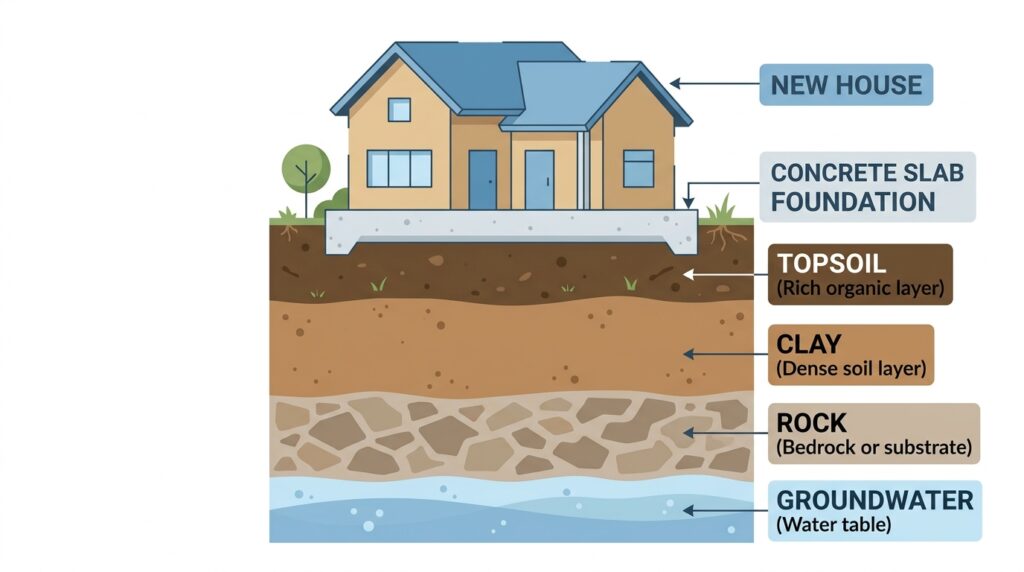
Step 3: Studying the layers. The technician records the soil profile, which is the order and thickness of the layers from the surface down. A block might have topsoil, then clay, then rock.
Step 4: Checking moisture. The team notes the groundwater level, because high water tables can affect excavation and drainage.
Step 5: Lab analysis. Samples may be tested in a laboratory to measure how the soil behaves when moisture changes.
Step 6: Report. The findings are written up, with recommendations for building on the site.
Professionals often follow the standard known as AS 1726 site investigation guidelines, which set out how ground information should be gathered in Australia. A typical residential block is usually tested in a day or less.
What Does a Soil Test Report Include?
The final geotechnical report is the document your builder and engineer rely on. It generally covers:
- A description of the site and the soil layers found
- The class of your block (explained below)
- Soil bearing capacity, which is how much weight the ground can safely carry
- Notes on water, rock, fill or unstable ground
- Recommendations for footings, drainage and excavation
You do not need to understand every technical term. Ask your builder or engineer to walk you through the summary page, which lists the key findings and what they mean for your home.
Understanding Soil Types in Australia
Australian sites are grouped into classes according to how much the ground is likely to move. The system is set out in the Australian Standard, and the site classification AS 2870 is the reference most builders and engineers use for residential homes. Here is a simple guide:
- Class A: mostly sand and rock. Very little movement. The most straightforward ground to build on.
- Class S: slightly reactive clay. Small movement is expected.
- Class M: moderately reactive. Moderate movement with changes in moisture.
- Class H1 and H2: highly reactive. Large movement is expected, so stronger support is needed.
- Class E: extremely reactive. The most movement, and the most demanding to build on.
- Class P: problem sites. This includes soft ground, fill, mine subsidence, landslip areas or sites with trees recently removed. They need specialist engineering advice.
Many parts of NSW, including large areas of Greater Sydney, sit on clay soil. Clay swells when it is wet and shrinks when it dries. That is why soil shrinkage and expansion is the main concern in most residential reports. A house sitting on moving clay can crack if the structure was not built for it.
How Soil Classification Affects House Foundations
The class assigned to your block directly shapes how your home is built. A stable Class A or Class S site generally needs a more standard approach. A highly reactive or problem site often needs deeper, stronger and more expensive support.
Your structural engineer uses the report to plan the foundation design, and this is where the soil test earns its value. The engineer decides on the size, depth and reinforcement of your house footings so they match the way your ground behaves.
The most common option for homes is a concrete slab foundation, which suits many stable and moderately reactive sites. Where the ground moves more, the slab may need deeper edge beams or additional reinforcement. On some sites, piers or other footing systems are the better choice. The right answer depends entirely on your results, which is why guessing is never a safe option.
Soil Test vs Geotechnical Report: What Is the Difference?
People often use these terms as if they mean the same thing, but there is a small difference.
The soil test is the fieldwork and laboratory testing, which means the digging, sampling and measuring. The engineer’s report is the written document that explains what the testing found and what it means for your build. In practice you usually get both together as one service, and you should receive a clear written report rather than just raw test data.
When Should You Get a Soil Test?
The best time is early, ideally after you buy the block or before you finalise your build contract. Ideally you would do it before you lock in your final plans and price.
If you test too late, your design may need to change. A house plan drawn for stable ground may not suit a highly reactive block, and changing it after approvals can be expensive and slow.
If you are still deciding whether to buy a block, talk to your builder first. A block that looks like a bargain can become costly once poor ground conditions are discovered.
Soil Test Requirements for Building a House in NSW
In New South Wales, builders and certifiers need reliable ground information to design and approve footings and slabs. For most new homes, replacement homes and vacant blocks, an engineering assessment of the ground is expected as part of the approval process.
Your council or private certifier will tell you exactly what they need. You can also find guidance on site assessments and engineering reports through the NSW Planning Portal. Requirements can differ depending on your site, your council area and the type of build, so check with your builder and certifier early.
Bushfire areas, flood zones, steep slopes and previously filled land can bring extra assessment requirements. If your land is affected by any of these, plan for additional reports on top of the standard test.
How Much Does a Soil Test Cost in Australia?
Costs vary with location, the size of the block, access for drilling equipment and how many test points are needed. Many residential tests cost from several hundred dollars to a few thousand. Complex or sloping sites can cost more. Always get a written quote and confirm what it includes.
The test fee is small compared with the cost of the problems it can prevent. Findings from the test can also affect other costs:
- Rock may increase excavation costs.
- Highly reactive clay may need stronger footings.
- Sloping land may need retaining walls and extra engineering.
- High groundwater may need drainage solutions.
- Poor site preparation, such as unremoved fill or old tree roots, can lead to movement later.
Your builder should include these factors in your quote once the report is in. Anything that is not known until digging begins is a risk to your budget, which is why testing early gives you a more honest price.
What Happens If Your Soil Is Reactive or Unstable?
Receiving a difficult result does not mean you cannot build. It means your home needs to be designed for the ground it will sit on.
When soil reactivity is high, engineers can respond with deeper footings, stiffened slabs, improved drainage or soil treatment. For soft or filled ground, the answer might be piers that reach firmer layers below. For rock, excavation methods and budgets are adjusted.
Almost every block in NSW can be built on with the right engineering. The key is knowing the conditions up front so that the cost and the design are planned, not discovered halfway through the build.
Can You Build a House Without a Soil Test?
In practice, no. Councils, certifiers and engineers generally need the information to approve footings and slabs. Even where a shortcut seems possible, skipping the test is a poor decision. If the ground behaves in an unexpected way, the repair bill can far exceed the cost of the original test, and warranty and insurance issues can follow.
How to Choose a Qualified Geotechnical Engineer
When you hire a specialist, look for:
- Recognised qualifications and experience with residential projects in NSW
- Professional indemnity insurance
- Familiarity with Australian Standards
- A clear written report that explains results in plain language
- Reasonable turnaround times
- Positive reviews from builders and homeowners
Your builder can usually recommend trusted professionals they have worked with before. Using someone already familiar with your local area saves time and reduces the chance of errors.
Frequently Asked Questions About Soil Testing Before Building
1. What does a soil test show before building a house?
It shows the type of soil on your block, its layers, how much it moves with moisture, how much weight it can carry and whether rock, fill or water is present. It also assigns your site a class, which guides how your home should be supported.
2. How long does a soil test take?
Fieldwork on a standard residential block is often completed in a few hours to a day. The written report usually follows within a week or two, depending on laboratory work and the engineer’s workload.
3. What happens if soil fails a building test?
Soil does not technically fail. It is simply classified, and difficult ground just needs a stronger engineering response. If your block is highly reactive or classed as a problem site, your engineer will recommend a suitable footing system, and your builder will adjust the price and plans.
4. Who pays for the soil test, the buyer or the builder?
This depends on your contract. In many cases the homeowner pays or the cost is built into the quote. Confirm this with your builder before signing so there are no surprises.
5. Does a soil test expire?
Reports are generally tied to a specific block and time. If the site changes through earthworks, filling or tree removal, or if a long time passes, your engineer or certifier may ask for an update. Always check how long a report will be accepted for your project.
6. Do I need a soil test for a knockdown rebuild?
Yes, in most cases. Even if a house stood on the block before, the ground may have changed, and the new home will have different loads and design. A fresh assessment makes sure the new foundations suit the site as it is today.
Final Thoughts
A soil test is a small investment that protects the biggest one you will ever make. It helps your builder price accurately, helps your engineer design safely and gives you confidence that your home is built on solid ground.