
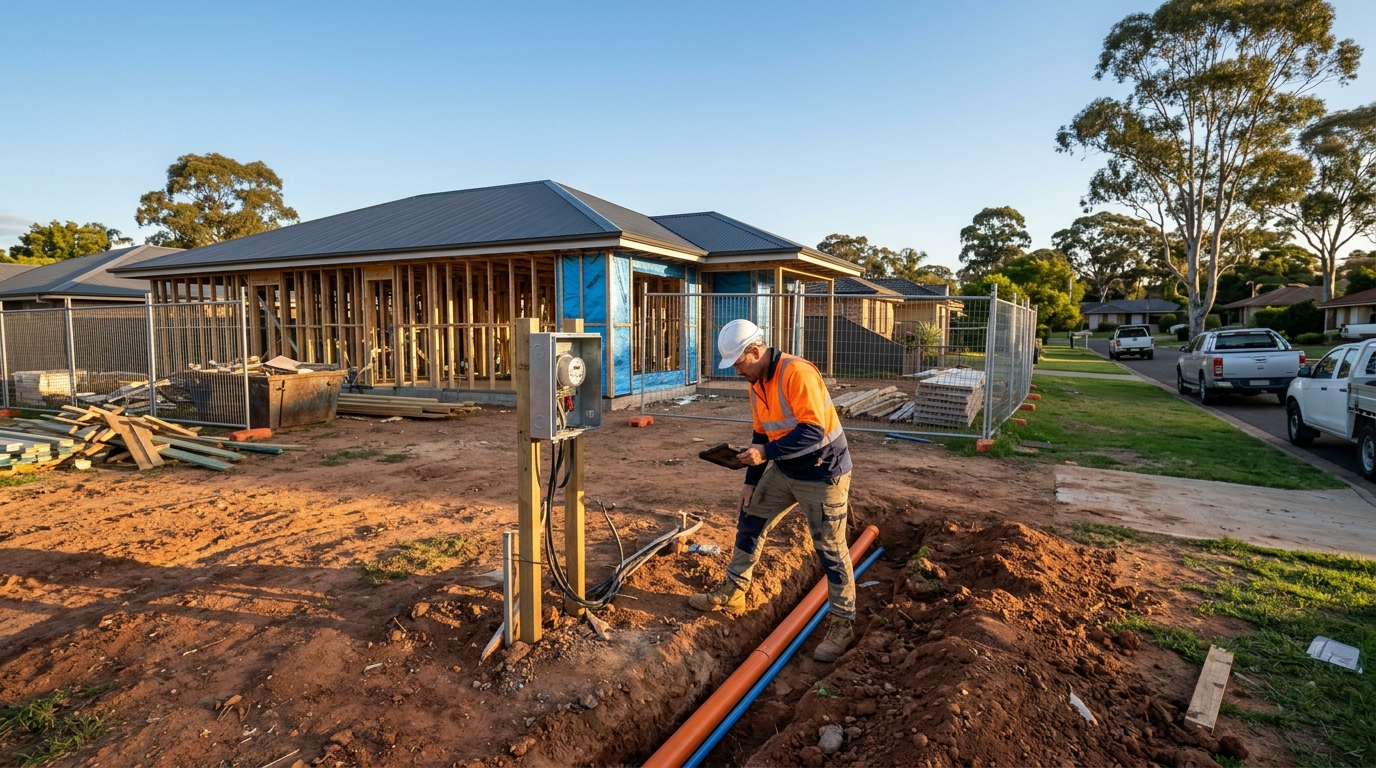
Home Choice Australia is a home development company in New South Wales, helping families plan, design and build new homes across the state, including the Central Coast. You can explore our services here: Expert Home Development Australia wide | 40+ Years Experience
When you plan a build, most of your attention goes to the floor plan, the finishes and the builder’s quote. Utility connection costs are the expenses that often get missed until late in the process, and they can put real pressure on your new home construction budget. This guide explains what to expect, where costs come from and how to plan ahead so nothing catches you off guard.
What Are Utility Connections When Building a New Home?
Utility connections are the links between your new house and the essential services it needs to function. They include power, water, sewer, gas (if you want it) and internet. Each service is supplied by a different provider, and each has its own process, timeline and charges.
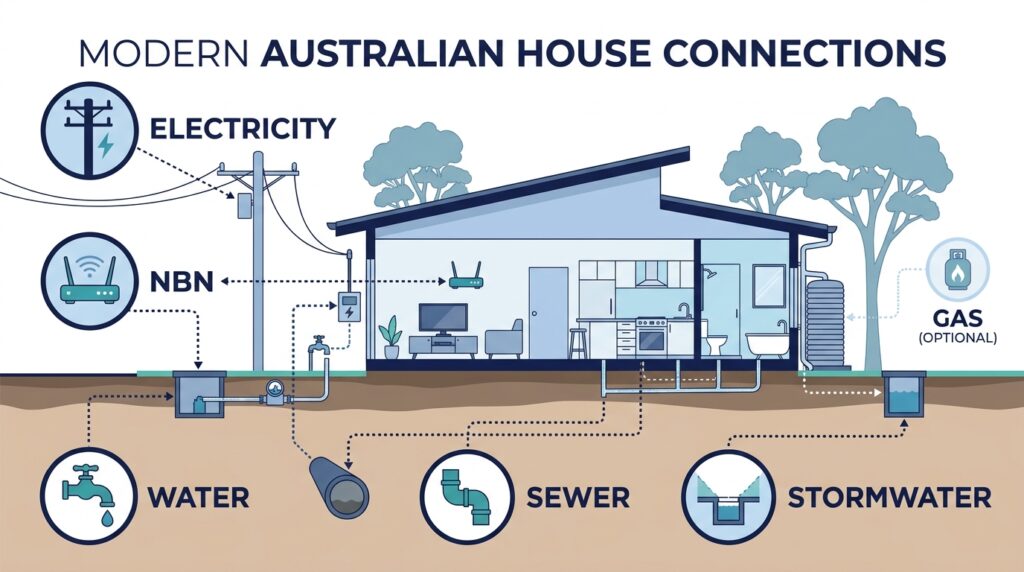
Not every block is ready to plug in. Some blocks sit beside well-established utility infrastructure, while others need pipes, cables or poles extended before a connection is possible. That difference is the main reason two homes of the same size can have very different utility budgets.
Provider charges also differ from the total cost of getting a service to your home. A basic service connection fee covers the provider’s side of the work. It may not cover the cabling, pipework or excavation needed to reach your boundary or your house.
Which Utilities Need to Be Connected to a New House?
Most new homes in NSW need the following:
- Electricity for lighting, appliances, heating and cooling
- Water for drinking, bathrooms, laundry and the kitchen
- Sewer or wastewater, so used water can leave the property safely
- Internet and phone, usually through the NBN
- Stormwater drainage, to manage rain runoff
Gas is optional. Many new builds are now all-electric, so you can decide whether gas suits your lifestyle and budget.
It also helps to separate two kinds of work. The first is the permanent infrastructure installed during construction. The second is choosing retail plans, such as your electricity retailer or internet provider, which you do shortly before moving in.
How Much Do Utility Connections Cost in Australia?
There is no single figure that applies to every home, and anyone quoting one without knowing your block should be treated with caution. The total depends on:
- Where your block is located
- How far the nearest services are from your property boundary
- Whether existing infrastructure has enough capacity
- The slope, soil and access conditions on your site
- The requirements of each provider
- What your builder’s contract already covers
A block in an established suburb with services at the front boundary will usually cost far less to connect than a rural or newly subdivided lot. Remote or hard-to-access sites sit at the higher end.
Expect some administrative charges as well. Connection application fees, inspection fees and compliance certificates can appear at different stages, so it is worth asking each provider for a written breakdown before you commit to a budget.
Electricity Connection Costs for a New Home
Power is usually the largest and most variable utility item. The basic fee from your network provider is only part of the picture.
Several items can add to the total. The first is electricity meter installation, which is needed before your home can be energised and billed. The second is the cabling between the network and your switchboard. If your estate or street requires an underground power connection, you may need to budget for extra cabling and materials compared with an overhead supply.
Trenching is another cost. Utility trenching, the excavation needed to lay service lines, can become expensive if the distance is long or the ground is rocky. If your site is far from the nearest transformer, the network may also need to be extended or strengthened.
Ask your builder and your electrician early whether your block already has a supply point, how far it is from the house and whether the existing network can handle your planned load. This matters even more if you plan to add solar panels, a battery, an electric vehicle charger or ducted air conditioning.
Water Connection Costs and Water Meter Installation
A water supply is essential, and the process is regulated. Your provider needs to know where your home will sit and what size supply you need.
Water connection fees vary depending on your property, the size of the connection and whether a main already runs past your boundary. Water meter installation is typically part of the process, since the meter measures your usage and sets up your billing.
If your block is not yet serviced, additional pipework may be needed to bring water from the nearest main. This can add significantly to the cost, so check this before you sign a contract on a block. Your builder should also confirm who arranges and pays for the work.
Sewer and Wastewater Connection Costs
Wastewater is handled differently depending on where you build. Many urban and suburban blocks connect to a public sewer, while some rural properties use an on-site system such as a septic tank, which has its own design, approval and installation costs.
If you connect to the public network, sewer connection costs depend on the position of the nearest main, the depth of the line and the work needed to join your plumbing to it. A professional plumber usually carries out the connection, and their fees are separate from any charges made by the authority.
In Sydney Water’s service area, new connections generally need water authority approval. The process can include building plan approval, a connection application and, where applicable, a Section 73 Compliance Certificate. Requirements are property-specific, so confirm them directly with the provider before you build. This helps you avoid delays, resubmissions and unplanned fees.
Gas Connection Costs: Is Connecting Gas Worth It?
Gas is no longer a default feature of new homes. Gas connection fees depend on whether mains gas is available in your street and how far your house sits from it. Beyond the provider’s charge, you need to allow for pipework, a gas meter and the appliances that run on it, such as a cooktop, heater or hot water system.
If you go all-electric, you avoid these items and the ongoing supply charges that come with a gas account. If you do want gas, ask your builder whether it is included in your quote and who arranges the connection.
Think about the long-term picture too. Heating and cooking preferences, energy prices and your plans for solar can all affect whether gas makes sense for your household.
NBN and Internet Connection Costs for New Homes
Reliable internet is now a basic requirement for work, study and entertainment. Your NBN connection depends on the technology available at your address, and your builder should plan the internal cabling and outlet locations during the design stage.
For new developments, NBN Co explains that a one-time contribution charge of up to $600, including GST, may apply for a single dwelling. The charge may be passed on by your internet provider, so confirm the amount and who is responsible for paying it.
The telecommunications infrastructure in your area also matters. Some new estates are fully serviced from day one, while others wait for the network to be completed. Check the status of your address on the NBN website and ask your builder where the connection point will be installed.
Stormwater Drainage and Other Infrastructure Costs
Rainwater needs somewhere to go. Stormwater drainage requirements are set by your local council and the conditions of your approval, and they can include pits, pipes, tanks or connections to the street system. The right solution depends on your block’s slope, soil and position.
Other site-related items can sit alongside this. Site preparation costs, such as clearing, levelling, retaining walls, soil testing and driveway crossovers, are often separate from utility work but affect the same budget. Because they are linked, a site with poor drainage or a steep fall can change what your plumber, electrician and civil contractor need to do.
It is wise to discuss these items with your builder before you finalise your plans, because a site cost report or soil test can reveal issues that are far cheaper to deal with early.
What Happens If Utilities Are Not Available Near Your Block?
Sometimes a block sits too far from existing services. In that case, the network may need to be extended before your home can connect, and you may be asked to contribute to the cost.
Infrastructure upgrades might include new mains, larger pipes, additional poles or a new transformer. These can be time-consuming and expensive, and they can delay your build while approvals and works are completed.
Rural and fringe blocks are the most likely to face this. If you are considering one, get written advice from each provider before you buy, and speak with a development specialist about what the land will really cost once it is serviced. A cheaper block can easily become the more expensive option once the services are added.
Are Utility Connections Included in Your Builder’s Contract?
Do not assume they are. Builder contract inclusions vary widely. Some builders include standard connections for a typical site, while others exclude them or allow only a provisional sum, which is an estimate that can change once the real work is priced.
When you review your quote, look for:
- Which services the builder will arrange
- Whether fees paid to authorities are included or passed on to you
- How far from the boundary the allowance applies
- What happens if the site needs more work than expected
- Whether trenching, meters and compliance paperwork are covered
If something is unclear, ask for it in writing. A clear, itemised contract protects you from disputes later.
Who Pays for Utility Connections When Building a New Home?
In most cases the homeowner ultimately pays, but how and when depends on the contract. Some builders arrange the work and include it in the price. Others expect you to organise and pay the providers directly.
Estate developers sometimes cover the main services up to the lot boundary, leaving you responsible for the final link into your home. In older areas or on standalone blocks, more of the responsibility usually falls on the owner.
The key is to find out before you sign. Ask your builder to list each service, state who is responsible and confirm whether the cost is fixed or provisional.
How to Avoid Unexpected Utility Connection Costs
A few habits can prevent most surprises:
- Research the block before you buy. Ask what is already connected and what is not.
- Contact each provider early for written advice on your address.
- Get an itemised quote from your builder and check every exclusion.
- Include a contingency in your budget for site and service surprises.
- Choose appliances and systems with your connections in mind, especially if you are going all-electric or adding solar.
- Lock in timelines, because delays in approvals can hold up the whole build.
Working with an experienced local team makes this easier, since they know how providers and councils operate in your area.
Utility Connection Checklist Before Construction Begins
Use this list before the first slab is poured:
- Confirm which services are available at your boundary
- Request written advice from the power, water and sewer providers
- Check NBN availability and any contribution charge
- Decide whether you want gas
- Review your builder’s contract for inclusions and exclusions
- Confirm who is responsible for each application and payment
- Check council requirements for stormwater drainage
- Allow a contingency for unforeseen site work
- Note the timeframes for approvals and meter installs
- Plan to choose your retail energy and internet plans before moving in
Frequently Asked Questions About New Home Utility Connections
1. How much do utility connections cost when building a new home in NSW?
There is no fixed figure. The cost depends on your location, how close the services are to your boundary, site conditions and what your builder’s contract includes. Request written quotes from each provider for your address.
2. Which utilities need to be connected before I can move in?
You will need power, water, sewer or an approved on-site wastewater system and, in most cases, internet. Gas is optional. Stormwater arrangements must also meet council requirements.
3. Is the NBN connection free for a new home?
Not always. NBN Co explains that a one-time contribution charge of up to $600, including GST, may apply to a new single dwelling. Your internet provider might pass it on, so check the amount and who pays.
4. Who pays for utility connections when building a new home?
Generally the homeowner, though it depends on your contract. Some builders include the work in the price, while others expect you to pay providers directly. Always confirm this in writing.
5. What happens if there are no utilities near my block?
The network may need to be extended, which can add cost and time. Ask each provider for written advice before buying the land, and factor any extension into your total budget.
6. Can I avoid hidden utility costs when building a house?
You can reduce them significantly. Research the block, get itemised quotes, read the contract exclusions carefully and set aside a contingency for the unexpected.
Plan Your Build With Confidence
Utilities rarely make the glossy brochures, but they decide whether your new home is ready to live in. Understanding the difference between a simple provider fee and the full cost of bringing a service to your property helps you build a realistic budget and avoid stress later.
Home Choice Australia supports homeowners across New South Wales with practical advice on planning, approvals and building. If you are preparing for a new build, speak with our team about your block and your budget before you commit.