
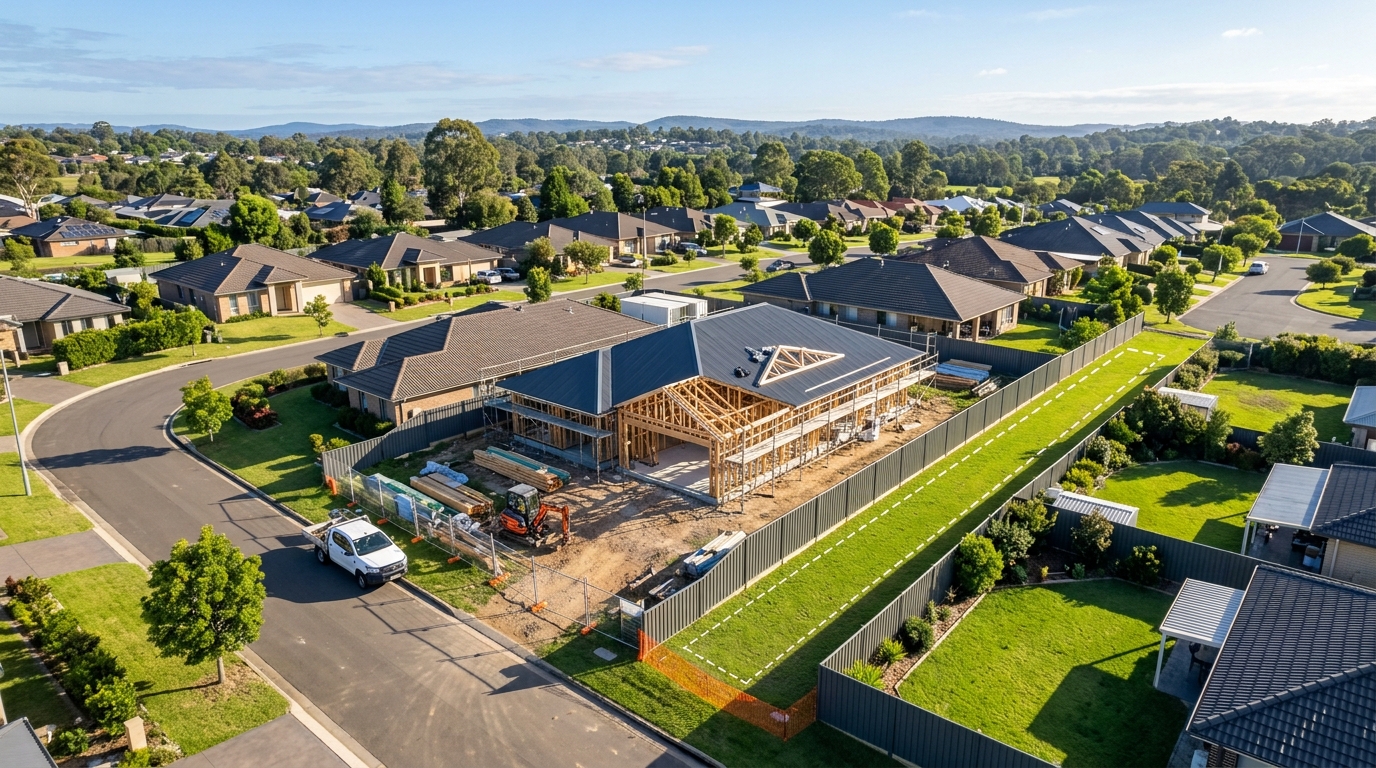
Homechoiceaustralia is a home development company in New South Wales, helping families plan, design and build homes across the state. You can explore our building and development Home Development Services Erina Heights NSW. Before any design is finalised, one question comes up again and again: is there an easement on the block? Easements can change where a home sits, how it is designed and how much it costs. This guide explains them in plain language so you can plan with confidence.
What Is an Easement?
An easement is a legal right that lets someone use part of another person’s land for a specific purpose. The land stays in the owner’s name, but certain uses are protected. A neighbour may need to cross your block to reach theirs. A utility provider may need to maintain a pipe that runs under your backyard.
Easements stay with the land, not the owner. If you buy a block, you take on every easement attached to it. That is why they matter so much before you commit to a design or a purchase.
Common Types of Easements
Easements come in many forms, and each one restricts your land differently. A services easement allows pipes, cables or wires to run through a property. A right of way lets neighbours or the public cross your land to reach a road or another lot. Access easements work in a similar way and often cover shared driveways.
Light and air easements stop owners from building in a way that blocks a neighbour’s sunlight or ventilation. Support easements protect a structure that depends on your land for stability. Always check which type applies, because the rules for each are different.
Positive and Negative Easements
Lawyers often split easements into two groups. Positive and negative easements work in opposite ways. A positive easement lets someone do something on your land, such as walk across it or maintain a pipe. A negative easement stops you from doing something, such as building a structure that blocks a neighbour’s view or light.
For builders, negative easements often shape the design, while positive ones usually affect where you can place walls, slabs and driveways.
Registered and Unregistered Easements
Most easements are recorded on the land’s records, but not all. A registered easement is lodged with NSW Land Registry Services and shows up in the property’s official documents. Anyone who looks can see it.
Some easements for water, sewerage, electricity and telecommunications may exist by law even when they are not shown clearly. These statutory easements still carry legal force. In NSW, Section 88B Conveyancing Act is the provision commonly used to create easements on subdivision plans and set out their terms. Reading those terms carefully tells you who benefits, who maintains the easement and what you can build near it.
How Easements Affect Your Building Plans
Understanding easements and building plans together is essential, because an easement can shrink the usable part of your block. So, how do easements affect building a house? In several practical ways.
First, they reduce your buildable area. A strip that looks like usable backyard may be off limits for walls, slabs or driveways. Second, they influence your building envelope, which is the three-dimensional space your home may occupy once council rules and easements are applied. Third, they add to the required setback, since many authorities want clear distance between a structure and a pipe.
An easement can also change your floor plan, garage position, pool location and even your roof design. Early advice avoids costly redesigns later.
Can You Build Over an Easement in NSW?
Many owners ask, can you build over an easement in NSW? The honest answer is that it depends on the type of easement, the asset inside it and the authority that controls it. Some uses are strictly prohibited. Others may be approved with conditions.
In general, building over an easement NSW authorities control is possible only with written consent. Lightweight structures such as carports, decks or pergolas are sometimes approved when the asset is small and shallow. Habitable rooms are far harder to approve and are often refused. Where a project involves building over easement land, the authority will want proof that it can still reach and repair the asset without damage.
Never start work on the assumption that “it should be fine.” Get consent first.
Drainage Easements
If you are wondering what is a drainage easement on a property, it is a strip of land that carries stormwater from one lot, or from a street, to a creek or council pipe. These easements are typically controlled by the local council.
They are usually the strictest type. Councils commonly refuse permanent structures over them because blocked drainage can cause flooding for neighbours. You can often build up to the edge, but not over it. Always speak with your council before finalising any plan near a drainage line.
Sewer and Water Easements
Sewer and water mains are usually managed by the water utility. In Sydney that is typically Sydney Water, while regional areas are served by local water authorities.
Building near a sewer easement NSW properties often have is common, particularly along rear boundaries. Authorities may allow building close to a sewer if the structure is designed to protect the pipe and keep access clear. This normally requires Sydney Water approval, which can involve a technical review, plans and inspections during construction. The authority will check pipe depth, pipe size and the load your footings place on the ground around it.
If the pipe is shallow or large, approval becomes harder and sometimes impossible.
Utility and Stormwater Easements
A utility easement serves power, gas, water or communications networks. Electricity easements often limit tall structures and trees. Gas and telecommunications lines carry their own restrictions on digging and excavation.
Stormwater and overland flow easements deal with water movement during heavy rain. Building over or beside these paths can worsen flooding risk and make asset management harder. For that reason, authorities aim to keep structures to a minimum in these areas.
If your site has more than one asset, expect more than one approval pathway.
The Approval Process
The process usually follows the same pattern. First, identify who owns the asset. Second, prepare a detailed site plan showing the easement, boundaries and proposed structure. Third, submit a build-over application to the asset owner, along with footing details and engineering drawings.
You may also need council approval through a development application or a complying development certificate. Keep in mind that permission from a water authority is separate from council consent. One does not replace the other.
Approval times can stretch for weeks, so build that into your schedule. A complete application with clear drawings moves faster than an incomplete one.
Design Solutions
Good design can often solve easement problems. The simplest option is to build clear of the easement and reposition the home on the lot. Where that is not possible, engineers can sometimes protect a pipe with concrete encasement or by lowering or deepening footings.
Foundation modifications such as bored piers or deepened footings can move building loads away from a pipe. In some cases, the asset can be relocated, though this can be costly and needs authority approval.
A good builder tests several layouts early. A slightly narrower or longer floor plan often removes the problem entirely and costs far less than engineering a fix.
Consequences of Building Without Approval
Ignoring an easement carries serious risk. If a structure is built without consent, the owner may be required to remove it at their own cost. The authority may also claim damages if a pipe is harmed.
An unapproved structure can also cause trouble at sale time. Buyers, lenders and solicitors often discover problems, which can delay settlement or reduce the sale price. Insurance claims may also become difficult.
The cost of fixing a mistake is nearly always higher than the cost of doing it properly the first time.
How to Check for Easements Before Buying Land
Before you sign a contract, do your homework. If you are asking how to check for easements before buying land NSW buyers should start with the property’s official records and the contract of sale.
A title search shows the registered ownership and any recorded interests. Look for each easement on title, including its purpose and the parties who benefit. Then review the deposited plan, which maps the easement’s exact location and width on the block.
Where the position is unclear, a licensed surveyor can complete an easement survey to mark the strip on the ground. Your solicitor or conveyancer should review all documents, and a water authority can confirm where its pipes actually run. Doing this before purchase can save thousands.
Costs and Timeframes
Easement costs vary widely. Application fees, engineering drawings, surveys, inspections and construction changes can all add up. Complex sites cost more than simple ones.
Timeframes depend on the asset owner and the complexity of the project. Straightforward applications may move quickly, while larger or deeper pipes can take longer to assess. Ask your builder for a clear allowance in your budget and program, rather than assuming the best case.
How Home Choice Aaustralia Helps
Home choice australia guides clients through each stage, from reading title documents to coordinating approvals and adjusting designs. Our team checks easements before design begins, so your plans are realistic from day one. We work with surveyors, engineers and authorities to keep your project moving and compliant.
If you are planning a new home or a knockdown rebuild anywhere in New South Wales, speak with us early. A short conversation now can prevent months of delay later.
Frequently Asked Questions
What is the difference between an easement and a covenant?
An easement gives someone the right to use your land for a specific purpose. A covenant is a promise that restricts what you can do with your land, such as limiting building materials or styles. Both can appear in your property documents.
Who is responsible for maintaining an easement?
It depends on the terms. Utility providers usually maintain their own pipes and cables, while the landowner is often responsible for keeping the surface clear. Shared driveways may be maintained by all users. Check the wording of your documents.
Can an easement be removed?
Sometimes. If the easement is no longer needed, the people who benefit can agree to release it, or an application may be made to the court. Authorities rarely give up easements that protect working assets.
Will an easement reduce my property value?
It can, depending on its size, location and purpose. A narrow strip along a boundary may have little effect, while one running through the middle of a block can limit design options and appeal to buyers.
Can I plant trees or build a fence on an easement?
Often you can install a fence or plant low shrubs, but deep-rooted trees and solid walls are commonly restricted. Always confirm with the authority that owns the easement before planting or installing anything.
Do I need a builder who understands easements?
Yes. An experienced builder checks the documents early, coordinates with authorities and adjusts the design when needed. This reduces delays, protects your budget and keeps your project compliant.