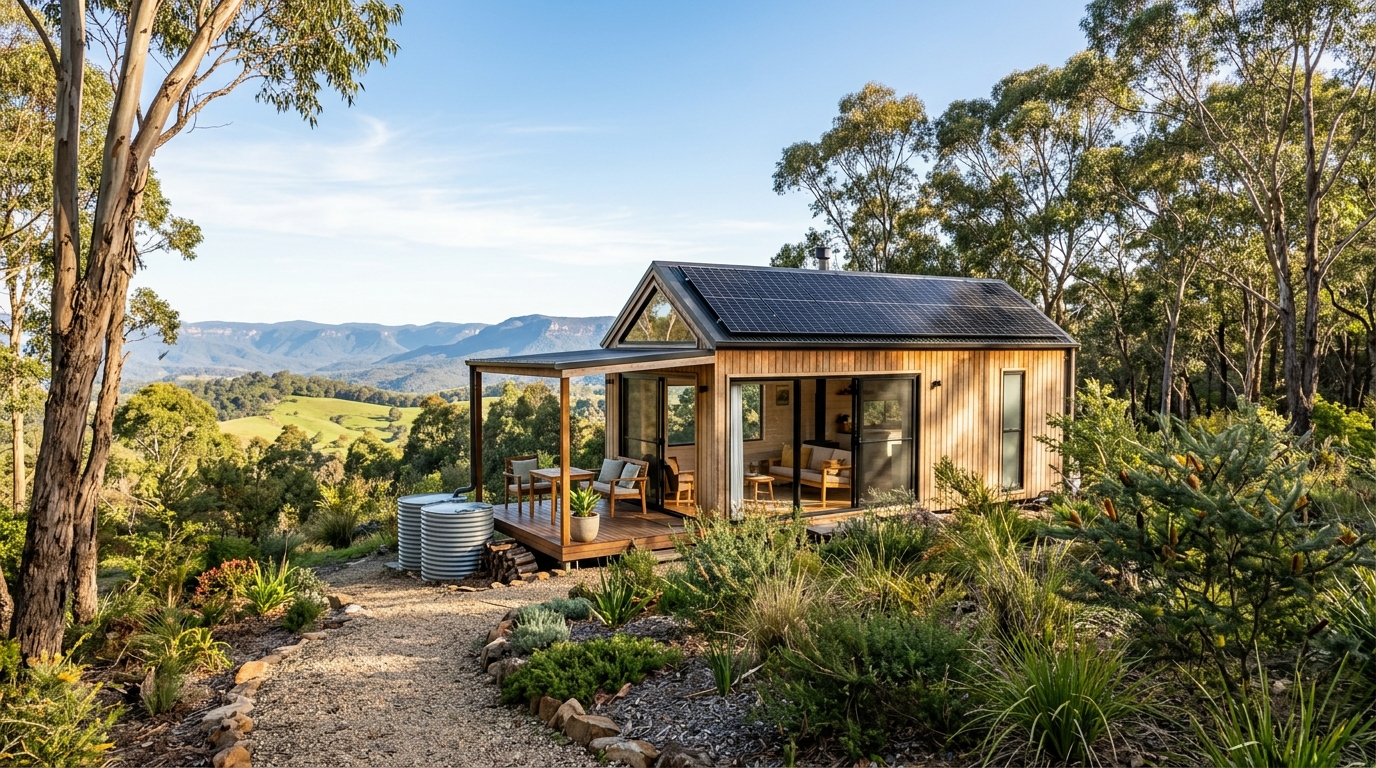
Australia’s housing market is pushing more people toward smarter, smaller living solutions. At Home Choice Australia, we have worked with hundreds of Australians navigating the tiny home journey, and we know firsthand that building a tiny house in NSW requires careful planning, a clear understanding of local regulations, and the right mindset from day one.
This guide covers everything — from legal definitions and council approvals to costs, design, and utilities — so you can make confident decisions before you spend a single dollar.
What Is a Tiny House?
A tiny house is a compact dwelling, typically between 15 and 50 square metres, designed to deliver full residential functionality within a minimal footprint. In NSW, the definition matters legally, so it helps to understand the different types.
Tiny House on Wheels (THOW)
A tiny house on wheels (THOW) is built on a registered trailer, making it technically a moveable dwelling under NSW planning law. This classification gives it more flexibility in some situations but also subjects it to caravan regulations in others. THOWs are popular for people who want the freedom to relocate without committing to a fixed foundation.
Fixed Tiny Homes
A fixed tiny home sits on a permanent or semi-permanent foundation. These structures are treated more like traditional dwellings under the National Construction Code (NCC) and usually require a Development Application (DA) or Complying Development Certificate (CDC) before you can occupy them.
Tiny Homes vs Granny Flats
People often confuse tiny homes with granny flats. A granny flat is a secondary dwelling on the same lot as a primary home, with strict size limits (typically up to 60 sqm in NSW). Tiny homes can serve a similar purpose but follow different planning pathways. Granny flat regulations in NSW are often more straightforward than those for standalone tiny homes on vacant land.
Tiny Homes vs Caravans
Legally, NSW treats some THOWs as caravans or moveable dwellings, which affects where you can park them and how long you can live in them. Understanding this distinction early prevents costly mistakes later.
Can You Legally Live in a Tiny House in NSW?
Yes — but the path to legal residency in a tiny house depends heavily on your land type, your council, and your dwelling classification.
NSW Planning Laws Explained
NSW planning laws sit under the Environmental Planning and Assessment Act 1979. This legislation governs what you can build, where you can build it, and what approvals you need. Tiny house regulations in NSW are not unified — different councils interpret rules differently, so your experience in Byron Bay may differ entirely from someone in the Hunter Valley.
Council Approval Requirements and DA vs CDC
Most fixed tiny homes require council approval in the form of a Development Application (DA) or a Complying Development Certificate (CDC). A CDC is faster and processed by a private certifier if your project meets set criteria. A DA involves a more detailed assessment by the council and suits projects in sensitive zones or that fall outside standard development provisions.
If you plan to place a THOW on your land permanently, many councils still require approval, even if you classify it as a caravan. Do not assume that wheels mean no paperwork.
Zoning Restrictions and Rural vs Residential Land
Zoning laws in NSW determine what land use is permitted in a given area. Rural land often allows more flexibility for tiny homes, particularly as secondary dwellings or for agricultural workers. Residential zones are more restrictive, and placing a tiny home in your backyard as a second dwelling requires compliance with secondary dwelling provisions.
Tiny homes on vacant land face the most scrutiny. In many zones, you cannot legally reside in a THOW on vacant land long term without approval.
Tiny House on Wheels vs Fixed Tiny House
Choosing between a THOW and a fixed tiny home is one of the first major decisions you will make.
THOWs offer mobility, lower upfront costs in some cases, and the romance of flexible living. However, they face towing requirements, trailer weight limits, and registration costs. Finding legal, long-term places to park them in NSW remains one of the biggest practical challenges.
Fixed tiny homes offer more design freedom, easier utility connections, and a clearer planning pathway in many councils. They generally hold better long-term investment value and are easier to finance.
For most NSW properties, a fixed tiny home or a properly approved secondary dwelling delivers a more stable and liveable outcome.
How Much Does It Cost to Build a Tiny House in Australia?
Cost is where many people get surprised. Here is a realistic breakdown based on current market conditions in NSW.
Average tiny house costs in NSW:
- DIY tiny house build: $30,000 – $80,000
- Prefab tiny homes: $60,000 – $150,000
- Tiny house trailer costs: $8,000 – $20,000
- Utility connection costs: $5,000 – $30,000 depending on off-grid vs mains
- Council and approval fees: $1,500 – $10,000+
- Ongoing maintenance: Budget 1–2% of build cost annually
Hidden costs most people forget include engineering certificates, bushfire and flood assessments if your land sits in a risk zone, driveway construction, and landscaping. At Home Choice Australia, we always recommend adding a 15–20% contingency buffer to your total budget.
Tiny House Building Requirements in NSW
Regardless of whether your home sits on wheels or a slab, certain technical standards apply.
The National Construction Code (NCC) sets minimum standards for structural integrity, fire safety, energy efficiency, and livability. Fixed tiny homes must comply in full. BASIX requirements (Building Sustainability Index) apply to new residential buildings in NSW, meaning your tiny home needs to meet energy and water efficiency benchmarks.
Structural engineering requirements ensure your home can handle wind, load, and ground movement. Plumbing approvals are mandatory for any fixed water and sewage connections. Electrical requirements follow Australian Standards and must be signed off by a licensed electrician. For THOWs, trailer weight limits and axle ratings matter enormously — overloading a trailer is both dangerous and illegal.
Utilities for Tiny Homes
One of the biggest advantages of tiny house living is the ability to go off-grid.
Solar power systems are increasingly affordable and well-suited to NSW’s sunny climate. A 6kW system with battery storage can power a tiny home comfortably. Water tanks and rainwater collection reduce reliance on mains water, especially on rural land. Septic systems and composting toilets handle waste where no mains sewer connection exists.
For those in suburban areas, connecting to mains power and water is simpler but adds upfront costs and council requirements. Off-grid tiny house setups suit rural land NSW particularly well and align with an eco-friendly living philosophy that many tiny home owners embrace.
DIY Tiny House vs Hiring a Builder
Building your own tiny house is achievable, but it demands skills across carpentry, plumbing, electrical, and project management. DIY tiny house Australia projects often take 12–24 months, and mistakes are expensive to correct.
Hiring a professional tiny home builder gives you certified workmanship, faster timelines (typically 3–6 months for a prefab tiny home), and peace of mind with approvals. Before choosing a builder, ask for examples of completed NSW projects, references from past clients, proof of licensing, and clarity on what approvals they manage on your behalf.
Common Tiny House Mistakes to Avoid
After working with clients across NSW, these are the mistakes we see most often:
Ignoring council regulations leads to demolition orders or inability to legally occupy your home. Underestimating costs derails projects mid-build. Poor storage planning makes even a well-designed tiny home feel cramped within weeks. Exceeding trailer weight limits creates serious safety risks. Buying unsuitable land — whether flood-prone, bushfire-prone, or incorrectly zoned — causes legal and financial pain. Skipping professional engineering advice, especially for THOWs, is a shortcut that almost always costs more later.
Is Building a Tiny House Worth It in Australia?
For the right person, absolutely yes. Tiny house living delivers affordable housing in a country where median home prices remain out of reach for many. It supports a minimalist lifestyle, reduces environmental impact, and offers genuine freedom — particularly in rural NSW.
The cons are real too. Financing is harder to secure than for traditional homes. Resale markets are still developing. NSW zoning laws remain inconsistent and confusing. Tiny homes suit singles, couples, retirees, and those seeking a sustainable housing alternative most effectively.
The Australian housing crisis is pushing government and councils to look at tiny homes more seriously. The future looks promising, but today you still need to do your homework.
Frequently Asked Questions
Do you need council approval for a tiny house in NSW?
In most cases, yes — either a DA or CDC is required for fixed tiny homes and often for permanent THOW placements.
Can you put a tiny house on vacant land?
It depends on zoning. Many zones require a primary dwelling to exist first, or specific approval for a secondary dwelling.
How much does a tiny house cost in Australia?
Expect $30,000 on the low DIY end to $150,000+ for a fully fitted prefab tiny home in NSW.
Can tiny homes be off-grid?
Yes — solar, rainwater, and composting systems make full off-grid living practical.
How long does it take to build a tiny house?
DIY projects take 12–24 months. Professional builds typically take 3–6 months.
Final Thoughts
Building a tiny house in NSW is genuinely achievable, but it rewards those who plan carefully and understand the rules before they start. Tiny homes can deliver affordable housing, a fulfilling minimalist lifestyle, and a smaller environmental footprint — but only if you approach the process with your eyes open.
At Home Choice Australia, we believe every Australian deserves a home that fits their life and their budget. Whether you are exploring a tiny house on wheels, a fixed eco-friendly build, or a backyard tiny home on your existing property, we encourage you to research your council’s specific requirements, consult a licensed builder, and plan thoroughly before you commit.
The future of tiny homes in Australia is bright — and with the right preparation, yours can be too.