If you own land in New South Wales and you’re not exploring multi dwelling homes, you may be leaving serious money on the table. Across Sydney, Parramatta, Blacktown, Liverpool NSW, Newcastle, and Wollongong, landowners are transforming single residential lots into high-performing assets — generating rental income, building equity, and meeting the region’s growing housing demand all at once.
Multi-dwelling development in NSW, Australia, is no longer reserved for large-scale developers. Everyday property owners are now using smart property maximisation strategies to unlock the hidden potential of their land. Whether you’re chasing passive income, long-term capital appreciation, or simply want to future-proof your investment, multi-dwelling homes offer a compelling path forward.
This guide walks you through everything you need to know — from NSW planning laws to construction, leasing, and beyond.
2. What Are Multi Dwelling Homes?
In simple terms, multi dwelling homes refer to multiple separate dwellings built on a single lot of land. Each dwelling functions independently, with its own entrance, living space, kitchen, and bathroom.
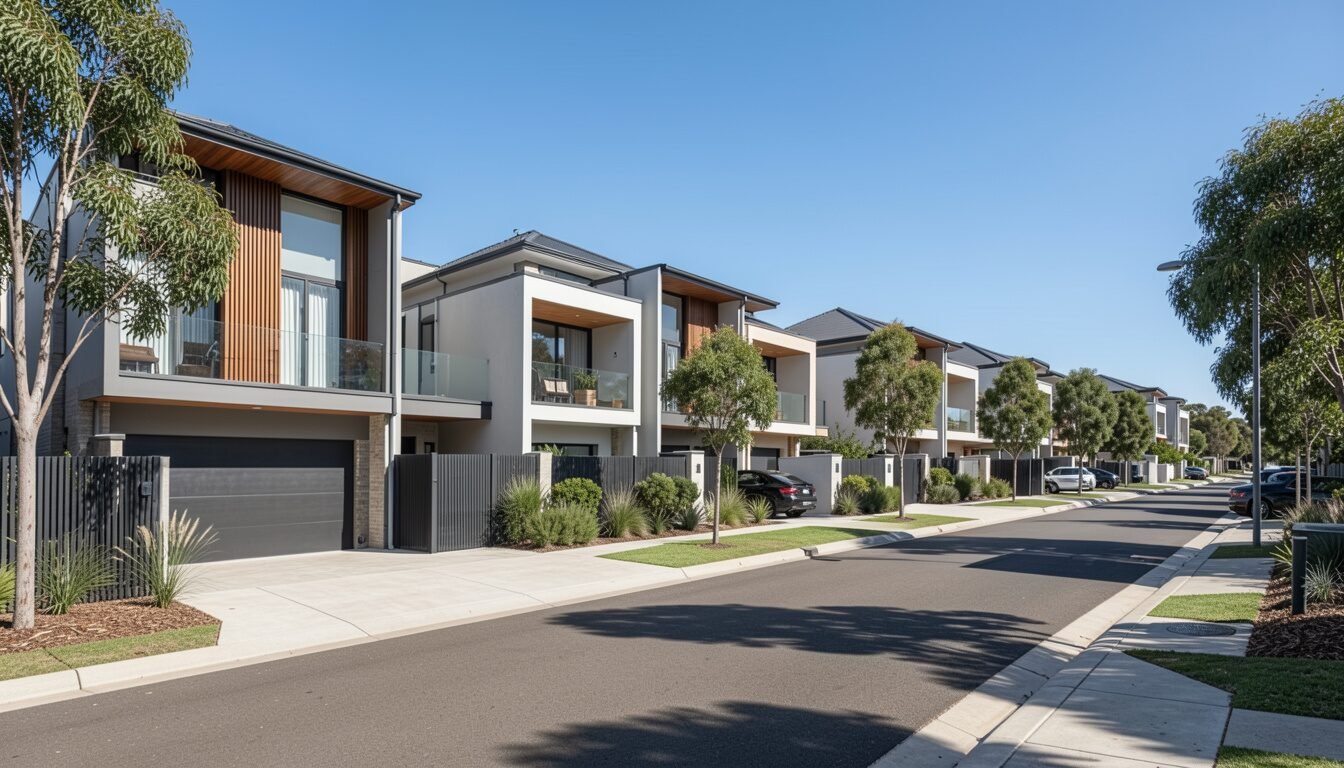
Under NSW planning codes, common examples include townhouses, villas, terraces, row housing, and manor houses. These fall under the broader category of multi-unit housing in Australia and represent what urban planners call the “missing middle” — housing that sits between a standalone house and a high-rise apartment block.
It’s worth clarifying the differences between related terms. A dual occupancy involves two dwellings on one lot — either attached (like a duplex) or detached (like a granny flat). A granny flat is a secondary dwelling, typically smaller, added to an existing property. Multi dwelling housing, by contrast, refers to three or more dwellings on a single lot and is governed by specific rules under the NSW planning framework.
Each option sits on a spectrum of complexity, cost, and return — and understanding where your property fits is the first step toward smart property investment strategy in Australia.
3. The NSW Property Market & Planning Environment
NSW has undergone significant planning reforms in recent years to address the housing supply shortage in Australia. The introduction of the Low Rise Housing Diversity Code expanded the complying development pathway for dual occupancy homes in NSW, townhouses, and manor houses across many residential zones — reducing the time and cost of getting projects approved.
There are two main approval pathways for residential development in New South Wales. The first is a Development Application (DA), assessed by your local council. This path allows more design flexibility but typically takes longer and involves public notification. The second is a Complying Development Certificate (CDC), a faster private certifier pathway for projects that meet pre-set standards under the NSW Planning Portal.
Zoning laws in NSW residential properties determine what you can build and where. Most R2 Low Density Residential zones now permit dual occupancy, while R3 Medium Density zones open the door to full multi dwelling development. Council regulations for dual occupancy in NSW vary, so always verify your local council’s specific requirements before committing to a design.
4. Key Benefits of Multi Dwelling Homes
4.1 Increased Rental Income
One of the strongest arguments for multi dwelling development is the ability to generate multiple income streams from a single block of land. Instead of collecting rent from one tenancy, you collect from two, three, or more — significantly lifting rental yield on NSW properties and improving monthly cash flow.
In high-demand suburbs of Sydney and surrounding areas, individual townhouses and villas can command strong weekly rents. Two or three of these on one lot can transform a modestly performing asset into a top-tier investment property in NSW Australia.
4.2 Higher Property Value
Multi dwelling homes consistently deliver value uplift through increased density and land utilisation efficiency. When you build dual occupancy property in NSW or develop a townhouse complex, you’re not just adding structures — you’re multiplying the asset count on your land.
Strata titling each dwelling allows you to sell them individually on the open market, which typically achieves a higher combined sale price than selling the whole block as one. This is one of the most effective property value enhancement techniques available to NSW landowners today.
4.3 Efficient Use of Land
Australia faces an ongoing challenge with urban sprawl. Higher density housing in NSW is increasingly seen as a solution — not just for investors, but for communities. By maximising land in high-demand areas, you contribute to housing affordability solutions while personally benefiting from superior real estate ROI in Australia.
Land utilisation efficiency also matters from a construction cost perspective. Building two or three dwellings on one site shares site preparation costs, reducing the per-dwelling cost compared to developing separate blocks.
5. Types of Multi Dwelling Developments in NSW
NSW planning laws recognise several forms of multi dwelling housing:
Townhouses and villas are the most common form. They suit medium to large lots and typically offer two or three bedrooms per dwelling — ideal for families and achieving strong rental income.
Terraces and row housing work well on narrower lots, particularly in inner-city suburbs where land is expensive and housing demand in Sydney suburbs remains intense.
Manor houses are a relatively newer addition to NSW planning codes, allowing up to four dwellings in a compact building format. They represent an excellent “missing middle” solution for suburban redevelopment opportunities.
Duplex development in NSW remains highly popular due to its simplicity and accessibility for first-time developers. Knockdown rebuild duplex projects in particular are a proven strategy for property portfolio diversification.
6. Step-by-Step Process to Maximize Your Property
6.1 Site Feasibility and Selection
Before spending a dollar on design, assess your site carefully. Key factors include zoning, lot size, shape, slope, street frontage, and access to services. Early yield analysis and feasibility modelling will tell you whether a project stacks up financially. Many experienced developers also explore land subdivision in NSW rules at this stage to understand future exit strategies.
6.2 Concept Design and Planning
Work with an experienced architect or building designer who understands both NSW planning laws and market preferences. The goal is to balance density — maximising the number of dwellings — with liveability, so each home is genuinely appealing to tenants or buyers.
6.3 Approvals and Compliance
Decide early whether your project suits a CDC or DA pathway. Gather your consultant team — surveyor, civil engineer, town planner, and certifier. Infrastructure and zoning compliance must be addressed thoroughly to avoid costly delays in the planning permission approval process.
6.4 Construction and Project Management
Select your builder through a competitive tender process. Establish clear milestones, payment schedules, and a variation management process. Cost control during construction is critical to protecting real estate investment returns.
6.5 Leasing, Selling, and Long-Term Strategy
Once complete, you have three main options: hold all dwellings as investment properties for ongoing passive income, sell all individually to realise capital gains, or use a hybrid approach — sell one or two to recover construction costs and hold the rest for long-term capital growth. Tax and financing advice from a qualified professional is essential at this stage.
7. Common Challenges and How to Overcome Them
Regulatory constraints remain the most common obstacle. Council objections, heritage overlays, and stormwater requirements can derail projects if not identified early. The solution is thorough due diligence before purchasing or committing to a design.
Budget overruns stem from poor feasibility modelling and inadequate contingency planning. Always build a 10–15% contingency into your construction cost estimates for duplex projects in Australia.
Design compromises are tempting when trying to squeeze yield, but under-designed dwellings hurt your rental yield and resale value. Invest in quality design — it pays back through better tenants and stronger sale prices.
8. NSW Case Study Example
A homeowner in Blacktown, NSW purchased a 700sqm R3-zoned block with a tired single dwelling. After completing a feasibility study with Home Choice Australia, the site was identified as suitable for a three-townhouse development via a DA pathway. The existing house was demolished, and three two-bedroom townhouses were constructed over 14 months. Each townhouse achieved a weekly rent of $580, generating a combined weekly income of $1,740 — compared to the $420 per week the original dwelling had returned. The combined strata value of the three titles exceeded the construction cost and land purchase by a significant margin, delivering strong real estate ROI.
9. Conclusion
Multi dwelling homes represent one of the most powerful property maximisation strategies available to NSW landowners today. By understanding the planning environment, choosing the right development type, and managing the process carefully, you can significantly increase your income, grow your property portfolio, and contribute to solving Australia’s housing supply challenges.
Home Choice Australia works with landowners across Sydney, Parramatta, Newcastle, Wollongong, and greater NSW to unlock the full potential of their land. Reach out today to assess what your property could achieve.
10. FAQs
Can I build multi dwelling homes on my NSW block? It depends on your zoning and lot size. R3 zones generally permit multi dwelling housing, while R2 zones may allow dual occupancy. Check the NSW Planning Portal or speak with a town planner.
What’s the difference between dual occupancy and multi dwelling? Dual occupancy means two dwellings on one lot. Multi dwelling housing means three or more. Both fall under different planning controls in NSW.
How much income can multi dwelling homes generate in NSW? Rental income varies by location and dwelling size, but multi dwelling developments in Sydney and surrounding areas can generate significantly higher combined yields compared to a single dwelling — often two to three times the original rental return.