
Home Choice Australia is a home development company in New South Wales, and we help families plan, design and build homes that look great and stay easy to live in. Explore our home development services to see how we take a project from first sketch to final handover.
Most people dream of a beautiful new home, but few dream of spending every weekend cleaning, repairing and mowing. Australian weather adds to the workload, with strong sun, heavy rain, humidity and the occasional bushfire season all testing a home year after year. The good news is that most upkeep is decided long before the first brick is laid. This guide explains how to design a low-maintenance home in Australia by making smart choices about materials, layout, interiors, gardens and long-term costs.
1. Choose Durable Materials for Australian Conditions
Every material in your home will face sun, moisture and daily wear. Choosing well at the start saves you a lot of time and money later. Choosing durable building materials means picking products that resist fading, cracking, rot and pests without constant sealing, painting or replacement.
Low-Maintenance Exterior Walls and Cladding
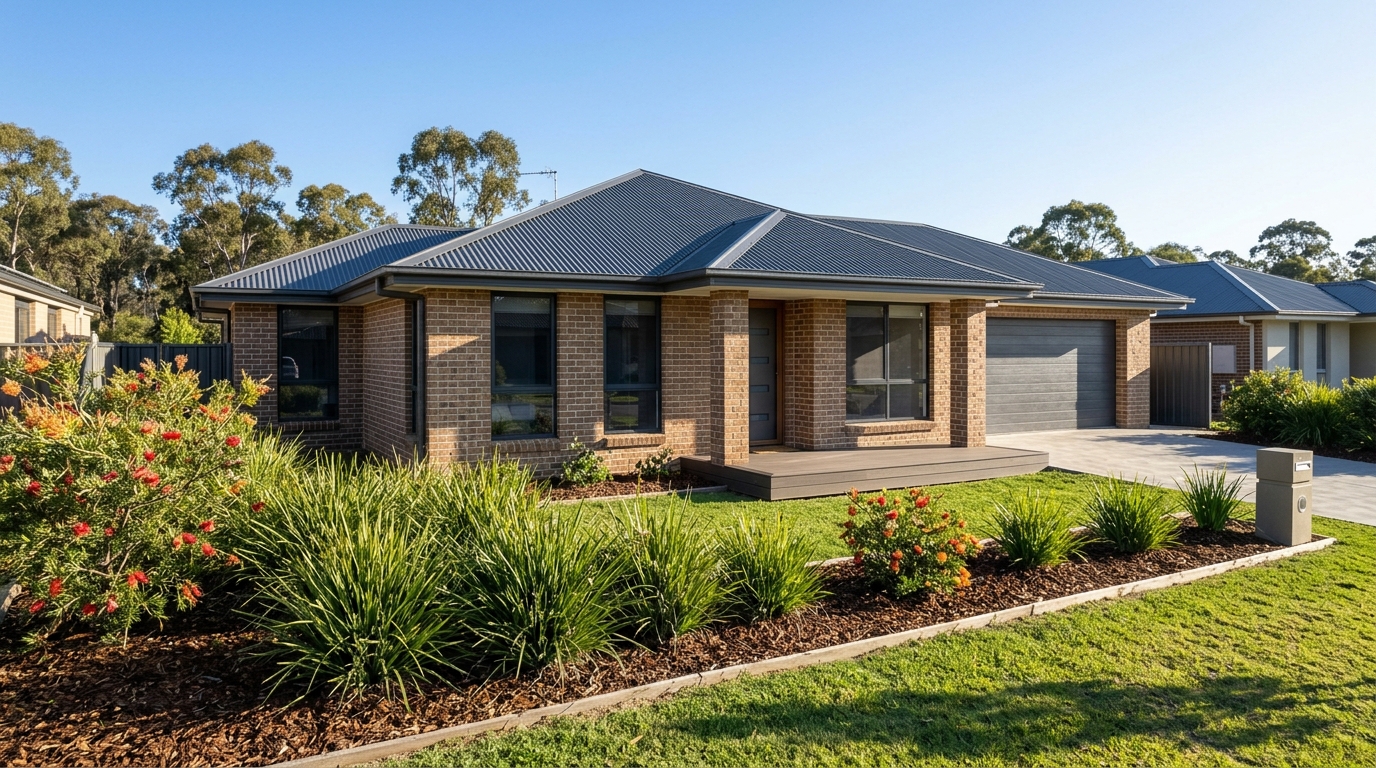
Exterior walls take the most punishment. A face brick exterior never needs repainting, resists weather and handles temperature swings well. Fibre cement cladding and rendered finishes can also perform nicely, provided they are installed properly and sealed to manufacturer guidelines. Timber looks wonderful but usually needs regular staining, so use it as a feature rather than covering the whole house.
Roofing Materials That Withstand Local Weather
Your roof is your first line of defence. Colorbond roofing is popular across New South Wales because steel resists rot, does not attract termites and comes in heat-reflective colours that help keep interiors cooler. Concrete and terracotta tiles are another long-lasting choice, though they are heavier and may need occasional re-pointing. Whatever you pick, ask about warranties and coastal-environment suitability.
Durable Flooring, Tiles and Decking
Floors see constant traffic, so they deserve careful thought. Large-format porcelain tiles, sealed concrete and quality hybrid planks are all strong performers. For outdoor areas, composite decking avoids the splintering, rotting and yearly oiling that natural timber needs, so you spend more time enjoying the space and less time maintaining it.
2. Choose a Practical Floor Plan
A smart layout reduces cleaning time, wasted space and everyday frustration. Good planning is just as important as good materials.
Why the Right Home Size Matters
Bigger is not always better. Every extra room means more floor to clean, more walls to paint and more space to heat and cool. Think honestly about how your household lives. A spare room that only collects boxes is a maintenance cost with no benefit. Right-sizing your home is one of the simplest ways to cut ongoing effort.
Open-Plan Living and Easy Movement
Open-plan living gives you fewer doors, fewer corners and long clear sightlines, which makes vacuuming and mopping faster. It also improves airflow and keeps family spaces connected. Just make sure the design allows for some separation, such as a study nook or a sliding door, so noise and clutter do not take over.
Built-In Storage to Reduce Clutter
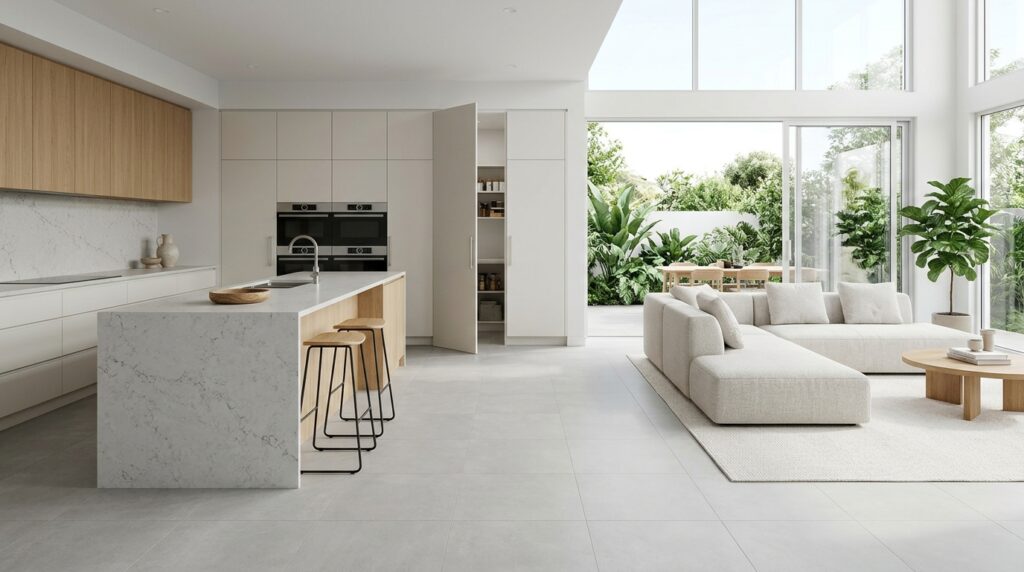
Clutter makes cleaning harder than it needs to be. Built-in storage solutions such as walk-in pantries, linen cupboards, mudroom benches and wardrobes keep belongings out of sight and surfaces clear. A well-planned entry with hooks and shoe storage also stops dirt from travelling through the house.
A functional floor plan ties all of this together, placing the kitchen, laundry and living areas so that daily tasks feel natural and require fewer steps.
3. Design an Easy-Clean Kitchen and Bathroom
Kitchens and bathrooms are where grime, grease and moisture build up fastest. Smart design choices here pay off every single day.
Low-Maintenance Benchtops and Cabinetry
Engineered stone and quality laminate benchtops resist stains, scratches and heat without regular sealing. Natural stone like marble looks stunning but can etch and stain, so it suits people who enjoy extra care. For cabinetry, choose moisture-resistant, smooth-finish doors without elaborate grooves where dust and grease collect. Handleless or simple-profile designs wipe clean in seconds.
Easy-Clean Tiles and Fewer Grout Lines
Grout is the part of tiling that stains, cracks and grows mould. Choosing large tiles with minimal grout lines dramatically cuts scrubbing time, especially in showers and splashbacks. Rectified tiles, which are cut with very precise edges, allow thinner joints and a cleaner look. Pair them with a quality sealer and good waterproofing to protect the home for decades.
Fixtures That Are Simple to Maintain
Fixtures take daily abuse. Selecting long-lasting fixtures and fittings, such as solid brass or stainless steel taps and well-reviewed shower mixers, avoids drips, corrosion and costly replacements. Frameless shower screens remove the tracks where soap scum builds up, and wall-hung vanities make floor cleaning much easier.
4. Plan a Low-Maintenance Australian Garden
Even the best-built house can turn into a chore if the garden demands constant attention. Smart low-maintenance landscaping creates curb appeal without endless mowing, watering and weeding.
Native and Drought-Tolerant Plants
Australian native plants like kangaroo paw, grevilleas, lomandras and banksias are naturally suited to local soil and climate, so they need less fertiliser, less water and less care. They also attract birds and pollinators, which brings your garden to life. Choose varieties suited to your specific region of New South Wales, since coastal, inland and highland conditions differ. Drought-tolerant gardens are especially valuable given how often water restrictions apply.
Reduce Lawn Areas and Ongoing Mowing
Lawn looks lovely, but it is hungry for water and time. Keep a smaller patch for kids and pets, then replace the rest with garden beds, pavers, gravel or ground covers. Artificial turf is another option for small courtyards, although it can get hot in summer, so shade is helpful.
Mulch, Drainage and Efficient Irrigation
A thick layer of mulch suppresses weeds, holds moisture and protects roots from heat. Good drainage prevents puddles, soggy soil and water damage near your foundations. Water-efficient landscaping combines these basics with smart plant grouping, so thirsty and hardy plants are not mixed. Automated irrigation systems with timers or moisture sensors then deliver exactly the right amount of water, even when you are away.
5. Reduce Energy and Water Use
A home that uses fewer resources is usually easier and cheaper to look after. Comfort and efficiency also reduce wear on heating, cooling and plumbing systems.
Orientation, Shading and Natural Ventilation
In most of Australia, positioning living areas to capture winter sun while shading summer heat makes a big difference. Eaves, pergolas, awnings and well-placed windows keep the house comfortable naturally. Cross-ventilation lets breezes flow through, reducing reliance on air-conditioning and helping prevent damp and mould.
Water-Efficient Fixtures and Appliances
Look for WELS-rated taps, showerheads and toilets, which use less water without sacrificing performance. A rainwater tank connected to the garden and laundry reduces mains usage and makes the home more resilient during dry spells. Efficient appliances also tend to be better built and last longer.
Insulation and Energy-Efficient Design
Quality insulation in the walls and ceiling keeps heat out in summer and in during winter. Combined with double-glazed windows and sealed gaps, it forms the foundation of energy-efficient home design, lowering bills and putting less strain on your heating and cooling equipment. Solar panels and a battery can then help cut costs even further.
6. Consider Maintenance Costs Before Building
Many buyers focus on the build price and overlook what the home will cost to maintain over 20 or 30 years. Thinking about this early leads to better decisions.
Initial Material Costs Versus Long-Term Upkeep
A cheaper finish may need repainting every few years, while a slightly more expensive option could last decades without attention. Comparing lifetime cost rather than upfront price is the key to reduced home maintenance costs. Ask yourself how much time and money you are really willing to spend each year on cleaning, sealing, repainting and repairs.
Quality Construction and Warranties
Skilled workmanship matters as much as the products themselves. Using quality construction materials and an experienced, licensed builder reduces the risk of leaks, cracks and structural issues. Always check what structural, waterproofing and product warranties are included, and ask for details in writing.
Questions to Ask Your Builder About Maintenance
Before signing any contract, ask your builder:
- Which materials in this design need regular sealing, painting or replacement?
- What warranties apply to the roof, cladding, waterproofing and fixtures?
- How will this design perform in my local climate and bushfire or flood zone?
- Are there upgrades that would meaningfully reduce long-term upkeep?
- What maintenance schedule do you recommend after handover?
7. How to Future-Proof Your Home Design
Your needs will change over time. Children grow up, work-from-home arrangements shift and mobility needs evolve. Future-proof home design means planning for those changes now so you avoid expensive renovations later.
Consider wider doorways, step-free entries and a ground-floor bedroom or study that can adapt to different uses. Run extra conduits for future wiring, solar, battery storage or an electric vehicle charger. Leave room in the garden and layout for possible extensions.
Finally, choose timeless finishes over passing trends. Neutral palettes and classic materials stay appealing and are easier to refresh with cushions, art and paint than a bold feature that dates quickly.
A low-maintenance home is not about cutting corners. It is about making informed decisions at the planning stage so your home keeps looking and working beautifully with minimal effort. If you are planning a new build, the team at Home Choice Australia can walk you through design, materials and costs to create a home that suits your lifestyle and budget.
Frequently Asked Questions
What is the best exterior for a low-maintenance home in Australia?
Brick is hard to beat, as it needs no painting and handles heat, rain and pests well. Pair it with a steel roof and fibre cement or rendered accents for a modern, easy-care look. Coastal homes should also consider corrosion-resistant products.
What flooring is easiest to maintain?
Porcelain tiles, sealed concrete and quality hybrid flooring are all easy to sweep, mop and keep looking fresh. They resist scratches, spills and moisture better than carpet or untreated timber. Choose lighter, textured finishes if you want to hide everyday dust.
How do I design a low-maintenance garden?
Choose native, drought-tolerant plants, reduce lawn areas and use thick mulch to suppress weeds. Install drip irrigation on a timer, and group plants by water needs. Good drainage and defined garden beds keep everything tidy with little effort.
Is a smaller home cheaper to maintain?
Generally, yes. A smaller home means less cleaning, less painting, lower energy bills and fewer materials to replace. The key is a clever layout that uses every square metre well, rather than simply shrinking the house.
Does a low-maintenance home cost more to build?
Sometimes there is a modest upfront increase for better materials and finishes. However, the savings from fewer repairs, less repainting and lower energy use usually repay that difference over the years. Discuss lifetime costs with your builder before finalising selections.
How can I start planning a low-maintenance home in New South Wales?
Begin by listing your must-haves, your budget and how much time you want to spend on upkeep. Then talk to an experienced local builder who understands New South Wales climate, council requirements and soil conditions. A good team will guide you through materials, layout and landscaping so your design suits both your lifestyle and your block.