
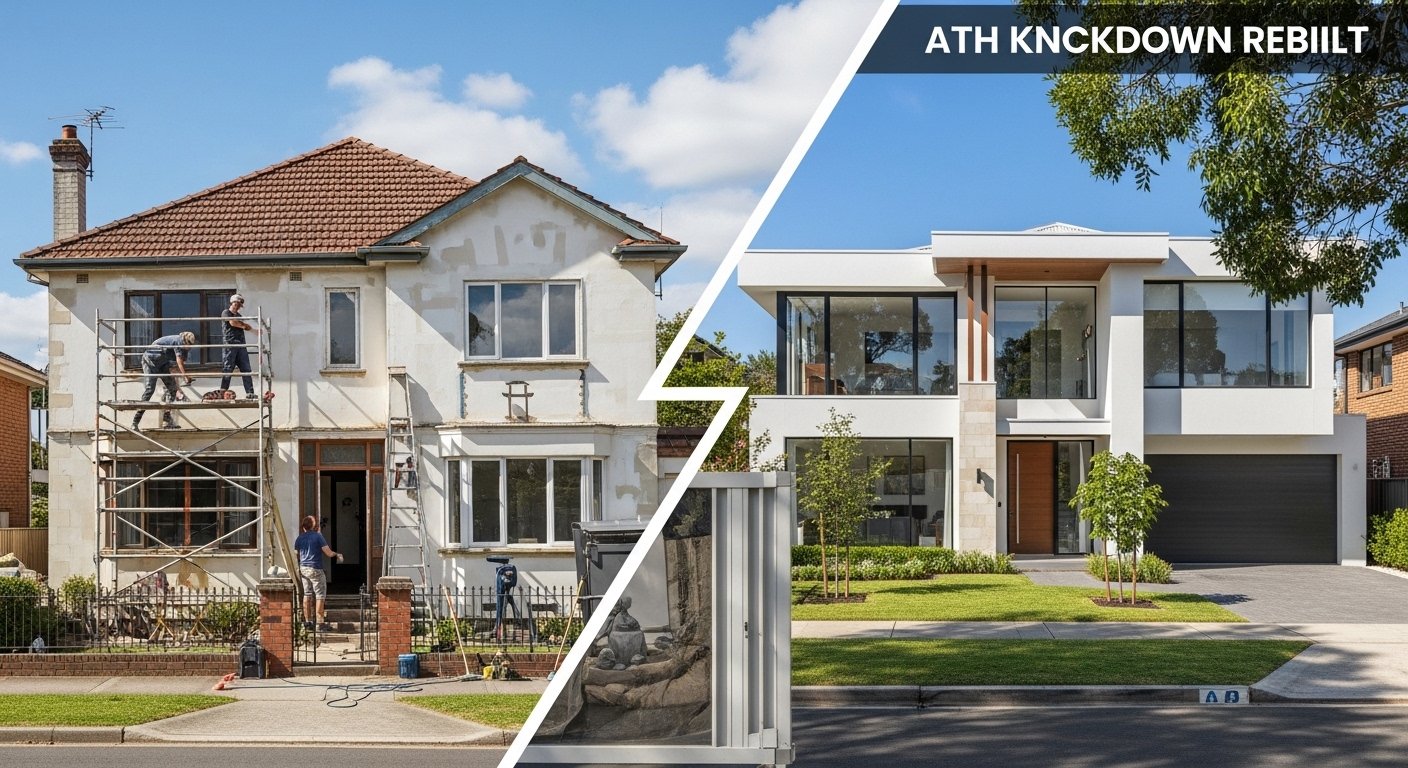
The Big Decision for NSW Homeowners
Every year, thousands of NSW homeowners stand at a crossroads. Their home is ageing, the layout no longer works, and the family has outgrown the space. The question becomes unavoidable: should you renovate or knockdown rebuild?
It is not a simple answer. Rising land values across Sydney suburbs, stricter NSW planning regulations, and increasing construction costs all shape the decision. Whether you are in Penrith, Parramatta, or the Northern Beaches, this guide walks you through the real costs, council rules, return on investment, and practical timelines so you can make the right call for your family and your property.
At Home Choice Australia, we have helped hundreds of NSW homeowners navigate exactly this decision. Here is what we have learned.
What Does Renovating Mean?
Definition of Renovation (Alterations and Additions)
A renovation means keeping your existing structure and upgrading, extending, or modernizing it. You are working within what is already there rather than starting fresh. This could mean anything from a new kitchen to a full second-story addition.
Common Types of Renovations
Cosmetic renovation covers surface-level upgrades like new flooring, paint, fixtures, and kitchen cabinetry. These are lower-cost projects and rarely require council approval.
Structural renovation involves changes to load-bearing walls, foundations, or the roof. This is where renovation costs in Sydney can climb quickly, especially when issues like asbestos, outdated wiring, or termite damage are discovered inside the walls.
Extensions and second-story additions add new floor space to the existing home. These can significantly improve livability but often cost more per square meter than a new build due to the complexity of tying new work into old structure.
What Does a Knockdown Rebuild?
Definition
A knockdown rebuild means demolishing your existing home entirely and constructing a brand-new custom home on the same land. You keep your block, your location, and your neighborhood — you simply replace what sits on it.
How Knockdown Rebuild Works in NSW
The process follows four main stages: demolition, custom home design, approvals, and construction. In NSW, you will typically need either a Development Application (DA) through your local council or a Complying Development Certificate (CDC) through a private certifier, depending on your zoning laws and block characteristics. BASIX requirements also apply, meaning your new home must meet minimum energy efficiency and water standards set by NSW planning regulations.
Renovation vs Knockdown Rebuild: Key Differences
Cost Comparison (NSW 2026 Estimates)
This is where most homeowners need clarity. Based on current Australian housing market conditions, renovation costs in NSW typically run between $3,000 and $4,500+ per square metre for structural or mid-to-high-end work. A knockdown rebuild generally costs between $2,200 and $3,500+ per square metre for construction, plus demolition costs of $15,000 to $35,000 depending on the site and asbestos removal requirements.
On a mid-sized 250sqm home, a full renovation could cost $700,000 or more. A knockdown rebuild of similar size might land between $600,000 and $900,000 all in. The gap is narrower than most people expect.
Timeline
Renovations typically take 6 to 9 months. A knockdown rebuild in NSW runs closer to 9 to 12+ months once you factor in the DA approval process or CDC assessment, demolition, and construction.
Design Flexibility
Renovation is limited by your existing structure. A knockdown rebuild gives you a completely blank canvas — modern floor plan design, optimal orientation for sunlight and airflow, and full control over every room.
Living Situation
Some homeowners can remain during a cosmetic renovation. For a knockdown rebuild or major structural renovation, you will need to budget for temporary relocation costs, typically renting for 9 to 12 months in the Sydney property market.
Pros and Cons of Renovating
Pros
Renovating lets you preserve the character of older period homes, which matters greatly in areas with heritage restrictions. It often involves less upfront disruption and, for minor upgrades, can cost less than a full rebuild. Some homeowners also maintain equity and financing options more easily when they avoid demolition.
Cons
Hidden renovation costs are the single biggest risk. Structural integrity problems, asbestos behind walls, deteriorated plumbing, or outdated electrical systems are only discovered once work begins. This leads to budget blowouts that are almost impossible to predict upfront. Layout limitations also remain — you are always working around what the original builder decided decades ago.
Pros and Cons of Knockdown Rebuild
Pros
A knockdown rebuild delivers full design freedom and modern energy efficiency through BASIX compliance. New South Wales construction costs for new builds are more predictable because reputable builders offer a fixed-price building contract. Long-term, a new home typically adds stronger property value renovation vs rebuild comparisons favour the rebuild side in most Sydney suburbs.
Cons
The total cost is higher, and you must move out during the build. Council restrictions under your Local Environmental Plan (LEP) may limit what you can build, and the demolition process means losing established gardens and landscaping.
7 Key Factors to Decide (NSW Focus)
1. Condition of Your Existing Home — If your home has major foundation issues or compromised structural integrity, renovation becomes risky and expensive. Homes with good bones are better renovation candidates.
2. Budget and Hidden Costs — Renovation carries financial uncertainty. Rebuilding with a fixed-price building contract offers more budget control. Always get a structural inspection before committing to either path.
3. Council Regulations in NSW — Check your zoning laws, heritage overlays, and whether your project qualifies for CDC approval or requires a full DA. Some Sydney suburbs have strict LEP controls that limit height or floor-to-site ratios.
4. Block Potential and Orientation — A knockdown rebuild lets you fully optimise sunlight, airflow, and land usage. If your existing home faces the wrong direction, renovation cannot fix that.
5. Long-Term Plans — Are you staying for 20 years, selling in five, or holding as an investment? A rebuild typically delivers stronger return on investment (ROI) for long-term ownership, while a targeted renovation may suit a short-term sell strategy.
6. Emotional Value and Character — Period homes carry real sentimental and architectural value. If your home has genuine heritage significance or character worth preserving, renovation may align better with your values.
7. Return on Investment — Always consider the risk of overcapitalisation. In some NSW property markets, you can spend more than the suburb ceiling will ever return. Compare builder quotes and speak with a local NSW architect or property valuer before deciding.
When Should You Renovate?
Renovating makes the most sense when your home is structurally sound, has heritage or character value worth keeping, needs only targeted upgrades, or your budget does not support a full rebuild. A well-planned renovation in a strong Sydney suburb can still deliver excellent equity growth.
When Should You Knockdown Rebuild?
A knockdown rebuild is the right call when your home has poor layout and structural problems that renovation cannot economically fix, when you need major expansion, when you want a fully modern lifestyle home with energy efficiency built in, or when renovation cost exceeds what the finished product would be worth.
Partial Rebuild: The Middle Option
Many homeowners overlook this path entirely. A partial rebuild keeps some existing structure — typically the foundation or a solid portion of framing — while demolishing and rebuilding the rest. This can be a cost-effective compromise, particularly on older homes where one section is sound but the remainder is beyond saving. Home Choice Australia often recommends this option for homeowners who want the benefits of a new build without the full demolition cost.
Cost Breakdown Example (NSW Case Study Style)
Renovation scenario: 180sqm home, full structural renovation in Western Sydney. Construction cost $540,000. Unexpected costs (asbestos removal, rewiring) $45,000. Temporary rental 6 months $18,000. Total: approximately $603,000.
Knockdown rebuild scenario: Same 180sqm block. Demolition $22,000. New build at $2,800 per sqm = $504,000. Temporary rental 11 months $33,000. Total: approximately $559,000.
The rebuild came in lower and delivered a brand-new home. This is not always the result, but it illustrates why the cost comparison deserves proper analysis, not assumptions.
Common Mistakes to Avoid
Underestimating renovation costs is the most common error we see. Ignoring council rules early in the process causes expensive delays. Overcapitalising in a suburb that cannot support the spend destroys ROI. Not planning for temporary housing adds financial pressure mid-project.
Expert Tips Before You Decide
Get a structural inspection from an independent engineer. Compare at least three builder quotes for both options. Speak with a local NSW architect or town planner early. Check zoning and approvals before you commit to any design or spend money on plans. At Home Choice Australia, we offer obligation-free consultations to help NSW homeowners understand exactly where they stand before making this decision.
FAQs
Is it cheaper to renovate or rebuild in NSW? Not always. Rebuild costs per square metre are often lower, but demolition and temporary relocation add to the total. A full cost analysis for your specific home and suburb is essential.
How long does a knockdown rebuild take? In NSW, typically 9 to 12+ months from demolition to handover, depending on DA or CDC approval timelines and builder availability.
Do I need council approval in NSW? Yes. Either a DA through your local council or a CDC through a private certifier is required for both major renovations and knockdown rebuilds.
Can I live in my house during renovation? For cosmetic work, sometimes. For structural renovation or knockdown rebuild, you will need to move out.
Does rebuilding increase property value? In most cases, yes. A new home on a well-located NSW block typically achieves stronger capital growth and higher sale prices than an equivalent aged and renovated home.