
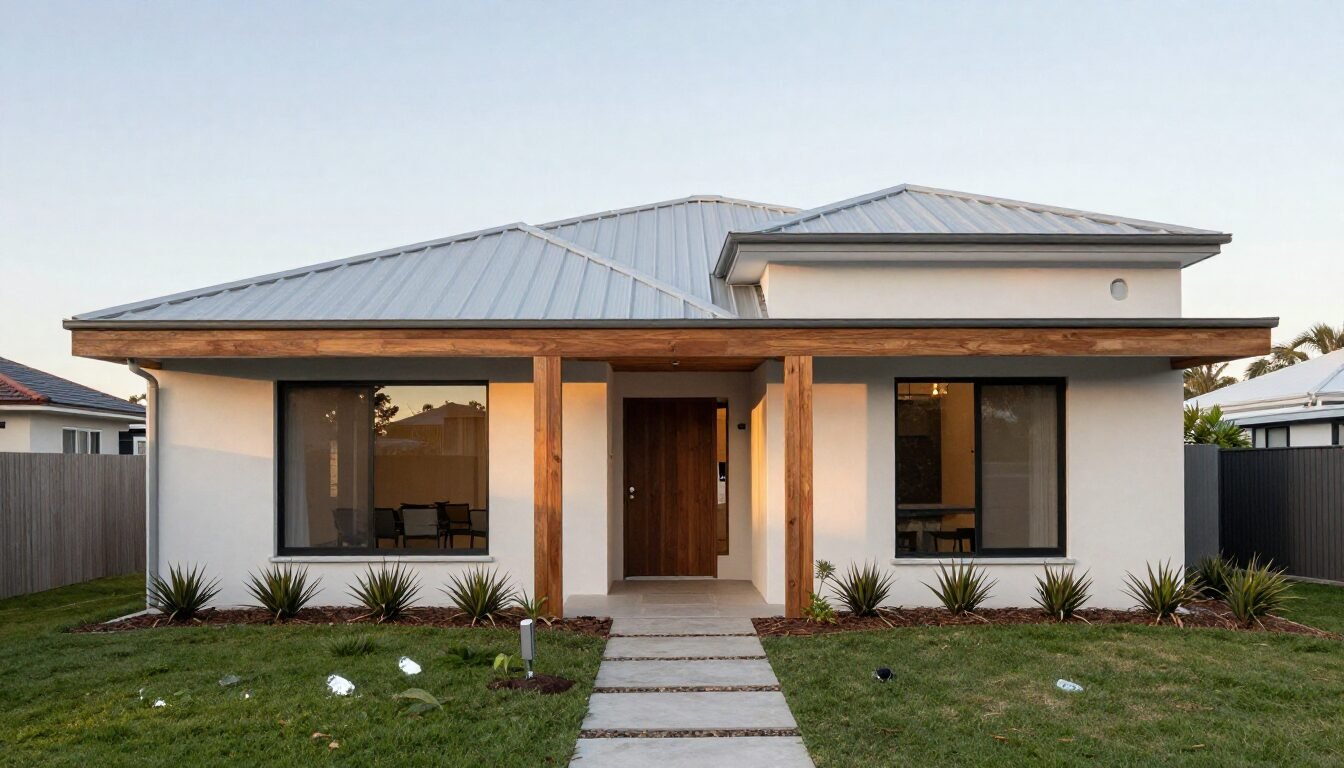
Home Choice Australia — Your trusted partner in custom home design and construction across New South Wales. We specialise in climate-responsive, energy efficient homes built to handle the real demands of Australian summers.
Why Climate-Responsive Design Matters in NSW
Building a custom home in a hot climate is one of the most rewarding decisions you can make — but also one of the most demanding if you get the design wrong. NSW summers hit hard. Inland regions bake under sustained heat waves, while coastal suburbs deal with relentless humidity and the urban heat island effect that pushes temperatures even higher in built-up areas.
A poorly designed home forces you to rely heavily on mechanical cooling, driving up energy bills and wearing out systems fast. A well-designed one does the opposite. It keeps indoor temperatures stable, cuts running costs, and gives your family genuine comfort without compromise. The tips below are drawn from real builds across New South Wales and are structured to guide you from the very first site assessment through to choosing the right cooling technology. Whether you are planning a luxury custom home or a more affordable build, these principles apply.
1. Understand Your Site’s Sun and Wind Exposure
Before a single line is drawn, you need to know exactly how your site behaves across the day and the year. Track the sun angles from morning to evening — the eastern sun is gentle and welcome, but the western afternoon sun is brutal and relentless. Prevailing winds vary depending on whether you are building in Sydney, Newcastle NSW, or along the Central Coast, so a proper site orientation assessment is non-negotiable.
Use free solar tracking tools and talk to your local council about prevailing wind patterns. This single step informs every decision that follows.
2. Smart Home Orientation for Natural Cooling
Orientation is the foundation of passive solar design. In NSW, the ideal approach is to align your main living spaces along a north-facing axis. This lets winter sun warm the home while minimising direct heat gain during summer. Position garages, storage, and service areas on the west side to act as a thermal buffer against harsh afternoon sun.
North facing homes perform significantly better in hot climates because they allow cross ventilation to work as intended and reduce the overall cooling load on your home.
3. Optimize Windows and Shading Devices
Windows are both your greatest asset and your biggest liability in a hot climate. The key is choosing high performance glazing with a low solar heat gain coefficient (SHGC) and reflective coatings that stop infrared heat before it enters the house. Low-E glass is the gold standard for NSW conditions.
Pair your glazing with deep wide eaves that shelter windows from direct midday sun. Pergolas and adjustable shading systems — whether fixed or retractable — add another layer of heat reduction. Window shading with quality blinds or external shutters completes the picture. Getting this right is one of the most effective heat reduction strategies available.
4. Ventilation and Passive Airflow Strategies
A home that breathes well stays cooler. Design for cross ventilation by placing openings on opposite walls to encourage a consistent airflow path through the house. Stack effect ventilation — where warm air rises and exits through high-level openings — works beautifully at night.
Night purging is a technique worth planning for from the start. By opening up the home after sunset to flush out the heat that built up during the day, you let the cooler night air reset indoor temperatures before the next morning. Airflow planning is not an afterthought; it is a core part of any climate smart home design.
5. Insulation and Thermal Mass
Insulation is your home’s first line of defence against heat. Australian insulation standards require specific R-values depending on your climate zone, and homes in NSW generally need robust roof insulation — often R4.0 or higher — plus well-insulated walls. Heat resistant home materials and breathable wall systems work together to keep moisture and heat in check.
Thermal mass plays a complementary role. Materials like brick veneer and concrete absorb heat during the day and release it slowly at night. But thermal mass only works when it is properly shaded during the day. Without shading, it simply stores more heat and radiates it back into your living space after dark. The balance between insulation, thermal mass, and shading is what separates a truly comfortable home from one that just looks good on paper.
6. Use Cool Roofs and Reflective Materials
Your roof is the largest surface exposed to direct sunlight, so it deserves serious attention. Colorbond roofing in lighter colours reflects a significant portion of solar radiation before it ever reaches your ceiling. Heat reflective roofing coatings take this further by reflecting infrared wavelengths that standard paint cannot.
Solar panels NSW serve a dual purpose here — they generate clean energy while also shading the roof surface beneath them, reducing heat absorption at the same time. Shade west facing walls and hard pavements around the property to cut down on radiated heat that bounces back into outdoor and indoor spaces.
7. Landscaping for Shade and Micro-Climate Cooling
Strategic landscaping is one of the most underrated tools for cooling a hot climate home. Shade trees planted on the western and eastern sides of the property block direct sun at the times it does the most damage. Choose species suited to your local council requirements and coastal or inland conditions.
Green walls introduce evaporative cooling right against your building envelope. Outdoor shade rooms and pergola planting create comfortable transition zones between inside and outside, reducing the heat that radiates back into the home from paved or exposed surfaces.
8. Plan Outdoor Living Spaces for Comfort
Outdoor living is a cornerstone of the Australian lifestyle, but in NSW summers, an exposed alfresco area becomes unusable without proper planning. Covered outdoor areas reduce indoor heat gain by giving occupants a comfortable alternative that does not require turning on the air conditioning.
Design your alfresco zones with shade sails, deciduous planting overhead, or a combination of both. Deciduous trees let winter sun through while blocking summer sun — a simple but effective strategy that works year round.
9. Cooling Technology and Mechanical Systems
Even the best passive design benefits from smart mechanical cooling. Ceiling fans move air and make occupants feel cooler without dropping room temperature, which means less energy spent than running air conditioning at full capacity.
When you do need AC, size the system correctly for the space. An oversized unit cools too fast, cycles on and off constantly, and fails to dehumidify properly — a serious issue given humidity management is critical in coastal NSW climates. Place units strategically and avoid cooling the entire house uniformly. Zone-based systems let you direct cooling where it is actually needed, cutting energy use substantially.
10. Energy-Efficient Fixtures and Materials
Every fixture and fitting inside your home generates some heat. LED lighting emits a fraction of the heat produced by traditional bulbs, and energy efficient appliances reduce the internal heat load across the board. Insulated doors, particularly on the west side of the home, stop heat from conducting through to interior spaces.
These choices might seem small individually, but collectively they lower your home’s energy efficiency rating demand and reduce the strain on your cooling systems. A NatHERS rating assessment early in the design process will show exactly where these gains add up most.
Budgeting for Climate-Responsive Building
One question every homeowner asks is whether passive design costs more. The honest answer is: it can cost slightly more upfront, but it almost always saves more in the long run. Passive cooling strategies reduce your dependence on mechanical systems, which means lower electricity bills, less maintenance, and longer system life.
A custom home cost comparison between a passive-first design and a conventional build typically shows payback within three to five years through utility savings alone. Battery storage and solar panels NSW accelerate that timeline further. When you factor in comfort, livability, and long-term value, climate-responsive building is not a luxury — it is the smarter investment.
Conclusion
Building a custom home in NSW that genuinely handles the heat requires more than a good-looking floor plan. It demands a layered approach — starting with site orientation and passive design, layered with quality materials, smart shading, and right-sized mechanical systems. Every tip above has been proven across real builds in hot climate conditions across New South Wales.
If you are ready to start planning, Home Choice Australia offers home design consultation with builders experienced in climate responsive home design across Sydney, Newcastle, the Central Coast, and regional NSW. Get a custom home quote today and let us show you what a truly comfortable home looks like.
Frequently Asked Questions
What is the best orientation for a home in NSW?
North facing orientation is the gold standard. It maximises passive solar heating in winter while minimising summer heat gain, and it works with cross ventilation to keep the home naturally cool for as much of the year as possible.
How much insulation do you need in a hot climate?
NSW climate zones generally call for a minimum R4.0 for roofs and R2.5 or higher for walls, but your specific requirements depend on your location and building type. A NatHERS assessment will give you the exact figures for your design.
Are tinted windows worth it for heat reduction?
Yes — but only if you choose the right type. Low-E glass with a low SHGC outperforms standard tinting because it blocks infrared heat without reducing natural light as much. Pair it with external shading for the best results.