
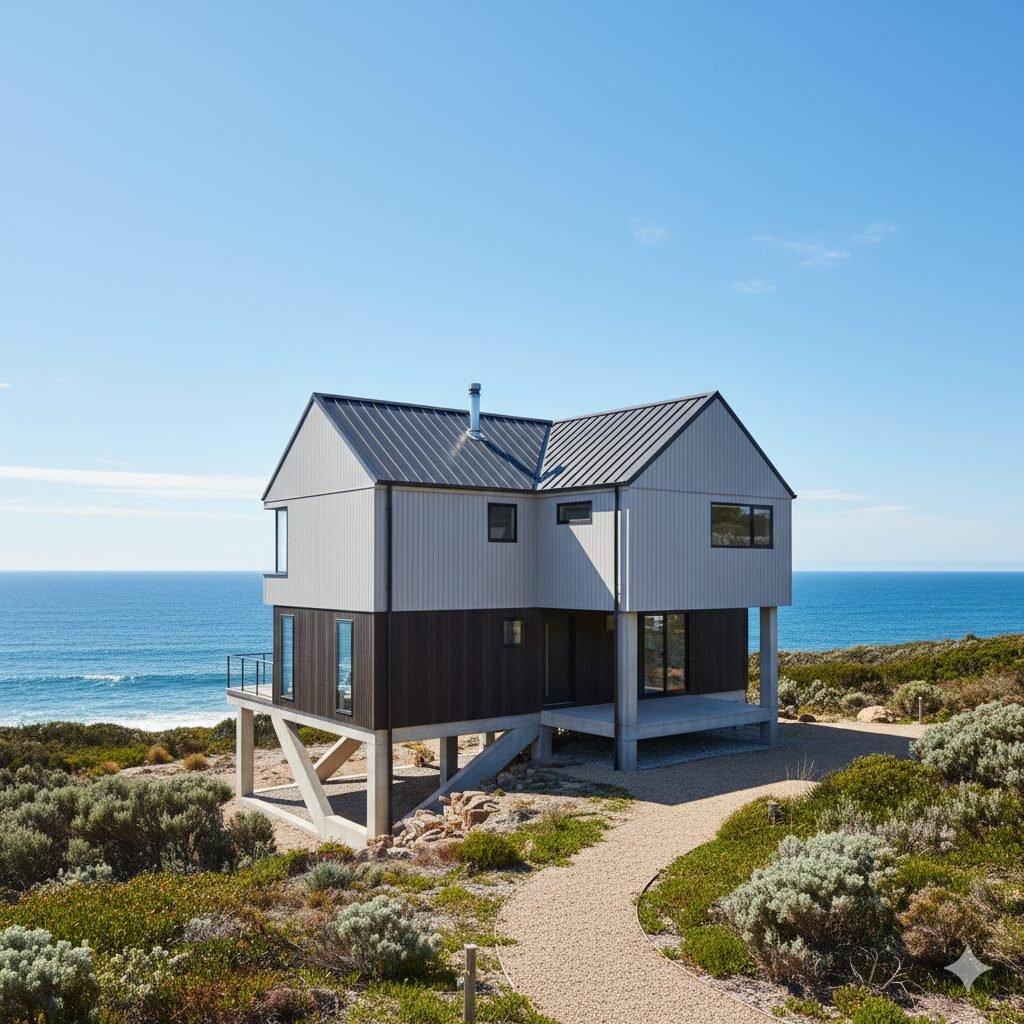
Building a home along New South Wales’ stunning coastline requires careful consideration of coastal the best materials for Homes NSW that can withstand unique environmental challenges. Salt-laden air, high humidity, coastal winds, and intense UV exposure create demanding conditions that standard building materials simply cannot endure long-term. At Home Choice Australia, we understand that selecting the best materials for coastal homes is crucial for ensuring your investment remains structurally sound, aesthetically appealing, and low-maintenance for decades to come.
This comprehensive guide explores building materials suitable for humid climate conditions, with a focus on corrosion-resistant and weatherproofing materials for seaside homes. We’ll examine everything from cladding and roofing to fixings and finishes, helping you make informed decisions that balance durability, aesthetics, and cost while meeting coastal building codes NSW material recommendations.
Coastal Performance Challenges
Understanding the environmental stressors your coastal home will face is the first step in selecting durable materials for coastal construction.
Salt corrosion and airborne chloride attack pose the most significant threat to coastal structures. Salt spray carried by coastal winds deposits chloride particles on every exposed surface, accelerating metal corrosion, degrading paints and coatings, and causing salt-induced corrosion in fixtures and fasteners. Even properties located several hundred meters inland experience these effects.
High humidity and moisture ingress create perfect conditions for damp and mould growth, particularly in poorly ventilated spaces. Moisture resistance becomes non-negotiable when selecting timber, insulation, and interior finishes. Without proper ventilation and moisture-resistant materials, rot resistance quickly deteriorates, leading to timber decay and structural degradation.
Cyclonic winds and UV exposure intensify weathering processes. Coastal properties face wind uplift on roofing that exceeds inland requirements, while relentless UV exposure breaks down paints, sealants, and plastics faster than in protected locations. Combined with occasional severe weather events, these factors demand materials with proven durability and thermal insulation properties.
Flooding, tidal risk, and coastal erosion affect low-lying coastal areas. Proper site selection, elevated foundations, and drainage planning become essential considerations alongside material choice to protect against water damage and foundation instability.
How to Choose Materials for NSW Coastal Homes
Selecting appropriate materials requires balancing multiple factors:
Durability versus aesthetics versus cost represents the fundamental trade-off. While marine-grade stainless steel fixings cost significantly more than standard galvanised options, their superior salt tolerance eliminates the rust and paint peeling that plague cheaper alternatives. Similarly, fiber-cement cladding offers better long-term value than untreated timber despite higher initial costs.
Maintenance frequency dramatically impacts lifetime ownership costs. Low maintenance materials like composite decking or powder-coated aluminium require minimal upkeep, while treated hardwood timber demands regular inspection, cleaning, and recoating. Consider your willingness and ability to perform ongoing maintenance when evaluating options.
Local compliance and regulations cannot be overlooked. NSW coastal building standards establish minimum requirements for materials in different exposure categories. The NSW Coastal Design Guidelines provide detailed recommendations for high-wind zones, salt-spray exposure areas, and coastal erosion zones. Always verify your material selections with local council controls before finalizing plans.
Exterior Cladding Options
Your cladding choice significantly impacts both appearance and performance in coastal conditions.
Fibre-Cement Cladding
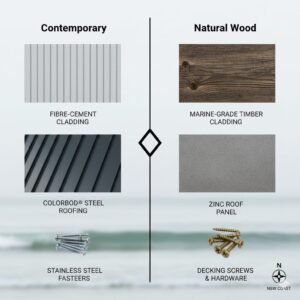
Fibre-cement products have become the gold standard for salt air resistant cladding NSW applications. These engineered panels combine cement, cellulose fibers, and additives to create dimensionally stable boards that resist moisture, rot, termites, and fire. Unlike timber, fiber-cement cladding maintains its integrity in humid conditions without warping or developing mould.
Modern fiber-cement offers realistic timber textures and profiles, delivering aesthetic appeal without timber’s maintenance burden. The material accepts paint well and, when properly primed with marine-grade coatings, provides decades of reliable performance. Pre-finished factory options further reduce installation time and ensure consistent, durable finishes.
For optimal performance, ensure proper installation with adequate clearance from ground level, appropriate flashing details, and use of stainless steel fixings to prevent rust staining. Regular washing to remove salt buildup and periodic recoating maintains appearance and protection.
COLORBOND® and Coated Steel Cladding
Steel cladding with advanced coating systems offers exceptional wind resistance and minimal maintenance. COLORBOND steel, specifically the Ultra grade designed for severe coastal environments, features enhanced corrosion protection that significantly outlasts standard coated steel products.
The material’s light weight reduces structural loading while its interlocking panel systems provide superior weather-tightness compared to traditional weatherboard applications. Wind ratings for properly installed steel cladding exceed requirements for most NSW coastal locations, including high-wind zones.
Maintenance involves annual washing with fresh water to remove salt deposits and occasional inspection of fastener points and cut edges. The factory-applied coating eliminates the need for on-site painting, though exposed cut edges require field application of touch-up paint to maintain corrosion resistance.
Treated Native Timber and Marine-Grade Timbers
While timber cladding offers natural beauty and character, it demands significantly more maintenance in coastal environments. Only properly treated species with high natural durability should be considered for weatherboard installations in salt-laden air.
Marine-grade hardwoods like ironbark, spotted gum, and blackbutt possess natural oils and dense grain structure that resists moisture better than softwoods. However, even these premium timbers require treatment, proper installation with adequate ventilation behind boards, and regular maintenance including cleaning, checking for timber decay, and recoating every 2-4 years.
Moisture-resistant timber treatments extend service life but cannot eliminate maintenance. Budget for ongoing care including replacement of deteriorated boards, treatment of exposed end grain, and regular application of protective coatings. For low-maintenance preferences, fiber-cement or steel alternatives prove more practical.
Masonry, Rendered Block, and Off-Form Concrete
Solid masonry construction provides exceptional durability and thermal mass benefits for coastal homes. Rendered concrete block, brick veneer over frame, and off-form concrete walls all offer robust protection against salt spray, wind-driven rain, and impact.
These systems excel in flood-prone areas, as properly detailed masonry withstands temporary inundation better than timber-framed walls. The thermal mass moderates interior temperatures, reducing cooling loads during hot coastal summers. Modern render systems incorporate breathable, flexible acrylic formulations that accommodate minor movement while resisting crack propagation.
Proper detailing proves critical—damp-proof courses, appropriate mortar selection, and quality render application determine long-term performance. Reinforced concrete performs exceptionally well but requires experienced contractors to achieve quality finishes and avoid cracking.
Roofing Materials
Your roof faces the harshest coastal exposure and warrants careful material selection.
Metal roofing dominates coastal applications due to its superior wind performance and longevity. COLORBOND Ultra specifically addresses coastal corrosion, with specialized coatings that resist salt-air attack far better than standard metal roofing products. Properly installed metal roofing with cyclone-rated fixings handles wind uplift forces that would damage lesser systems.
The material’s light weight reduces structural requirements while interlocking panel designs shed water effectively. Concealed fastener profiles eliminate exposed screws that become corrosion points. Regular maintenance involves annual inspections of fasteners, valleys, and penetrations, plus washing to remove accumulated salt deposits.
Concrete and terracotta tiles offer traditional aesthetics and excellent durability when installed with stainless steel fixings and cyclone clips. Their greater weight requires stronger roof framing but provides better wind resistance through mass alone. Tiles excel at shedding water and resisting UV degradation, though individual units may crack under severe impact.
Tile installations must follow manufacturer specifications for high-wind zones, including increased fastening frequency and proper underlayment details. Choose tiles with low water absorption ratings to minimize salt penetration and efflorescence.
Roof design considerations significantly impact performance. Generous overhangs protect walls from wind-driven rain and salt spray. Quality flashings at penetrations, valleys, and terminations prevent water ingress. Adequate ventilation prevents condensation accumulation in roof spaces. Design roof slopes to promote rapid water runoff, minimizing exposure time to salt-laden moisture.
Structural and Foundation Materials
The bones of your coastal home must withstand decades of environmental assault.
Reinforced concrete and masonry provide unmatched strength and durability for coastal construction. Properly specified concrete with appropriate cement content, reinforcement coverage, and admixtures resists chloride penetration and corrosion of embedded steel. Masonry foundations and structural walls offer similar benefits with proper detailing.
Steel reinforcement requires adequate concrete cover to prevent corrosion—increased coverage beyond standard requirements suits severe coastal exposure. Consider stainless or epoxy-coated reinforcement for critical elements in high-exposure locations.
Structural steel requires comprehensive corrosion protection in coastal applications. Hot-dip galvanizing provides baseline protection, but severe exposures warrant additional coatings or specification of stainless steel for exposed elements. All welded connections and field cuts need immediate treatment with zinc-rich primers to prevent rust initiation.
Elevated and pier foundations prove essential in flood-prone and tidal zones. Reinforced concrete piers or treated hardwood posts raise habitable floors above potential inundation levels. These systems also improve ventilation beneath the structure, reducing moisture accumulation and termite risk. Design must account for scour potential during storm surges and provide adequate embedment depth for lateral stability.
Foundation design should reference NSW guidelines for flood planning levels and incorporate drainage systems that direct water away from the structure. Proper site-specific design considers soil conditions, exposure category, and local council requirements.
Fixings, Fasteners, and Hardware
The failure of inexpensive fasteners undermines otherwise quality construction—this represents false economy in coastal building.
Marine-grade stainless steel (316 grade) fasteners resist corrosion far better than standard galvanised alternatives. While initial costs run 3-5 times higher than galvanised steel, stainless fasteners eliminate rust staining, maintain structural integrity, and avoid the costly replacement that galvanised products eventually require.
All exposed fasteners—cladding screws, balustrade fixings, gate hinges, door hardware—should specify 316 stainless steel minimum. Even concealed fasteners benefit from stainless specification, as moisture ingress can reach hidden locations.
The comparison between stainless steel fixings vs galvanised for coastal climate proves clear: galvanised coatings sacrifice themselves to protect underlying steel through cathodic protection, but this process accelerates in salt-air, leading to rust breakthrough within years rather than decades. Stainless steel’s corrosion resistance comes from its alloy composition rather than a coating, providing inherent protection that endures.
Don’t overlook brackets, joist hangers, and structural connectors—specify stainless or heavily galvanized options with additional protective coatings. The modest additional cost prevents catastrophic failures and maintains structural integrity throughout the building’s life.
Windows, Doors, and Joinery
Openings represent vulnerable points where weather penetration most commonly occurs.
Powder-coated aluminium frames dominate coastal window and door applications. The material won’t rust, requires minimal maintenance, and accepts durable powder-coat finishes in numerous colors. Thermal breaks in frame designs improve insulation performance, addressing aluminium’s natural conductivity.
All window and door hardware must utilize stainless steel components. Standard zinc or chrome-plated hardware fails rapidly in salt-air, leading to frozen locks, corroded hinges, and failed mechanisms. Invest in quality marine-grade hardware from the outset.
Impact and storm-rated glazing options suit severe exposure locations. Laminated glass resists breakage from wind-borne debris, while properly rated units withstand pressure differentials during cyclonic events. Upgraded glazing also improves security and acoustic insulation.
Weatherproof seals and flashings prove critical for keeping coastal storms outside. Quality weatherstripping around doors and operable windows maintains performance through repeated salt exposure and UV degradation. Flashing systems must integrate with wall cladding and waterproofing layers, directing any moisture that penetrates away from structural elements. Use UV-resistant sealants at all penetrations and regularly inspect and replace deteriorated sealant beads.
Decking and External Timber Finishes
Outdoor living spaces require materials that balance aesthetics with coastal durability.
Composite decking delivers the appearance of timber with dramatically reduced maintenance. Modern composites combine wood fiber and polymer materials to create boards that resist rot, moisture, termites, and UV fading. Unlike timber, composites require no staining or sealing—occasional washing maintains appearance.
While initial costs exceed treated pine, lifecycle costs favor composites through eliminated maintenance. The material doesn’t splinter, maintains dimensional stability in humid conditions, and typically carries 20-25 year warranties. Installation utilizes concealed fastening systems with stainless steel clips, creating clean, fastener-free surfaces.
Marine-grade hardwoods provide authentic timber aesthetics for those willing to commit to regular maintenance. Properly selected and installed hardwood decking offers 20-30+ years of service, but requires annual cleaning, biannual inspection, and recoating every 2-3 years with penetrating oils or film-forming finishes.
Installation details significantly impact performance. Adequate joist spacing prevents excessive deflection, while proper ventilation beneath decking allows moisture to escape. All fasteners must be stainless steel, and regular checks for loose boards or protruding fasteners prevent trip hazards and accelerated deterioration.
The appearance versus upkeep trade-off determines the best choice—composites suit low-maintenance preferences, while hardwoods reward those who value natural timber character and accept ongoing care responsibilities.
Paints, Sealants, and Coatings
Protective finishes represent the first line of defense for many building elements.
Marine and exterior coatings formulated for coastal exposure incorporate additives that resist salt-air, UV degradation, and moisture penetration. Standard interior-grade paints fail rapidly outdoors, while even standard exterior paints prove insufficient for severe coastal exposure.
Choose the best paints/coatings for coastal homes by selecting products specifically labeled for coastal, marine, or severe exposure applications. These formulations typically include mildewcides to prevent mould growth, UV stabilizers to minimize fading and chalking, and flexible binders that accommodate substrate movement without cracking.
Anti-corrosive primers form the foundation of durable paint systems on metal substrates. Zinc-rich primers provide sacrificial protection for steel, while specialized primers for aluminium ensure proper paint adhesion. Multiple-coat systems—primer, intermediate, and topcoat—deliver far better protection than single-coat applications.
Breathable sealants prove essential for masonry and render applications. These products allow moisture vapor to escape while preventing liquid water penetration, avoiding the trapped moisture that causes paint failure, efflorescence, and substrate damage. Silicone-based sealants suit movement joints, while acrylic products work well for minor cracks.
Recoating schedules and maintenance planning should account for coastal exposure. Most paints require recoating every 5-7 years in coastal locations, versus 10-12 years inland. Establish a maintenance schedule that includes annual inspections, touch-up of damaged areas, and complete recoating before significant deterioration occurs. Proactive maintenance costs far less than remedial work after substrate damage develops.
Interior Materials Suited to Coastal Homes
Interior spaces require attention to moisture management and appropriate material selection.
Engineered timber flooring outperforms solid timber in high-humidity environments. The multi-layer construction provides dimensional stability, resisting the expansion and contraction that causes solid boards to cup or gap. Choose products with moisture-resistant core materials and appropriate finish coatings.
Tile flooring suits wet areas and high-traffic zones. Porcelain tiles with low water absorption resist staining and moisture penetration, while their durability withstands coastal sand and grit tracked indoors. Proper installation with flexible adhesives and grout accommodates minor structural movement without cracking.
Moisture-resistant plasterboard belongs in all bathrooms, laundries, and kitchens in coastal homes. These products incorporate water-resistant core materials and face papers that resist mould growth when exposed to elevated humidity. While not waterproof, they provide significantly better performance than standard plasterboard in damp conditions.
Ensure proper ventilation throughout the home to prevent mould in coastal houses NSW. Exhaust fans in wet areas, adequate natural ventilation, and consideration of whole-house mechanical ventilation systems maintain healthy indoor air quality and minimize condensation issues.
Sustainability and Local Sourcing
Responsible coastal construction considers environmental impact alongside performance.
Recycled materials offer reduced environmental footprints without compromising durability. Recycled steel in structural applications and reinforcement provides identical performance to virgin material. Recycled aggregate in concrete and reclaimed timbers for interior applications reduce embodied carbon while delivering necessary strength.
Low-embodied carbon options include timber from sustainably managed forests, which sequesters carbon during growth. Specify products certified by responsible forestry programs to ensure sustainable sourcing. Locally quarried stone and locally manufactured products minimize transportation emissions.
Local species and timbers that naturally suit NSW coastal conditions reduce treatment requirements and perform reliably. Native hardwoods like spotted gum, blackbutt, and ironbark evolved in Australian climates and offer excellent natural durability. Supporting local forestry and manufacturing strengthens regional economies while reducing project footprints.
Consider lifecycle environmental impact, not just initial embodied energy. Durable materials that require minimal maintenance and last decades prove more sustainable than cheaper alternatives needing frequent replacement, despite potentially higher initial environmental costs.
Cost versus Lifespan Comparison
Understanding lifecycle costs helps make informed material decisions:
| Material | Typical Lifespan (Coastal) | Relative Upfront Cost | Maintenance Frequency |
| Fiber-cement cladding | 40-50+ years | Medium-High | Low (wash annually, repaint 10-15 yrs) |
| COLORBOND Ultra roofing | 30-40+ years | Medium-High | Very Low (wash annually, inspect fasteners) |
| Composite decking | 25-30+ years | High | Very Low (wash as needed) |
| Marine-grade hardwood decking | 20-30+ years | Medium-High | High (clean annually, recoat 2-3 yrs) |
| Stainless steel (316) fixings | 50+ years | High | None |
| Galvanised fixings | 5-15 years | Low | High (inspect/replace as needed) |
| Concrete/terracotta roof tiles | 50+ years | Medium-High | Low (inspect/replace damaged units) |
| Treated pine decking | 10-15 years | Low | High (annual treatment, replace deteriorated boards) |
| Powder-coated aluminium windows | 30-40+ years | Medium-High | Low (clean/lubricate annually) |
| Masonry/rendered walls | 50+ years | High | Medium (inspect/repair render cracks) |
This comparison demonstrates how higher initial investments in quality materials typically deliver better value through extended service life and reduced maintenance costs. Calculating total cost of ownership over 20-30 years often reveals premium materials cost less than budget alternatives.
NSW Compliance and Recommended Standards
Ensuring regulatory compliance protects your investment and ensures appropriate performance.
NSW Coastal Design Guidelines provide comprehensive guidance for coastal development, addressing site selection, building orientation, material selection, and construction details specific to coastal exposure categories. Review these guidelines during the planning phase to inform design decisions.
Local council controls vary by location and may impose additional requirements beyond state guidelines. Consult with your local council early in the design process to understand specific restrictions, required setbacks from coastal erosion zones, and any local material preferences or restrictions.
Wind and flood ratings must match your site’s exposure category. The Building Code of Australia specifies wind classifications based on location and terrain, ranging from N1 (low exposure) to C4 (severe cyclonic). Similarly, flood planning levels establish minimum floor heights in flood-prone areas. Ensure all materials and construction methods meet or exceed these requirements.
Relevant Australian Standards include AS 2870 for residential footings and slabs, AS 4055 for wind loads, AS 3959 for bushfire construction (relevant in some coastal areas), and various standards for specific materials and products. Your designer and builder should demonstrate compliance with applicable standards.
Quick compliance checklist:
- Verify site exposure category with council
- Confirm wind classification and required ratings
- Check flood planning levels if applicable
- Review NSW Coastal Design Guidelines
- Ensure material specifications meet exposure requirements
- Verify fastener and fixing specifications
- Confirm all Australian Standards compliance
- Obtain required approvals before construction
Maintenance Checklist for Coastal Homes
Proactive maintenance preserves performance and appearance while preventing costly repairs.
Annual inspection tasks:
- Wash all exterior surfaces with fresh water to remove salt buildup
- Inspect roof fasteners, flashings, and penetrations for corrosion or looseness
- Check gutters and downpipes for blockages and secure attachment
- Examine cladding for damage, loose fasteners, or paint deterioration
- Inspect deck boards and balustrades for loose fixings or deterioration
- Test all door and window locks, hinges, and weatherstripping
- Check foundation and subfloor areas for moisture accumulation or termite activity
- Inspect exposed timber for decay, paying attention to end grain and joints
- Examine sealant around windows, doors, and penetrations for cracking
Fastener checks should occur annually, with particular attention to exposed screws and bolts. Tighten loose fasteners immediately and replace any showing corrosion. Even stainless steel benefits from occasional cleaning to remove surface deposits.
Recoat timelines depend on material and exposure:
- Painted fiber-cement cladding: 10-15 years
- Timber weatherboards: 2-4 years
- Decking oils/stains: 2-3 years
- Rendered walls: 10-15 years
- Metal roofing touch-ups: as needed for scratches/damage
Timber treatment schedule for any exposed timber elements includes annual application of penetrating oils or other protective finishes. Inspect for moisture damage, decay, or termite activity before treatment and replace deteriorated sections.
Gutter and flashing washdown twice annually (minimum) prevents salt and debris accumulation that accelerates corrosion and blocks drainage. Use gentle water pressure to avoid damage while thoroughly flushing all valleys, box gutters, and downpipes.
Document all maintenance activities and retain records for warranty purposes and future reference. Establish a regular schedule rather than waiting for obvious deterioration—prevention costs far less than repair.
Case Study: NSW Coastal Home Examples
Real-world applications demonstrate how material selection influences outcomes.
Example 1: Contemporary beachside home, Northern Beaches This single-story residence combines fiber-cement cladding in mixed profiles with COLORBOND Ultra roofing to achieve low-maintenance durability. Generous eaves protect walls from salt spray while aluminum-framed windows with stainless steel hardware provide weathertight performance. Composite decking extends indoor spaces outdoors without the maintenance burden of timber. After five years of coastal exposure, the home shows minimal weathering beyond light fading, requiring only annual washing to maintain appearance.
Example 2: Elevated flood-resilient home, Tweed Coast
Built on reinforced concrete piers to achieve required flood planning levels, this design places habitable spaces above potential inundation. Ground level contains only garage and storage spaces with flood-resistant concrete construction and drainage. Steel frame construction with masonry cladding provides robust weather protection, while elevated positioning improves ventilation and ocean views. The elevated foundation strategy combined with durable materials ensures the home withstands both everyday coastal exposure and severe weather events.
Example 3: Sustainable coastal retreat, South Coast Featuring locally sourced hardwood cladding from sustainably managed forests, this home accepts higher maintenance requirements in exchange for natural timber aesthetics and reduced embodied carbon. Careful detailing includes deep overhangs, stainless steel fixings throughout, and elevated underfloor ventilation to manage moisture. The owners committed to regular maintenance including biannual cleaning and timber oiling, preserving the natural weathered appearance they desired. After ten years, strategic board replacement maintains structural integrity while accepting natural patina development.
These examples demonstrate how thoughtful material selection tailored to specific goals—whether minimizing maintenance, achieving flood resilience, or prioritizing sustainability—delivers successful outcomes in NSW’s demanding coastal environment.
Conclusion
Building in NSW’s coastal climate demands careful material selection that balances durability, aesthetics, maintenance requirements, and budget considerations. The best materials for coastal homes resist salt corrosion, handle high humidity, and withstand cyclonic winds while maintaining appearance and structural integrity for decades.
Key principles include:
- Prioritize corrosion-resistant building materials, especially marine-grade stainless steel fasteners
- Select weatherproofing materials for seaside homes proven in coastal applications
- Follow coastal building codes NSW material recommendations and verify compliance
- Plan for appropriate maintenance based on material requirements
- Consider lifecycle costs rather than just initial expenses
- Work with experienced coastal builders who understand these unique challenges
At Home Choice Australia, we specialize in coastal construction throughout NSW, helping homeowners navigate material selection, regulatory compliance, and design decisions that ensure lasting performance. Whether you’re building new or renovating an existing coastal property, proper material selection provides the foundation for decades of comfortable, low-maintenance living by the sea.
Ready to discuss your coastal building project? Contact Home Choice Australia today for a site assessment and material consultation tailored to your specific location and requirements. Our experienced team understands NSW coastal conditions and can guide you toward material choices that protect your investment while achieving your vision for coastal living.